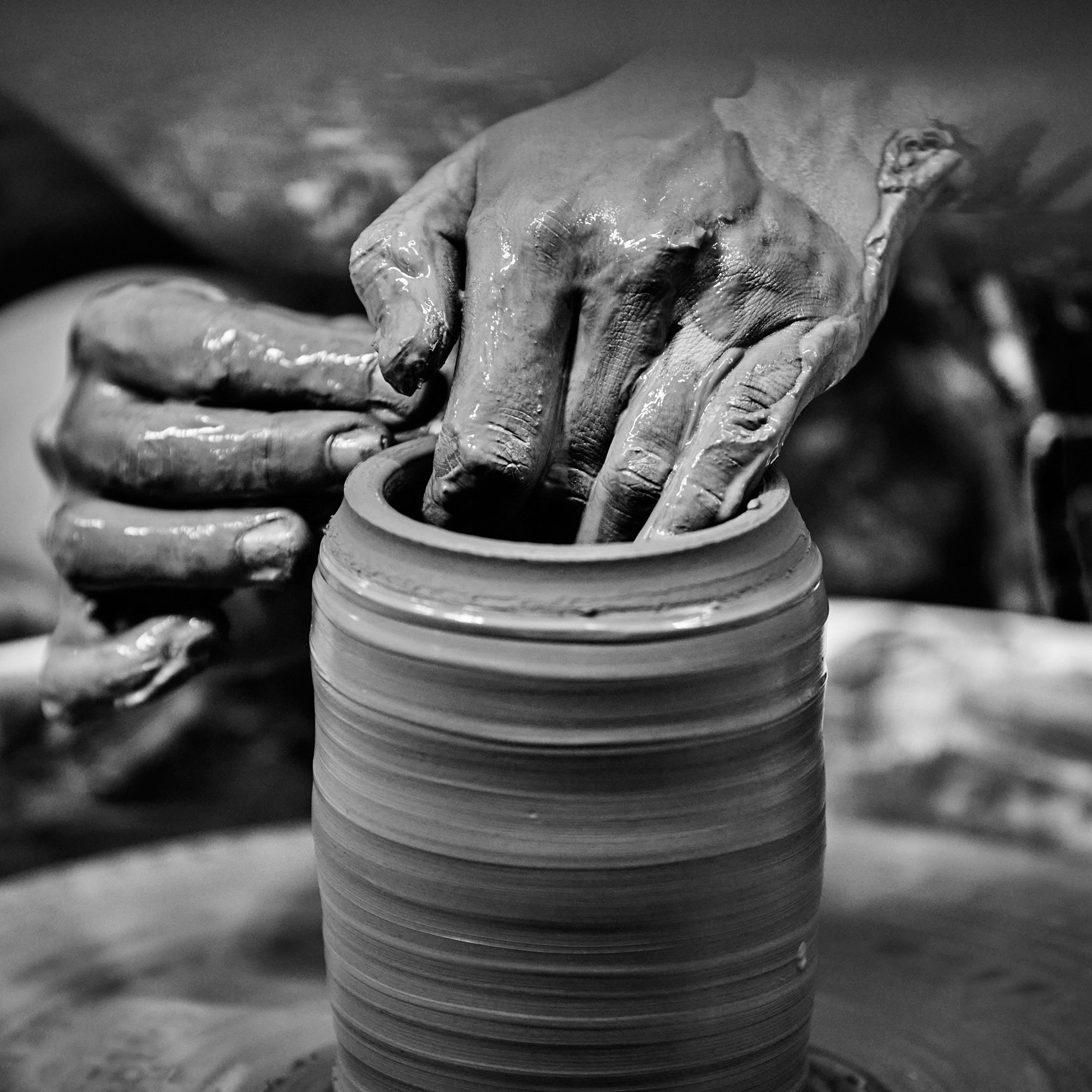
Description
Intensive Course: Throwing Fundamentals, Practice, Precision and Fluency
A Two-Day Intensive Course with Alice Wakefield
County Hall Pottery, London
Dates: 17 – 18 October
Times: 10:00am–5:00pm each day
Price: £280 per person
Duration: Two-day intensive course
Times: 10:00am–5:00pm each day
Price: £280 per person
Duration: Two-day intensive course
Join ceramic artist Alice for a focused two-day throwing intensive designed to strengthen the fundamental skills that underpin confident wheel work.
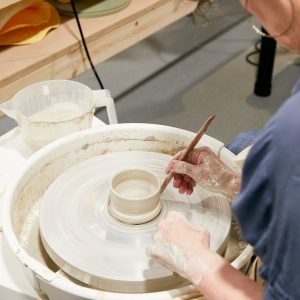
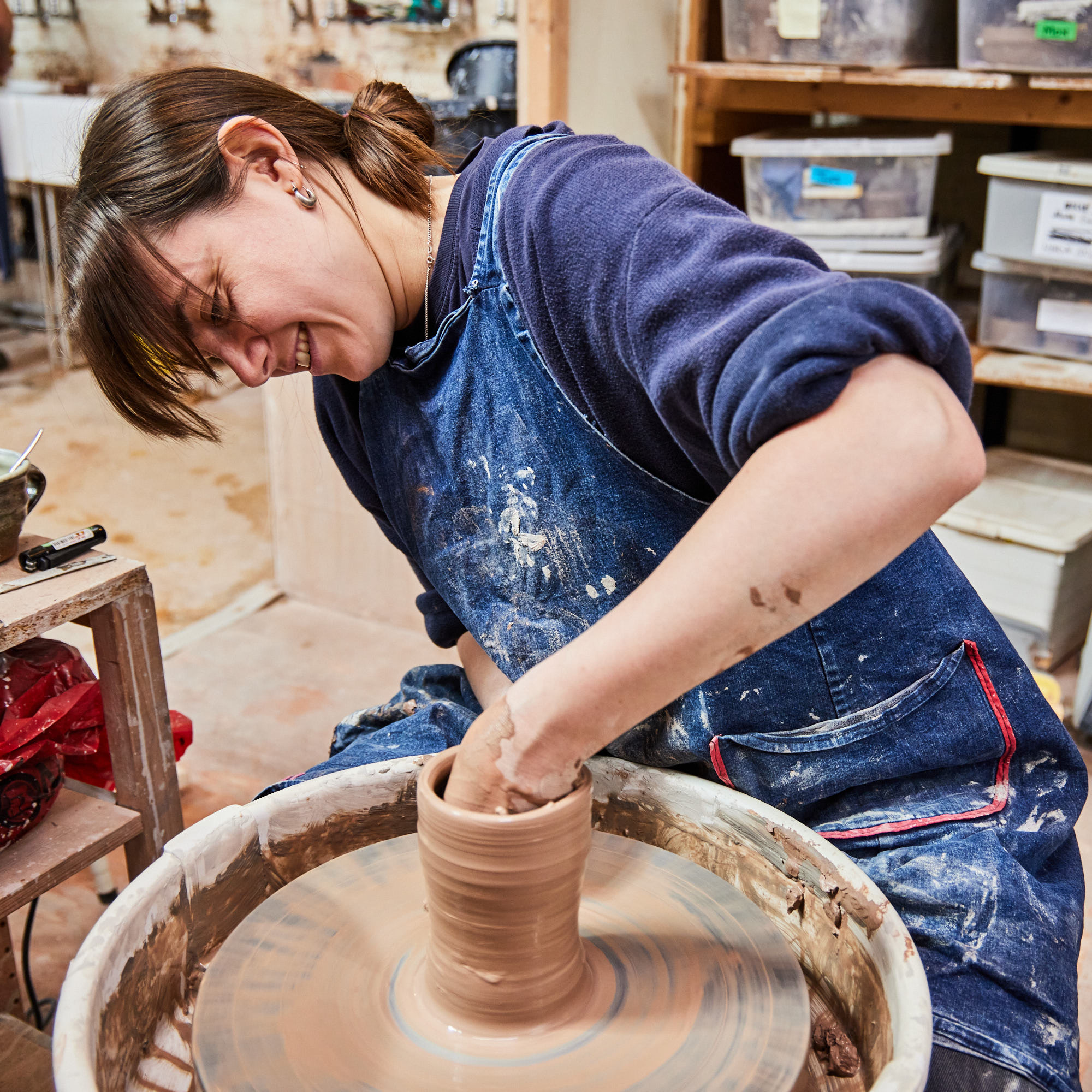
This course is centered on practice rather than finished pieces. Over two days, participants will repeatedly work through the core processes of wedging, centering, opening and pulling clay walls, developing greater fluency, consistency and efficiency through repetition.
The emphasis will be on understanding what is happening in the clay at each stage of throwing. Participants will begin with cylinders before progressing to bowl forms, regularly cutting their work in half to examine wall thickness, compression, weight distribution and areas that could be improved.
Rather than worrying about producing pots to keep, participants will be encouraged to throw, assess, recycle and begin again. Removing the pressure to make finished work creates space to concentrate entirely on technique, movement and developing good throwing habits.
The aim is simple: practice, practice, practice.
Course Overview
This practical two-day intensive focuses on the fundamental mechanics of throwing and is suitable for a range of experience levels.
Participants will work repeatedly with manageable amounts of clay, developing an efficient throwing sequence and gaining a clearer understanding of how their hands, body position, wheel speed and use of water influence the clay.
The first stage of the course will focus on wedging and centering. Participants will explore how to prepare clay consistently, establish a stable working position and center with less unnecessary effort.
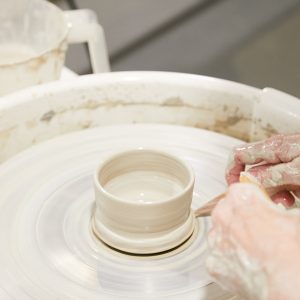
From there, the course will concentrate on throwing cylinders. Cylinders provide the foundation for almost every wheel-thrown form and offer an ideal way to practice opening, establishing a base, compressing the floor and pulling walls evenly.
Pieces will regularly be cut vertically in half so participants can see exactly what has happened inside the form. This provides immediate feedback on areas such as uneven walls, heavy bases, changes in thickness and inefficient pulls.
Once greater consistency has been developed, participants will move on to bowl forms, applying the same core principles while learning how to control and open the walls into a wider profile.
There will be no trimming, decorating, glazing or firing. The clay will be continuously recycled so that the full two days can be dedicated to improving throwing technique.
Learning will take place through demonstrations, repeated exercises, individual feedback and extensive supported practice time.
What You Can Expect
Day One: Centering, Cylinders and Clay Walls
Morning: Preparation and Centering
The first morning will focus on establishing an efficient and repeatable throwing process.
Participants will explore:
-
Preparing clay through wedging
-
Creating consistent clay portions
-
Setting up the wheel and working position
-
Body posture and using body weight efficiently
-
Centering clay with greater control
-
Reducing unnecessary movement and effort
-
Understanding appropriate wheel speeds
-
Using water effectively without over saturating the clay
-
Developing a consistent sequence from wedging to centering
The emphasis will be on repetition, allowing participants to center multiple pieces rather than immediately progressing towards finished pots.
Afternoon: Throwing Cylinders
Participants will then concentrate on the cylinder as the fundamental wheel-thrown form.
The session will focus on:
-
Opening the centered clay
-
Establishing an even base
-
Compressing the floor
-
Creating a clean transition between floor and wall
-
Pulling clay upwards efficiently
-
Developing even wall thickness
-
Controlling the rim
-
Maintaining vertical walls
-
Reducing excess weight at the base
Finished exercises will be cut vertically in half and assessed.
Participants will examine:
-
Wall thickness
-
Base thickness
-
Consistency from bottom to rim
-
Where clay has accumulated
-
Where walls have become unnecessarily thin
-
How the form could be improved on the next attempt
The process will then be repeated.
Day Two: Repetition, Bowls and Greater Fluency
Morning: Refining the Cylinder
The second day will begin by returning to cylinders, using observations from the previous day to improve consistency and efficiency.
Participants will focus on:
-
Centering more quickly and confidently
-
Establishing a consistent throwing rhythm
-
Pulling walls using fewer, more effective movements
-
Increasing height while maintaining control
-
Improving wall consistency
-
Reducing heavy bases
-
Using less water
-
Recognising when clay is becoming overworked
-
Developing more intentional hand positions
Participants will continue cutting selected pieces in half to compare results and identify progress.
Afternoon: Moving from Cylinders to Bowls
The final afternoon will apply the same principles to bowl forms.
Participants will explore:
-
Establishing a suitable base for a bowl
-
Pulling and opening the walls gradually
-
Supporting wider forms
-
Developing smooth continuous curves
-
Understanding the relationship between interior and exterior profiles
-
Controlling the rim as the form widens
-
Maintaining even wall thickness
-
Identifying common causes of collapsing or uneven bowls
As with the cylinders, selected bowl forms will be cut in half and examined to understand how their internal structure relates to their external appearance.
The course will finish with a review of the techniques covered and individual guidance on which areas participants should continue practicing.
What You Will Learn
-
How to prepare clay effectively through wedging
-
How to develop a more efficient centering technique
-
How posture, wheel speed and hand position affect throwing
-
How to open clay and establish an even base
-
How to compress the floor of a thrown form
-
How to pull walls with greater consistency
-
How to create cylinders with even wall thickness
-
How to recognise and reduce heavy bases
-
How to use water more efficiently
-
How to identify unnecessary movements in your throwing process
-
How to cut and assess thrown forms
-
How to use sectioned pots as a tool for improving technique
-
How to move from a cylinder into a bowl form
-
How to develop smoother, more controlled bowl profiles
-
How repetition can build fluency and confidence at the wheel
What You Will Take Away
This course is deliberately focused on skills rather than finished objects.
You will take away:
-
Greater confidence centering clay
-
A more efficient and repeatable throwing process
-
Improved control when pulling clay walls
-
A clearer understanding of wall and base thickness
-
Experience identifying technical problems in your own work
-
Greater confidence throwing cylinders and bowls
-
An understanding of how to practice effectively at the wheel
-
Individual feedback on areas to focus on in your future throwing practice
No work made during the course will be kept or fired.
All clay will be reclaimed and reused so that participants can concentrate fully on repetition and technical development.
Skill Level
Level: Open level
This course is suitable for both newer throwers and more experienced ceramicists who would like to revisit and strengthen their fundamental throwing skills.
Beginners who have had some previous introduction to the pottery wheel will benefit from sustained time practicing centering and pulling walls, while more experienced participants can use the course to identify inefficient habits, improve consistency and refine their technique.
The tutor will adapt exercises and individual guidance according to each participant’s experience.
Participants do not need to be able to produce finished cylinders or bowls before attending.
A Different Approach to Learning
Most pottery courses are centered around producing finished work. This intensive takes the opposite approach.
Nothing needs to survive.
Pots can be cut open, examined, collapsed, recycled and thrown again.
By removing the need to trim, decorate, glaze or fire the work, participants can spend almost the entire course at the wheel. Each attempt becomes an opportunity to understand the clay more clearly and make a small adjustment on the next one.
The emphasis is not on how many pots you make, but on how much you learn from making them.
What to Bring
Participants should bring:
-
A notebook, if you would like to record observations
-
Any preferred personal throwing tools
All clay and essential studio tools will be provided.
About Alice Wakefield
Alice Wakefield is a London based potter. She was a primarily self-taught maker before graduating with a diploma from Clay College in Stoke on Trent in 2024. She makes small batches of salt and wood fired functional wares alongside production pottery, fabrication for other artists and teaching pottery skills from different studios across London.
Key Information
Dates: 17-18 October
Times: 10:00am–5:00pm each day
Location: County Hall Pottery, Belvedere Road, London
Level: Open level
Experience Required: Some previous introduction to wheel throwing is recommended
Class Size: Maximum 10 participants
Clay: Stoneware practice clay
Materials: Clay and use of studio tools are included
Firing: No work will be fired
Finished Work: Participants will not keep work made during the intensive
Focus: Repetition, technical development and throwing practice
Times: 10:00am–5:00pm each day
Location: County Hall Pottery, Belvedere Road, London
Level: Open level
Experience Required: Some previous introduction to wheel throwing is recommended
Class Size: Maximum 10 participants
Clay: Stoneware practice clay
Materials: Clay and use of studio tools are included
Firing: No work will be fired
Finished Work: Participants will not keep work made during the intensive
Focus: Repetition, technical development and throwing practice