Description
Masterclass: The Crystalline Glaze – Form & Growth with Charly Blackburn
County Hall Pottery, London
Dates: 9–10 January 2027 10:00–17:00 (1 hour lunch break)
Results and Analysis Session: Thursday 14 January 2027, 11:00–12:00
Early Bird Price: £400 per person – until 16.12.2026 (all materials and firings included)
Price: £450 per person – after 16.12.2026 (all materials and firings included)
Duration: Two-day Masterclass, followed by a glaze results and analysis session
Short Introduction
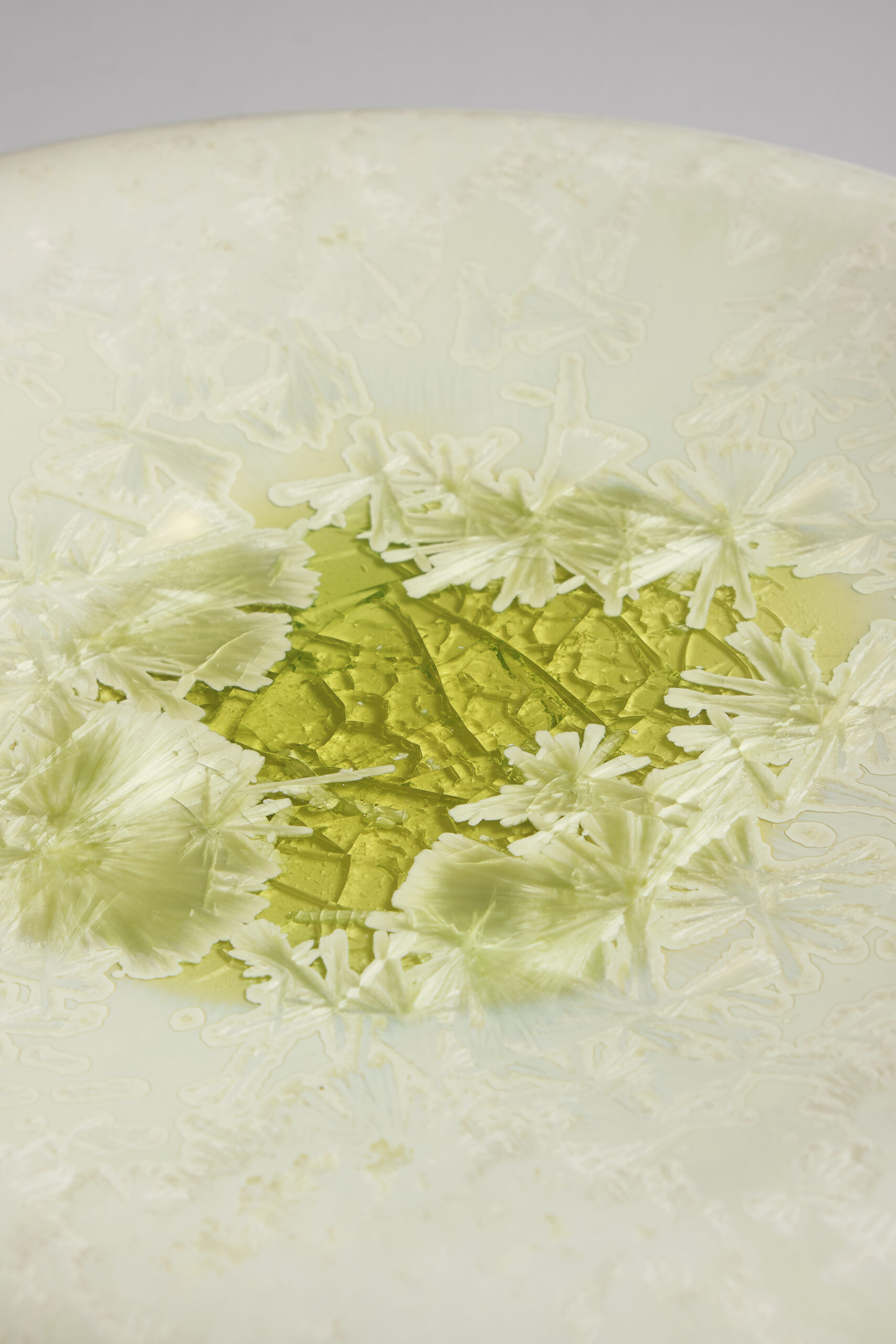
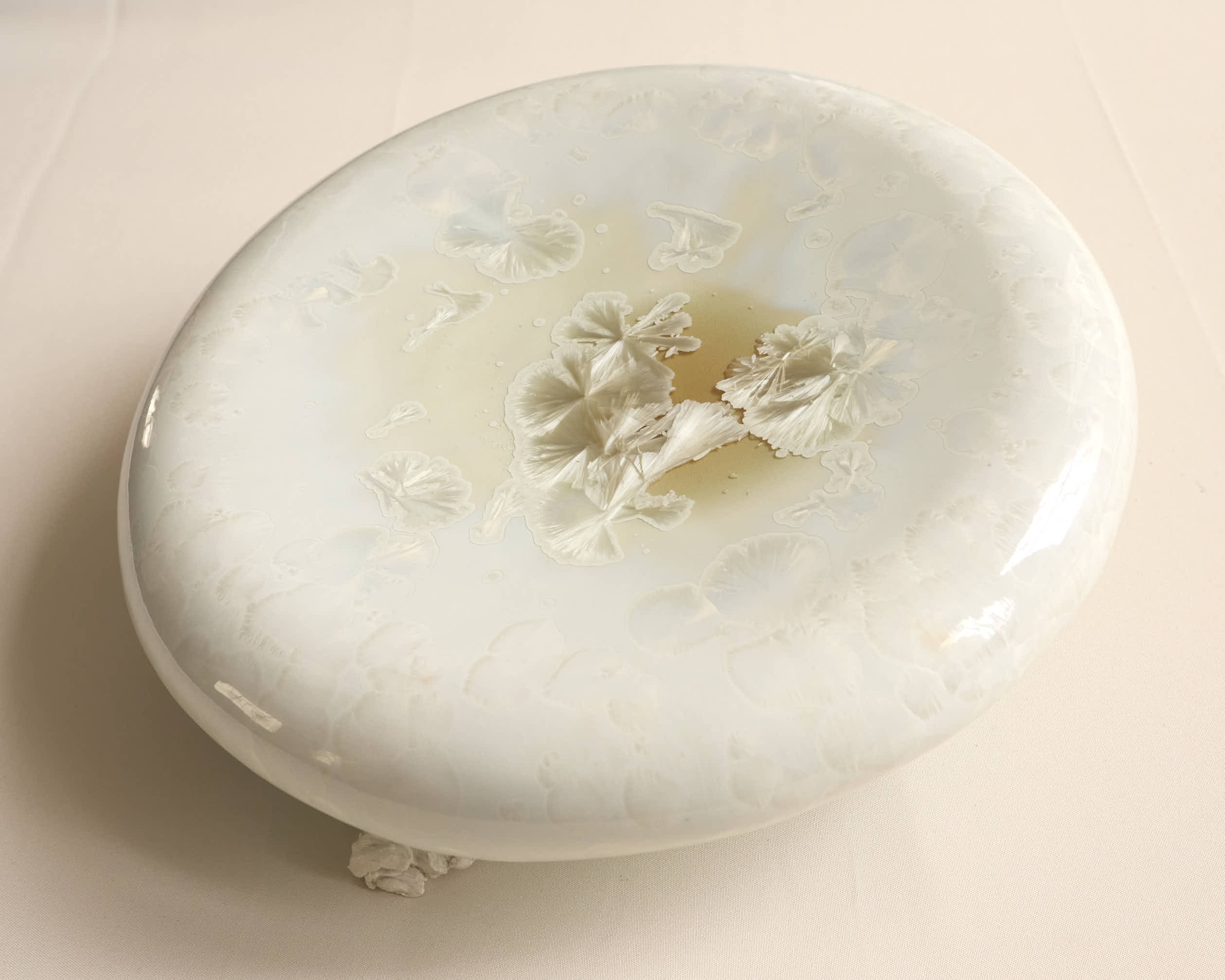
Join ceramic artist Charly Blackburn, our 2026 Potter in Residence, for a two-day specialist masterclass exploring the fascinating world of crystalline glazes and the relationship between glaze chemistry, ceramic form and firing.
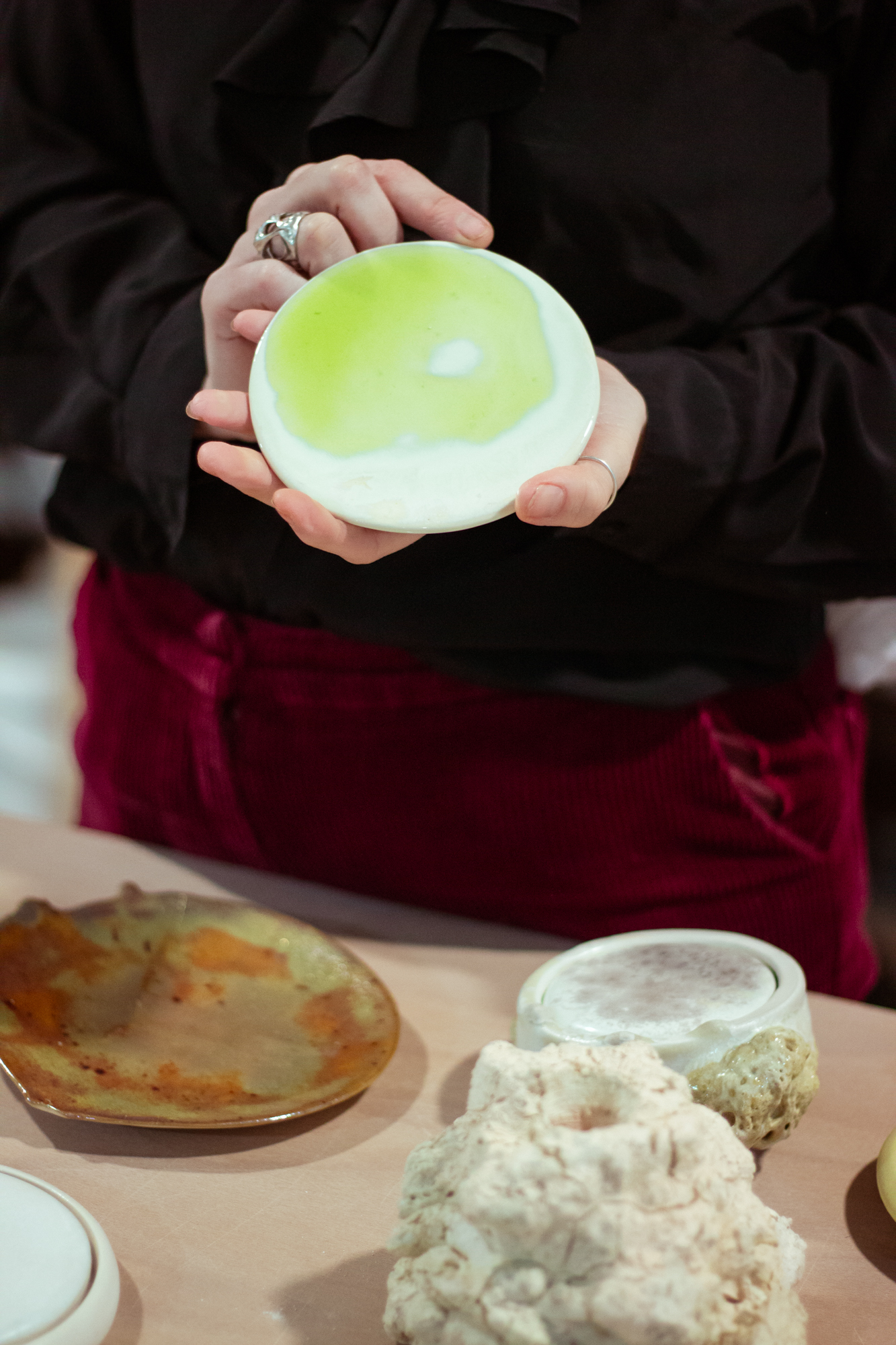
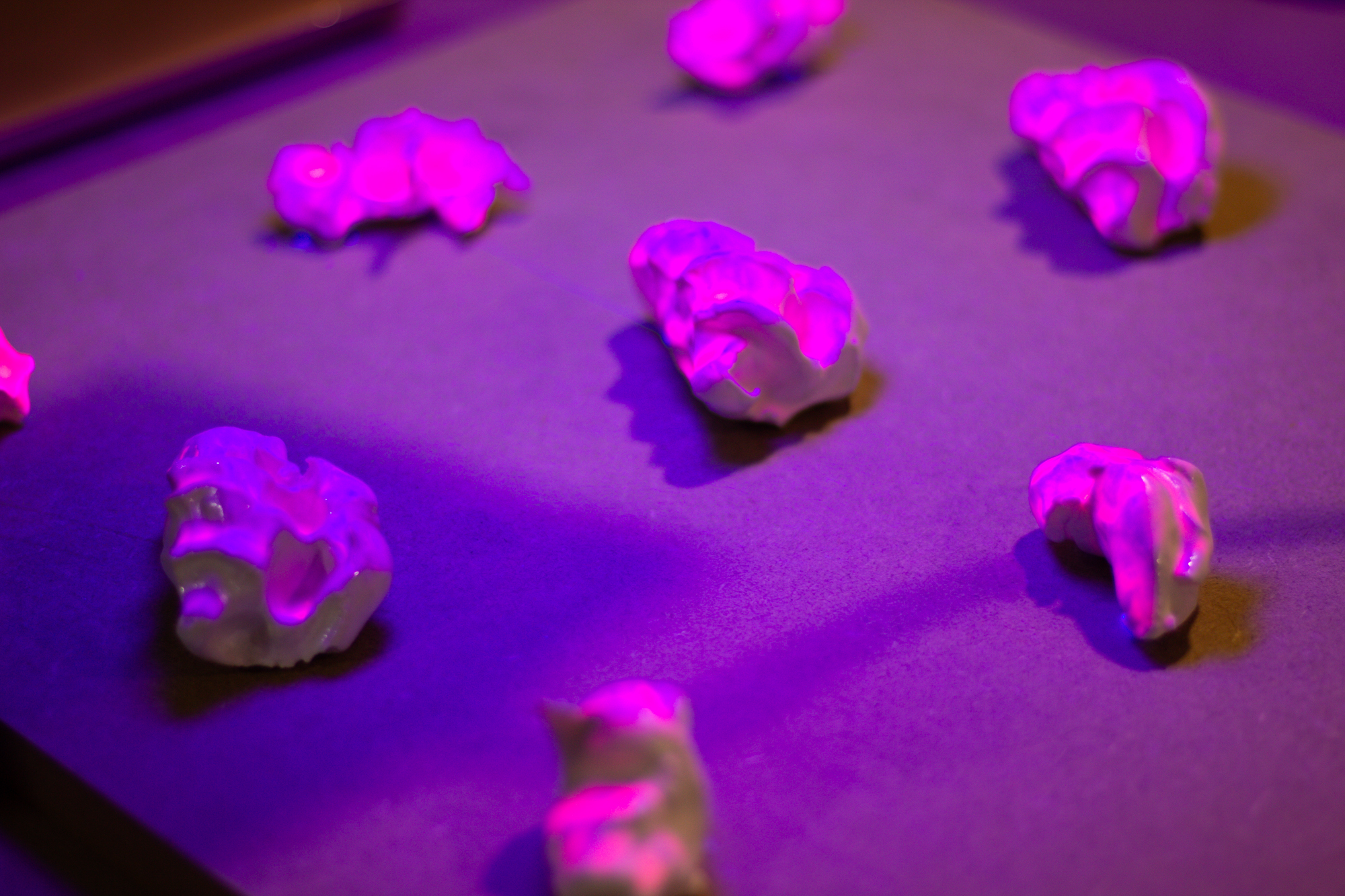
Following an exceptional year at County Hall Pottery, Charly presented her solo exhibition Lanthanides: Rare Earth Spectra in September 2026, showcasing the results of her residency and research into rare earth elements, ceramic materials and crystalline glazes. Her work explores the extraordinary effects of metals and minerals in ceramics, investigating their potential to produce remarkable colour, luminosity and light-reactive surfaces.
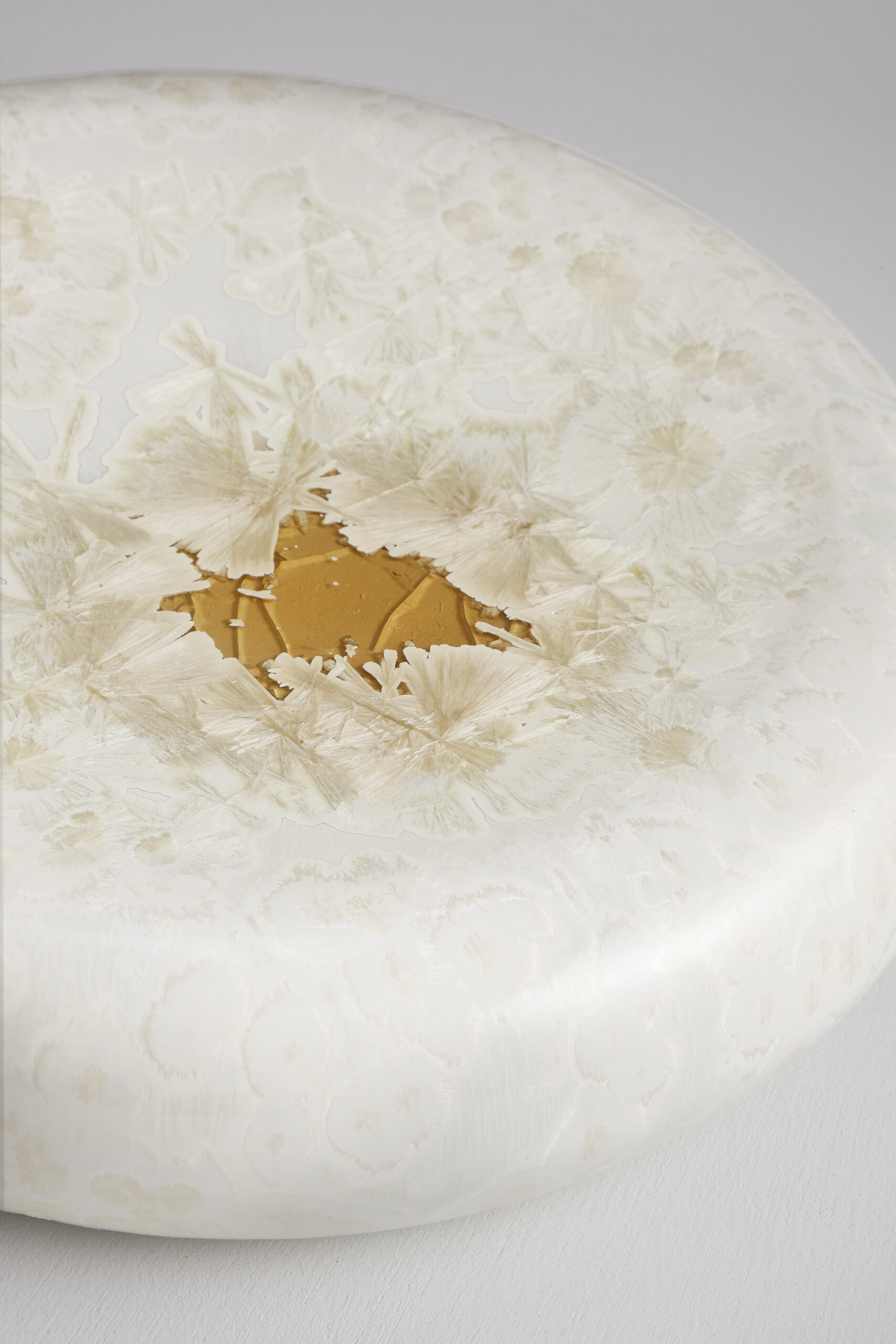
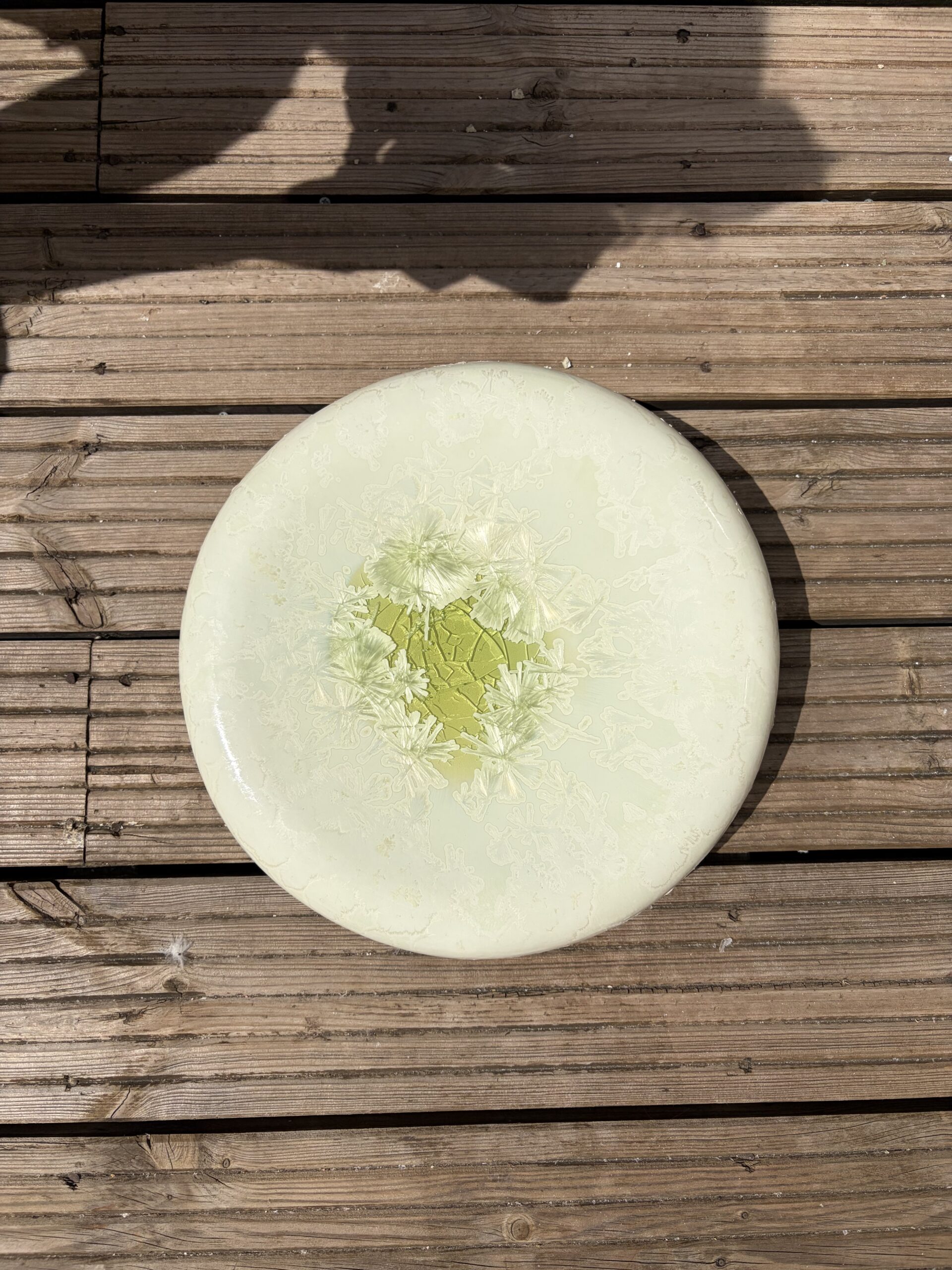
Building on this research, Charly will introduce participants to the principles and possibilities of crystalline glazing through presentations, demonstrations and hands-on experimentation. Participants will explore how different metal oxides influence colour, how glaze moves across different ceramic forms, and how crystals develop during the firing process.
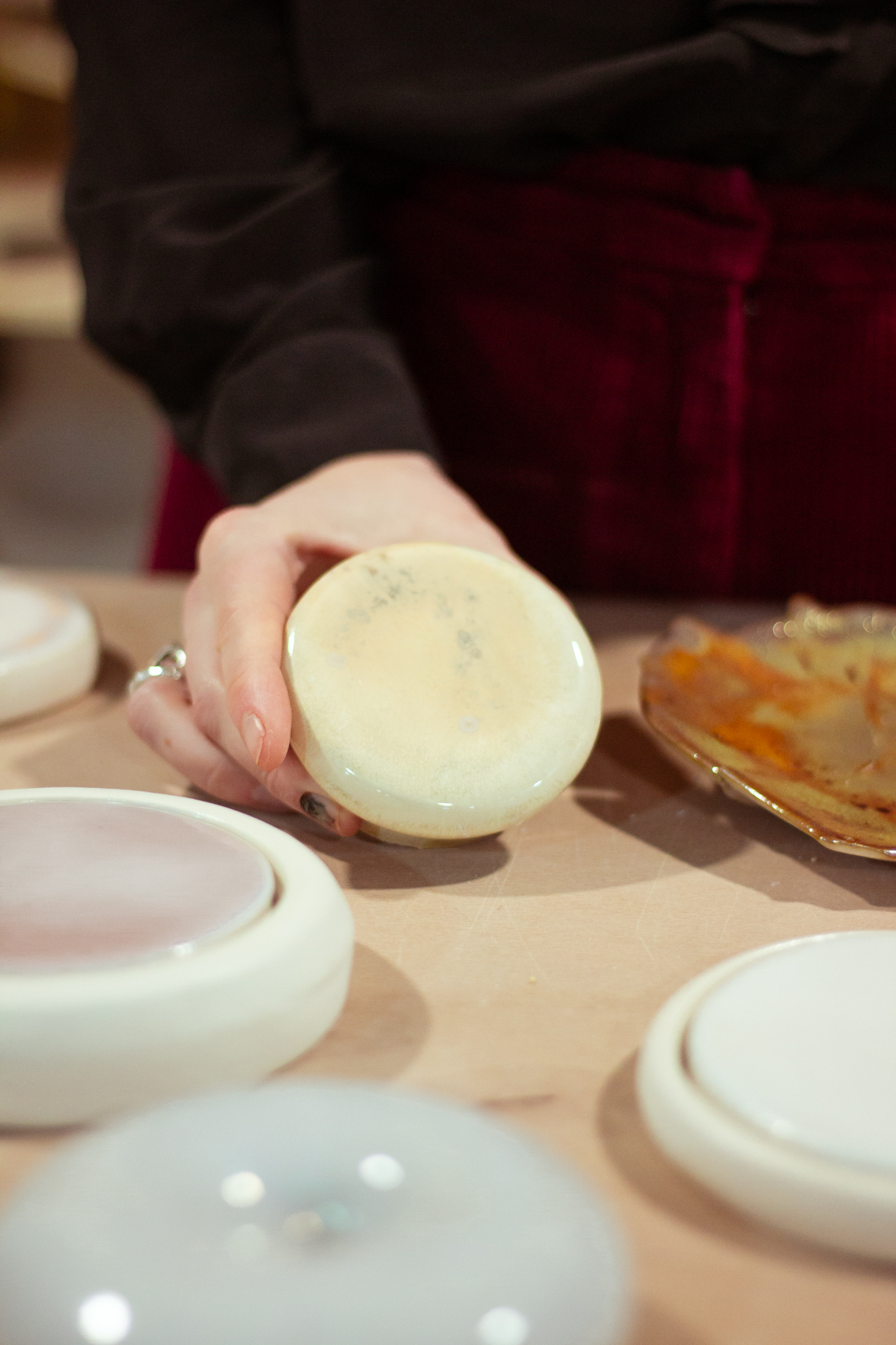
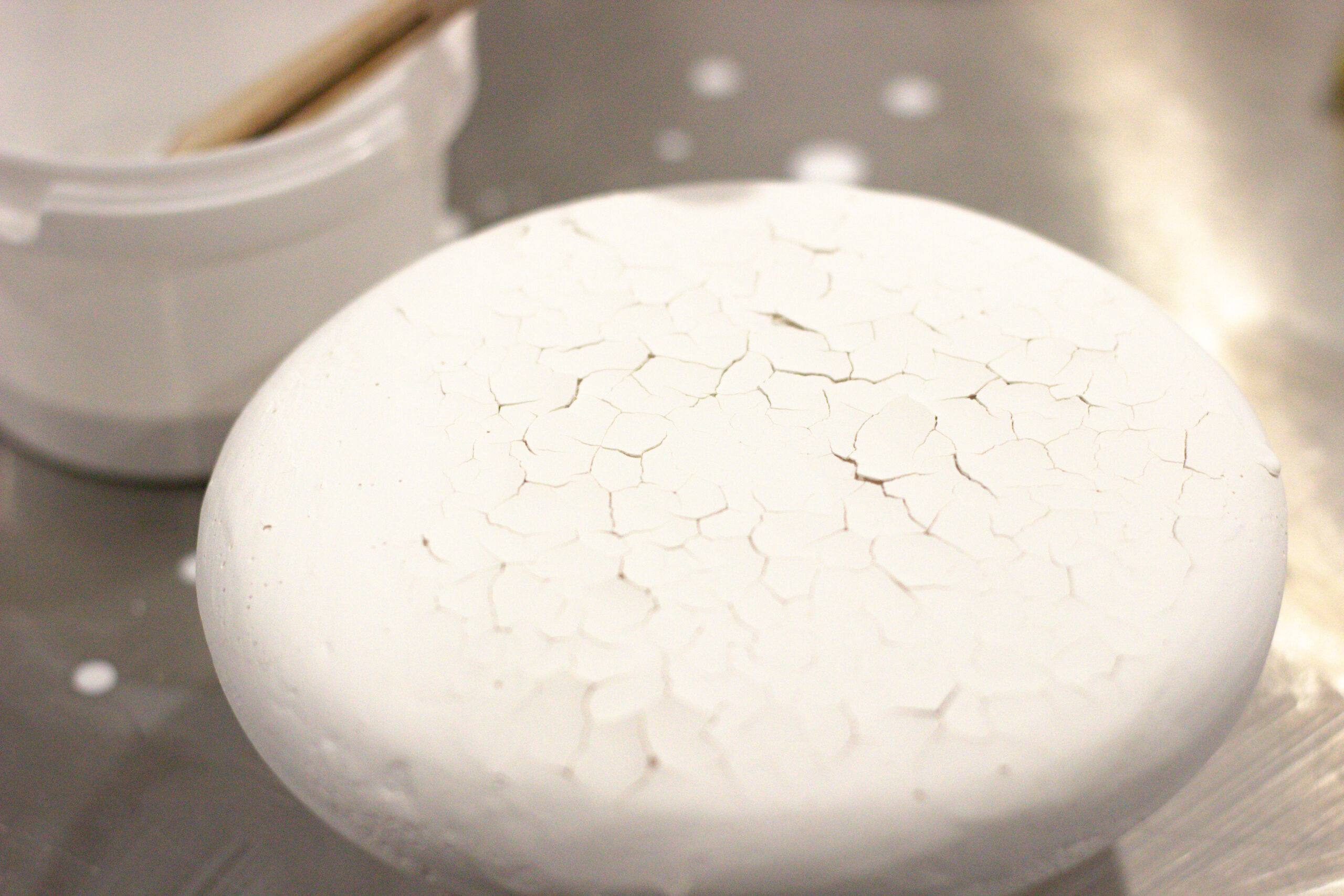
Working with a crystalline base glaze recipe, participants will prepare and apply different glaze mixtures to three specially prepared ceramic forms, investigating the relationship between composition, shape and firing.
Open to all levels, this workshop is particularly suited to curious makers interested in glaze chemistry, material experimentation and understanding how firing conditions influence ceramic surfaces. No previous experience with crystalline glazes is required, but an interest in the chemistry of ceramics and a willingness to experiment would be advantageous.
Course Overview
This practical two-day workshop focuses on exploring crystalline glazes through the relationship between form, glaze movement and kiln firing.
Each participant will work with three different ceramic forms, specifically prepared to investigate how crystalline glaze behaves across different shapes and surfaces. Through a series of experiments, participants will explore the effects of different metal oxides within a crystalline base glaze recipe, observing how colour develops and how crystals form during firing.
The emphasis is on investigation, observation and understanding rather than simply achieving a particular decorative result. Participants will leave with practical knowledge and a stronger foundation for continuing to experiment with crystalline glazes in their own practice.
What You Can Expect
Day 1 – Saturday 9 January
Schedule:
-
10:00–13:00 – Presentation and discussion
-
13:00–14:00 – Lunch break
-
14:00–16:00 – Glaze preparation, measuring and application
-
16:00–17:00 – Cleaning
Day 2 – Sunday 10 January
Schedule:
-
10:00–11:00 – Recap of oxide colours and form
-
11:00–13:00 – Glaze mixing and application
-
13:00–14:00 – Lunch break
-
14:00–15:00 – Glaze mixing and application
-
15:00–16:00 – Making kiln props and glaze catchers, and loading the kiln
-
16:00–17:00 – Cleaning
Firing and Results Analysis – Thursday 14 January
Following the workshop, the prepared work will undergo a dedicated crystalline glaze firing immediately afterwards. Participants will be invited to attend a follow-up session on Thursday 14 January, from 11:00–12:00, to examine and discuss the firing results. During this session, Charly will guide participants through an analysis of the finished work, discussing the development of crystals, colour variations, glaze movement and the influence of different glaze recipes and firing conditions.
What Participants Will Learn
By the end of the workshop, participants will have learned:
-
How to experiment with different metal oxides within a crystalline base glaze recipe.
-
How different metal oxides influence colour and crystal development.
-
How crystalline glaze behaves across different ceramic forms.
-
How the shape and surface of a ceramic object influence glaze movement during firing.
-
The principles behind crystalline glaze chemistry and crystal formation.
-
How and why crystals develop within the kiln.
-
How to measure, mix, prepare and apply crystalline glazes.
-
The importance of kiln props, glaze catchers and saggars when working with mobile glazes.
-
How firing schedules, including extended holding periods, influence crystalline glaze results.
-
How to observe, compare and analyse glaze results.
-
How to apply this knowledge to further experimentation and individual ceramic practice.
What Participants Will Take Away
Participants will take away:
-
Experience working with three different ceramic forms designed for crystalline glaze experimentation.
-
Their glazed experimental pieces following the dedicated crystalline firing (optional)
-
Practical knowledge of crystalline glaze preparation and application.
-
An understanding of the role of metal oxides in colour and crystal development.
-
Knowledge of the relationship between ceramic form, glaze movement and firing conditions.
-
Experience preparing kiln props and glaze catchers.
-
Individual guidance and feedback from Charly Blackburn.
-
A better understanding of how to analyse glaze results and develop recipes through experimentation.
-
New ideas and technical knowledge to continue exploring crystalline glazes independently.
Finished Work, Firing and Collection
Firing and collection details:
All ceramic forms provided for the workshop will be prepared and bisque-fired in advance by County Hall Pottery. Following the two-day workshop, all prepared experimental work will undergo a dedicated crystalline glaze firing immediately afterwards. Participants will be invited to attend the results and analysis session on Thursday 14 January, 11:00–12:00, to examine the finished work and discuss the outcomes with Charly.
The workshop fee includes the materials and firing required for the experiments.
Participants may also bring a small number of their own bisque-fired ceramic pieces to include in the experiments, subject to the requirements outlined below:
Please note the following requirements:
-
All work must be made from stoneware suitable for firing temperatures of 1280–1300°C.
-
All pieces must be bisque-fired before the workshop.
-
Work must be accompanied by appropriate glaze catchers and/or saggars.
-
The total volume of participants’ own work must not exceed W40 × D44 × H15 cm, including saggars and glaze catchers.
Participants wishing to bring their own work should ensure that their pieces are suitable for crystalline glaze firing and meet the size restrictions above.
Skill Level
Suitable for: All levels
Skill level notes: This workshop is open to participants of all experience levels. No previous experience of crystalline glazing is required. An interest in glaze chemistry, material experimentation and the technical aspects of ceramic firing would be advantageous. Participants should be curious, willing to experiment and interested in understanding how different materials and processes influence the final results. The workshop is particularly valuable for ceramic artists and makers who would like to expand their glazing knowledge and explore a more specialised approach to surface development.
About the Teacher
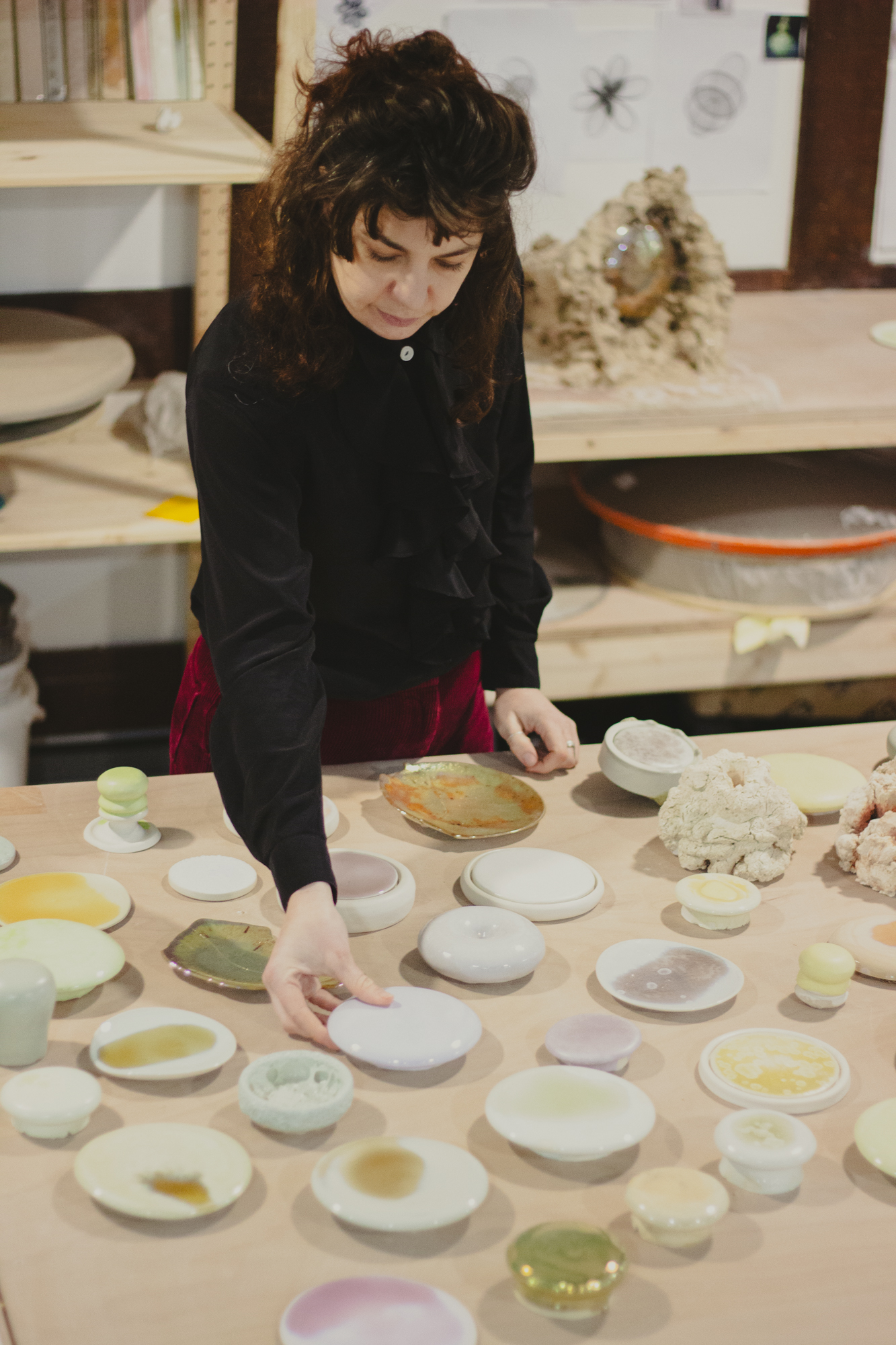
Charly Blackburn is a ceramic artist whose practice explores the disconnect between the resource superpowers on which modern technology depends and our collective material intelligence. Through ceramic sculpture and material experimentation, she celebrates the metals and minerals responsible for technological advancement while exploring their extraordinary effects in ceramics.
Originally from The Fens, Blackburn studied Performance Design at Central Saint Martins before completing a Master’s in Ceramics & Glass at the Royal College of Art.
Her work has been exhibited at Messums Gallery and the Art Institute of Chicago, and she has co-curated geological art exhibitions including Seismic Mother and Bog Bodies. Alongside her artistic practice, Blackburn has worked as a technical fabricator, design mentor and art conservator.
In 2026, Charly joined County Hall Pottery as our Potter in Residence. During her residency, she developed her research into rare earth elements and their applications in ceramic glazing, culminating in her solo exhibition Lanthanides: Rare Earth Spectra in September 2026.
Her funded research project, Developing Rare Earth Elements in Ceramic Glazing, investigates the use of rare earth elements within ceramics, exploring their magical, luminescent and light-reactive qualities alongside their wider social and technological significance.
Through her research and practice, Blackburn brings together material science, geology and ceramic experimentation, offering a distinctive perspective on the possibilities of glaze chemistry and the relationship between natural resources and contemporary ceramic making.
Website: www.charlyblackburn.com
Key Information / Practical Details
Dates: 9–10 January 2027, 10:00–17:00 Results session: Thursday 14 January 2027, 11:00–12:00
Location: County Hall Pottery, Belvedere Road, Waterloo, London, SE1 7PB
Duration: Two-day Masterclass + results and analysis session
Class size: Maximum 12 participants
Skill level: All levels
Materials and firings:: All included
Early Bird Price: £400 per person – until 16.12.2026 (all materials and firings included)
Price: £450 per person – after 16.12.2026 (all materials and firings included)