
Can you start by introducing yourself and sharing an overview of your artistic practice?
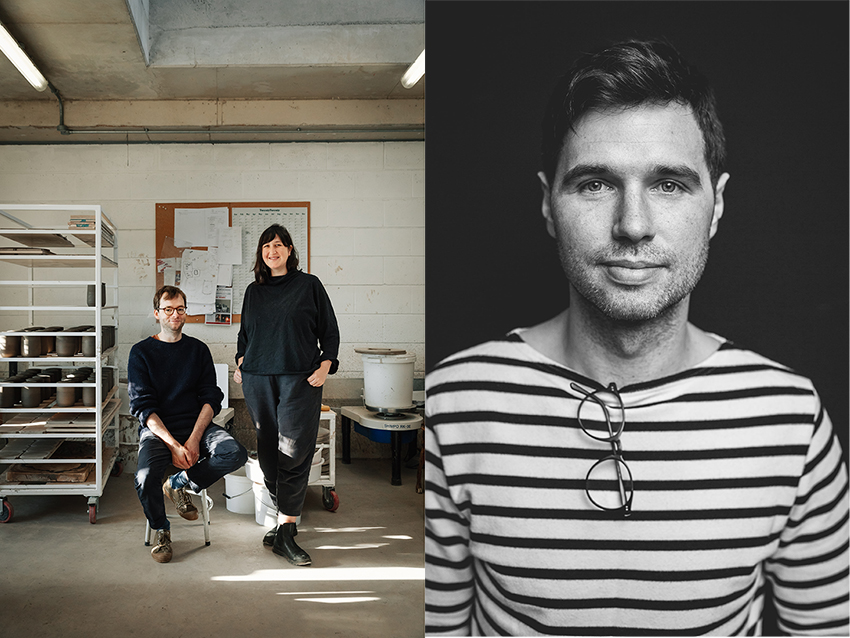
We are Catherine and Matt West, and we design and make by hand our line of tableware and wheel-thrown pottery under the name Pottery West. Whilst most of our practice stems around making functional plain glazed stoneware, we also work on material exploration, and more experimental pieces fired both in reduction and oxidation.
There were actually a few things that happened simultaneously that led us to pottery.
Despite us both being art graduates, myself in Fine Art and Matt in Design, we had never worked with clay until I moved to Sheffield and worked for a small business in the Yorkshire Artspace, where we had our first studio.
We both went to Art in Action at Waterperry House as part of my job, and Matt booked himself into a throwing lesson whilst I worked. Matt was a baker in those days, with very early starts, and as a way of spending some time together we took some pottery evening classes. That, alongside a love of cooking and a building a small collection of functional pottery ourselves, led us to want to make functional pieces primarily for our own satisfaction.
But over time it soon became a more consuming idea and something we both wanted to pursue together in a more professional capacity. It might seem strange to others, the idea of two people working on the same pots, but to us is quite natural. We felt like pottery had come to us out of nowhere, but in fact both Matt’s parents are artists, his father often worked with clay, and on his maternal side, we recently discovered an ancestry very heavy with potters, throwers and ‘clay labourers’!
What led you to explore ceramics? Was there a specific moment or inspiration that sparked your interest in working with clay?
I trained in Fine Art and Matt in Design at Goldsmiths and despite there being no ceramics in this chapter of our lives, some of the things we learned are certainly transferable. But we are mostly self-taught in ceramics with lots of help and support from other potters along the way.
In another life we would have followed a more straightforward route into pottery, a degree or apprenticeship perhaps, but it was one of those things that opened up to us later in life and, with both of us wanting to learn, it wasn’t financially feasible to pay tuition fees or take apprenticeships, especially as I was soon to have my first child.
Can you walk us through your creative process, from concept to completion?
When working on a new idea it usually begins with gathering – ideas teased out by sketching, found objects, passages from books – or if something functional, a series of rules or briefs of things we need to achieve. Often there is a lot of pieces thrown at this stage but not necessarily fired, then we narrow it down to a smaller number of pieces, continually tweaking and refining along the way. Because pottery is a slow craft, working on new pieces takes us months, if not years. In fact, some of the designs we’ve been making for years undergo tweaks all the time, so we are constantly refining and improving all the time – we respond to our material and our skills as these are our primary tools.
How central is community to your practice, and how does it shape your work? Where do you create your work? Could you share a bit about your studio or workspace?
Community is a large part of our practice in that pottery, whilst the practical aspect can be quite solitary, is actually quite a communal act, particularly when it comes to firing and knowledge sharing. One of the ways in which we were able to make a living in the early days was by building a presence on social media, so in a funny sort of way, the online community of potters and pottery enthusiasts has completely enabled our business. However, I would say that at the moment we are in different stage with our practice where we are working on ideas and exploration in a quieter, less public facing way, possibly because we have such a busy family life and our energy is elsewhere. The pottery community has always been kind to us, especially when exhibiting at fairs and events.
How did you both find each other to collaborate with on this project? Have you collaborated before together? Will you again?
We have known Ben for many years, as Matt was in a band and so was Ben and throughout the years we kept in touch. We really admire Ben’s work as a designer and we’ve been wanting to collaborate for a long time. This project has felt so natural, and we’d love to push some of the ideas a little further.
Do you have preferred techniques or materials you work with in ceramics? What draws you to these approaches?
Wheel throwing is our primary technique using stoneware. We mainly fire in oxidation but do occasionally gas and wood fire. We are drawn to traditional, slow-paced techniques which are process driven rather than conceptually motivated.
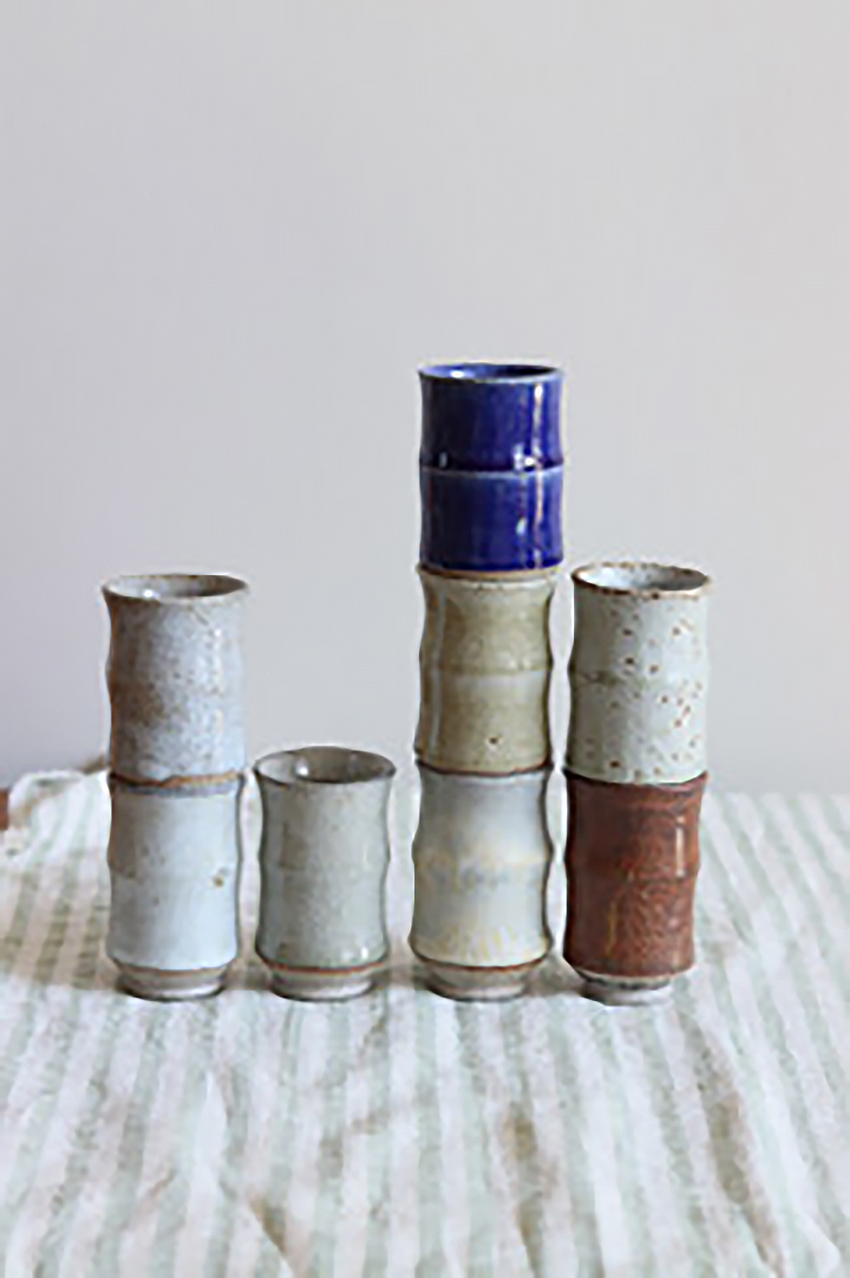
How would you describe the pieces you’ll be exhibiting at County Hall Pottery Gallery? What do you hope viewers take away from them? Can you talk about the specific materials and techniques you are using for this exhibition?
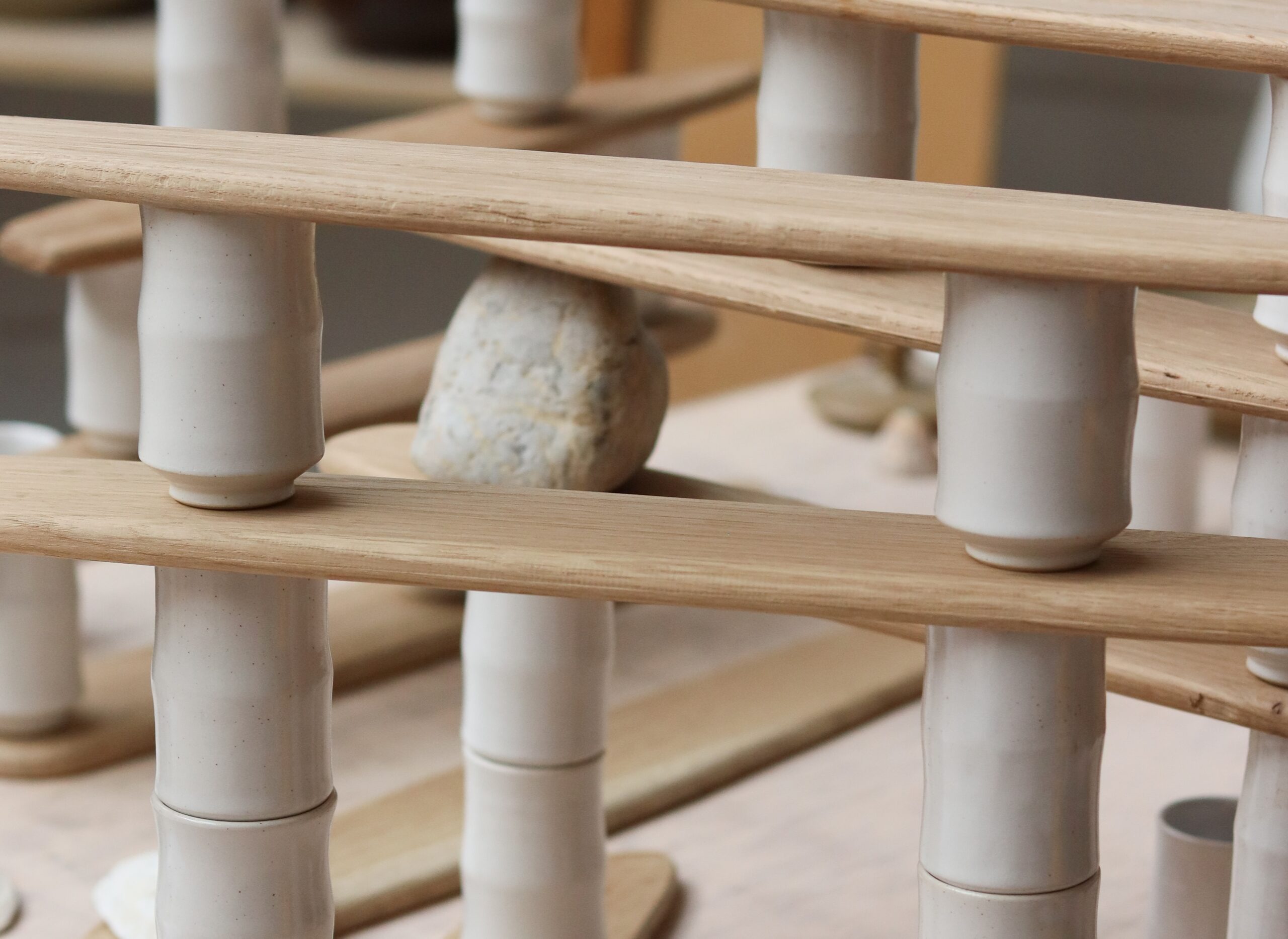
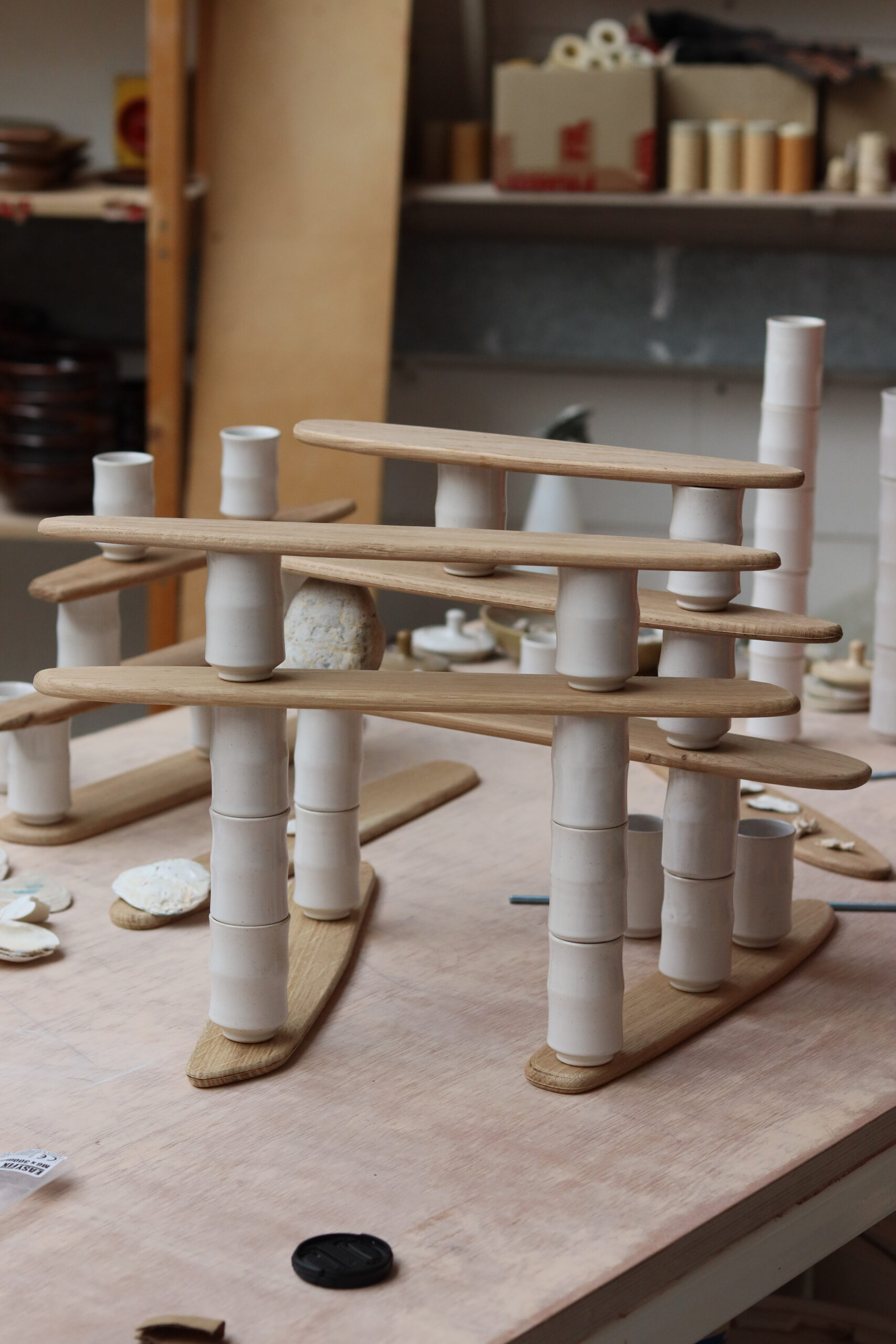
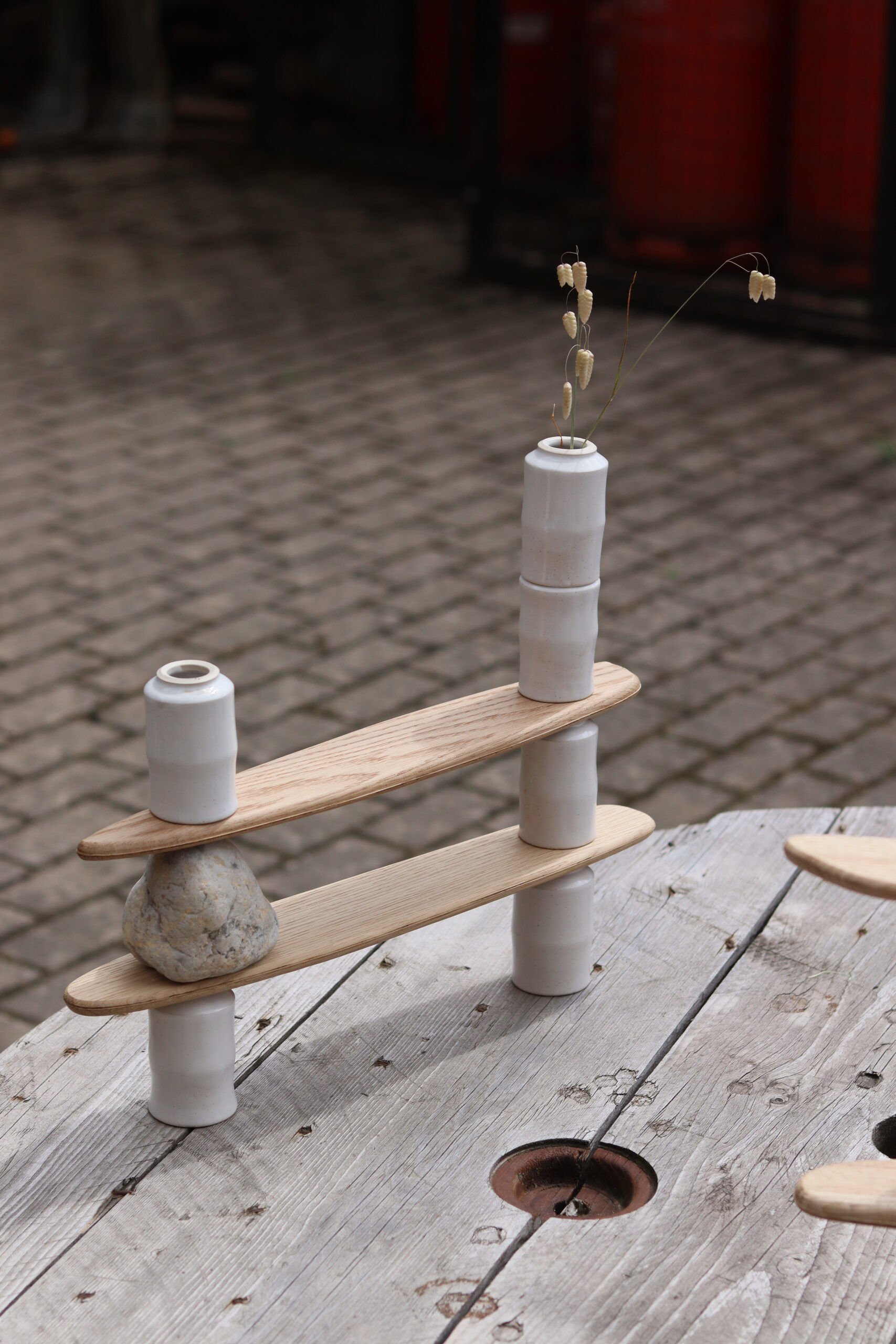
For County Hall we’ve taken a different approach completely. The idea for this project originally came from a conversation between ourselves (me, Matt and Ben) about areas of interest that, not surprisingly for two potters and a furniture designer, revolved around materiality and function. But from the very beginning we were united on the idea of combining ceramic and wood to create a modular / stacking sculptural system. Our initial exploration was to investigate the contrasts between notions of lightness and weight, fragility vs strength, organic and industrial and also ancient and modern. For inspiration we have referenced sculptors and designers Brancusi and Noguchi but also looked at children’s stacking toys and references from nature.
We took as a starting point some vessels we had been making in the studio for our glaze tests (image added above for info) and decided to make and fire a series of stackable versions, all glazed in white – a skeletal spinal column if you like – of uprights. Blades of oak, cut and sanded to an organic shape, like blades of grass, or equally, blades of a propeller.
Our next action has been to combine the two, creating a sculptural installation.
What are you currently working on? Are there any upcoming projects or exhibitions we should look forward to?
We are in the middle of making pieces for a number of restaurants and shops – none of which I can talk too much about unfortunately. In January we are planning on creating a gallery space within our new studio workshop and plan to host our first exhibition in the Spring.
The artwork of Pottery West and Ben Stanton is on display and available to purchase in our Collaborative exhibition. To take part in a County Hall Pottery exhibition or to speak to the team, please email gallery@countyhallpottery.com.