
Can you start by introducing yourself and sharing an overview of your artistic practice?
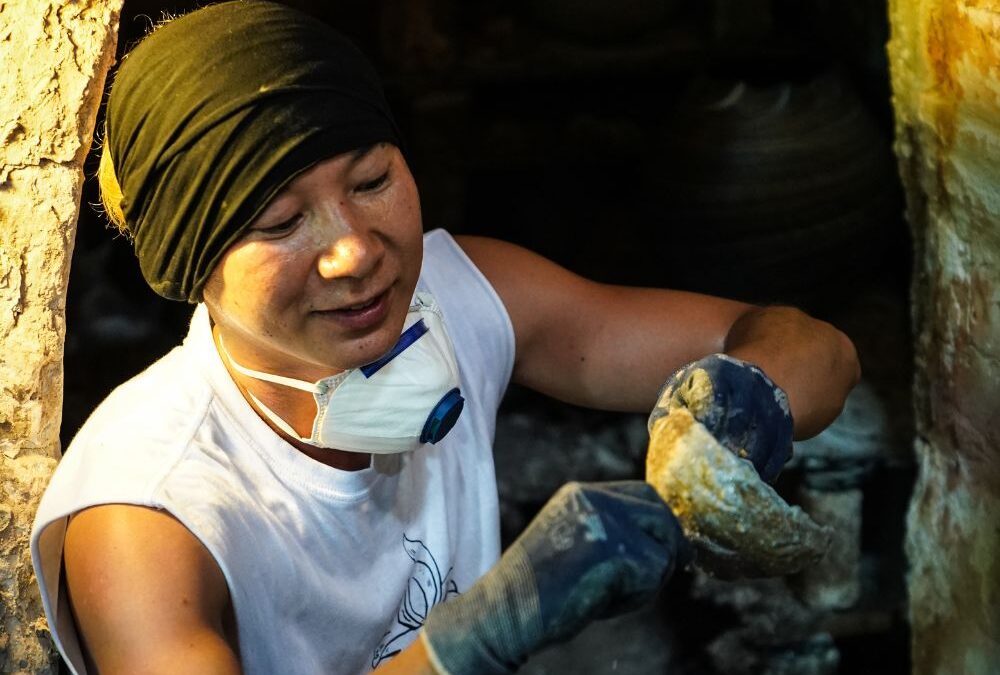
I was born into a family of potters here in Bizen, Japan, a town renowned as one of the six ‘ancient kilns’ and celebrated for its traditional, unglazed, high temperature fired pottery.
For my work, I use wood-fired kilns—both the noborigama, which is a multiple-chamber climbing kiln, and the anagama, a single-chamber climbing kiln.
My journey in pottery began with a four-year apprenticeship under Jun Isezaki, a Living National Treasure of Bizen. Following that, I spent time in the UK to learn different ceramic styles before returning to establish my own studio in Bizen. I have also had the honor of being the lead resident potter for the Anagama Project at the University of Oxford. There, I taught kiln building, firing techniques, and pottery making, while also giving lectures on my craft. A distinctive feature of my work, particularly my sculptures and vases, is the spiraling marks. This technique is uniquely inspired by my love for breakdancing as a teenager.
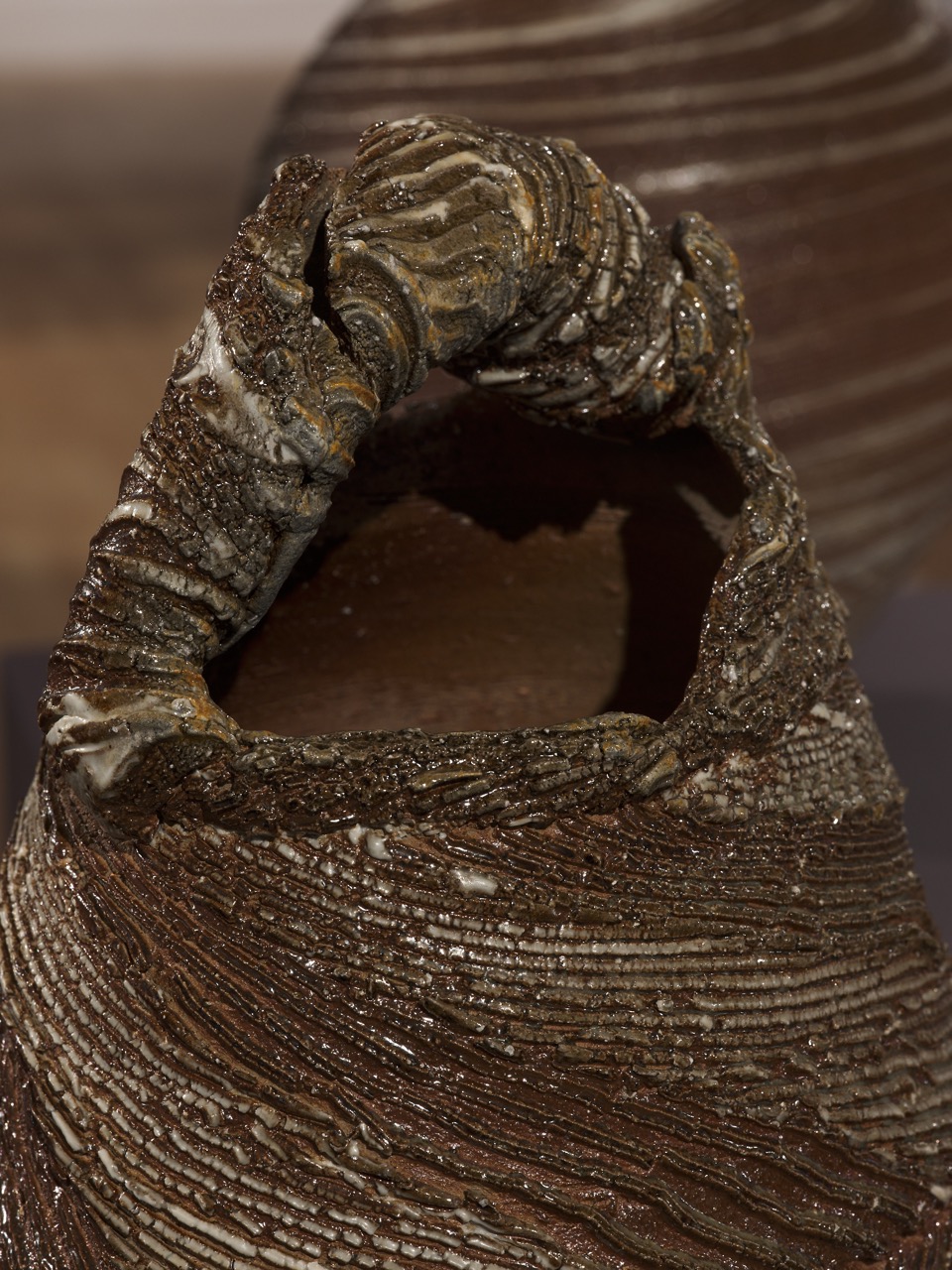
In keeping with Bizen tradition, I use a limited palette of materials—specifically, natural clay and natural ash glazes—to explore the rhythms and patterns of Nature. The contemporary forms of my pieces are a reflection of the primordial world: the rippled textures of the ocean bed, the tectonic shifts of a cliff face, and the marks left by ebbing tides on rock pools, pebbles, and seashells.
What led you to explore ceramics? Was there a specific moment or inspiration that sparked your interest in working with clay? Long story… or at least a long history.
When I started in ceramics, it was said that there were about 500 Bizen ware artists working in Bizen City. My father was also a ceramicist, and with friends also starting in the field, it was an easy environment for me to begin. After graduating from high school, I attended a technical school for ceramics. Having watched my father work since I was a child, I found that I improved more quickly than the other students. I was confident that I could make a living in the world of ceramics without any problems. Over the course of about 20 years since then, I have been able to broaden my work from traditional ceramics to ceramics as my own form of expression. I have now reached a point where I can choose the type of work I want to do.
How central is wood and alternative firing to your practice, and how does it shape your work?
In my hometown of Bizen, a pottery region with a history of wood-fired kilns stretching back about 1,000 years, using a makigama (wood-fired kiln) is a natural part of our environment. In my studio, I have three wood-fired kilns and do not use an electric kiln at all. Furthermore, because the firing process takes about one week, the wood naturally turns to ash, which colors the pieces. The smoke and the way the kiln is packed also create variations in the fired color, so I do not use glazes. What I am conscious of every time is that a wood-fired kiln is a tool filled with infinite possibilities that cannot be completely controlled. Therefore, I focus my work on the challenge of how I can manifest my own creativity by materializing it through my experience and skills.
Do you have an interest in the Firing process? Does the firing process affect the shape or material application of your work.
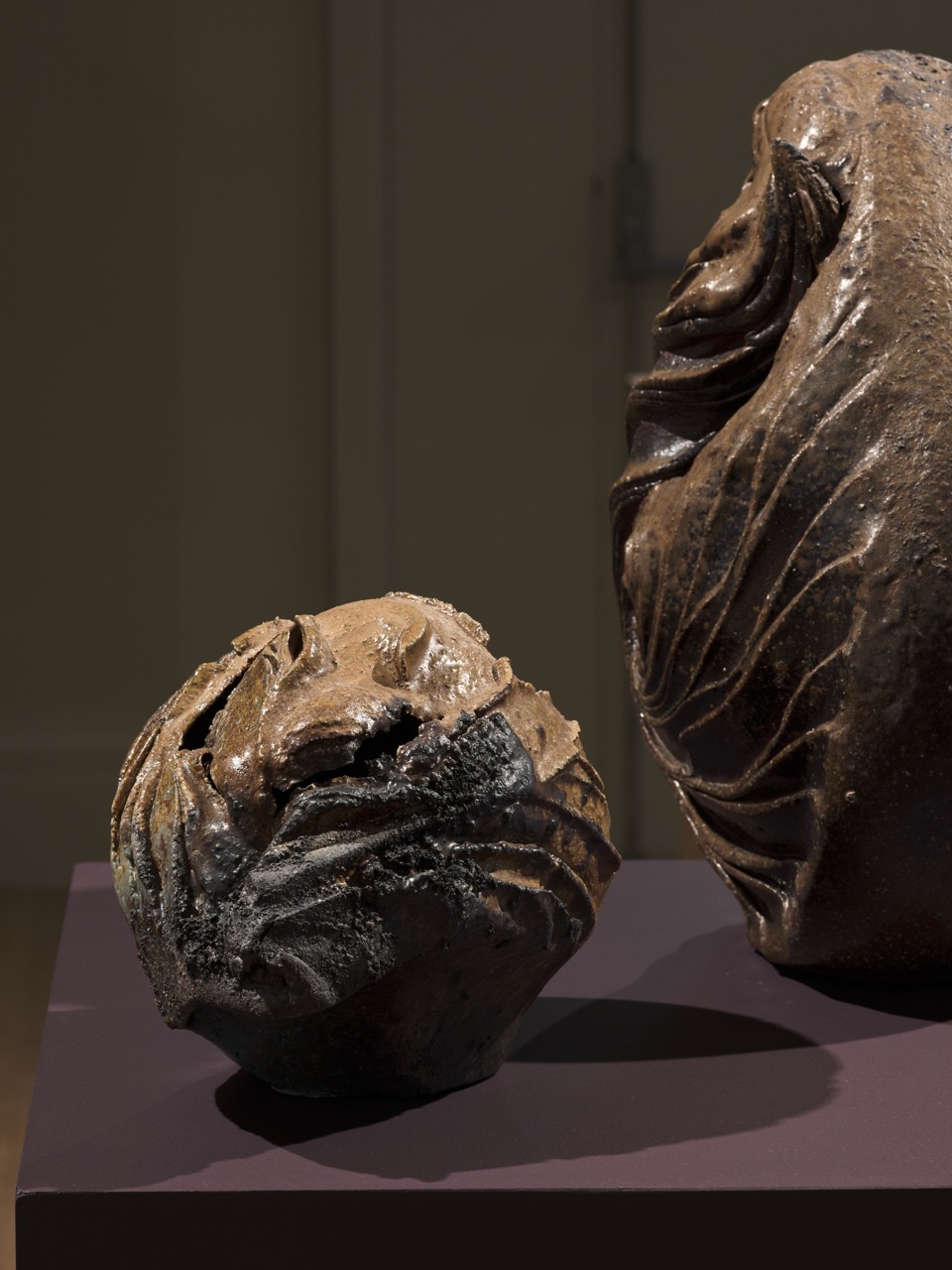
I believe the most fascinating aspect of a wood-fired kiln is its ability to produce work that transcends the imagination. At times, there are unexpected happenings. The beautiful gradations created by the effects of the smoke and temperature, and the way the natural ash glazes form, all change depending on how the kiln is loaded and fired. I do not have one particular favorite process. This is because from loading the kiln, through the firing, to the unloading, it is all a single, integrated workflow. Each time, my level of experience and my objectives are different.If I had to single something out, I would say that I look forward to being able to take on new challenges as I gain more experience and continue to grow.
Do you lend into the natural uncontrollable aspect of alternative (non electrical) firings or do you design your work to lend into the effects given?
My entire life has been deeply connected to wood firing. I was born into a pottery family and grew up in an environment where my father would fire a big noborigama kiln four times a year. This was my foundation. I built upon that by studying anagama firing for four years as an apprentice to my master, Jun Isezaki. So, for my entire pottery life, I have always used wood kilns. I am very proud of these skills, because my hometown, Bizen, has one of the deepest histories and most delicate firing techniques in the world. With this background, I would say I try to imagine the results very clearly for each work. Based on my experience, I often get around 80% of what I expected. The other 20% is the unexpected gift from the kiln, which is what makes this process endlessly challenging and beautiful.
Where do you typically find inspiration for your art? Are there particular themes or sources that resonate with you
When it comes to creating art, I’m particularly fascinated by natural forms. I’m drawn to the shapes and colors that emerge in specific locations, the forms created by centrifugal and propulsive forces, and the patterns that develop over time. I believe that in many cases, these natural occurrences are structured according to the golden ratio. I aim to express the inherent beauty of natural creations by focusing on the unique forms that can only arise in a particular place, the details that only a specific material can reveal, and by blending traditional techniques with my own experience.
Can you walk us through your creative process, from concept to completion?
My creative process is quite fluid. I intentionally don’t hold a detailed final image in mind from the outset. Instead, I cherish the evolving atmosphere as the artwork comes to life, keeping the completion constantly adaptable. Therefore, from the moment I begin preparing the clay, I engage deeply with the piece. Much of my work involves a dialogue between the material and myself, where we both yield to each other throughout the creation process.
Mainly, my studio in Bizen Japan.
How would you describe the pieces you’ll be exhibiting at County Hall Pottery Gallery? What do you hope viewers take away from them??
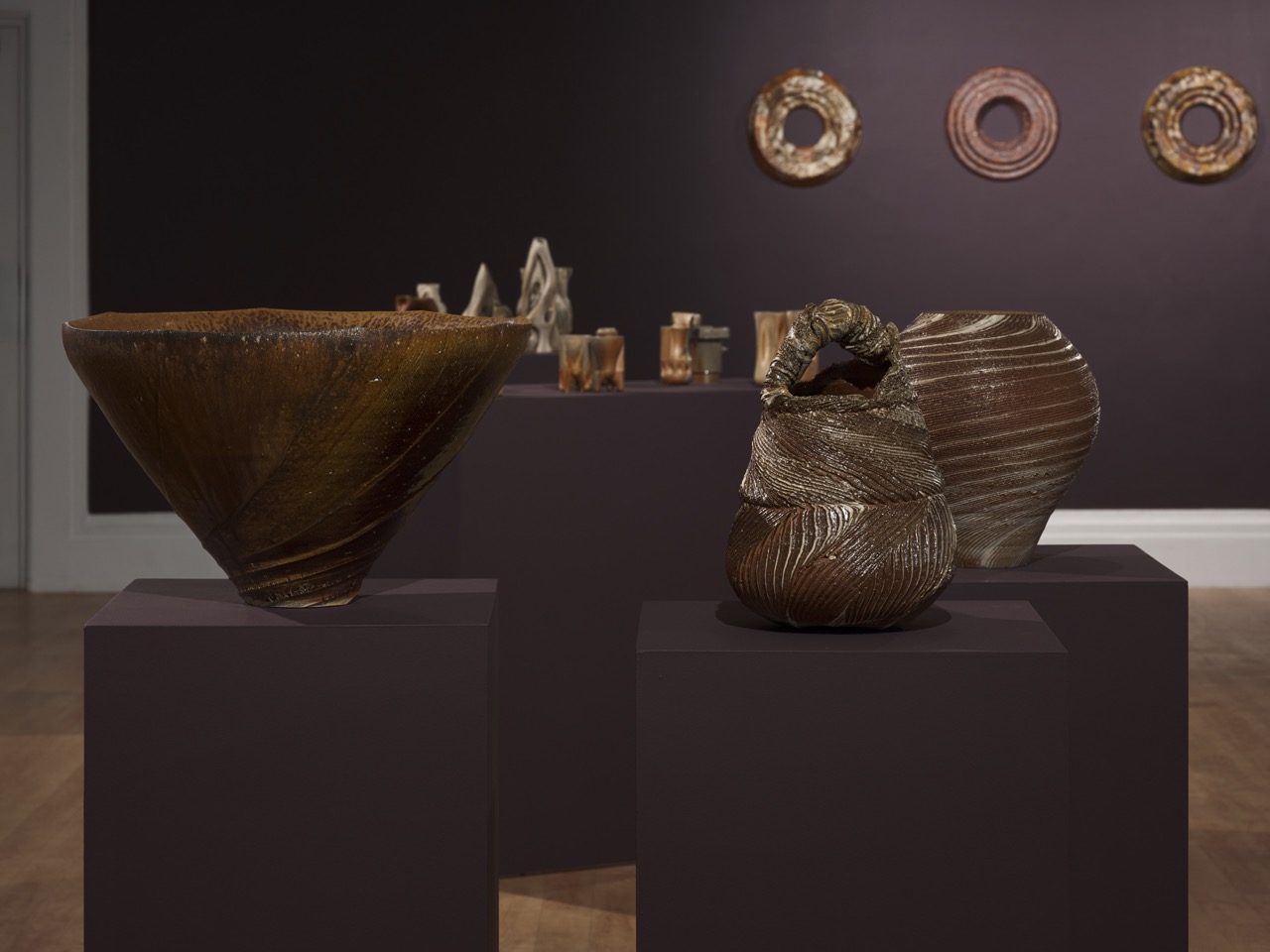
At the County Hall Pottery Gallery, I really want viewers to focus on the materiality of my work, especially the texture. Since I don’t use glazes, the texture becomes a crucial element, and it’s something I put a lot of care into. Clay is incredibly versatile and can be transformed into an infinite number of shapes, and I believe in exploring that boundless potential.
I also hope viewers appreciate the delicate landscapes that emerge from the firing process of Bizen ware. Each piece offers a variety of colors and tones depending on the viewing angle, and it’s important to understand that these are all achieved through the meticulous kiln loading and firing techniques. Ultimately, I want people to see and feel the depth that comes from working so intimately with the clay and the fire.
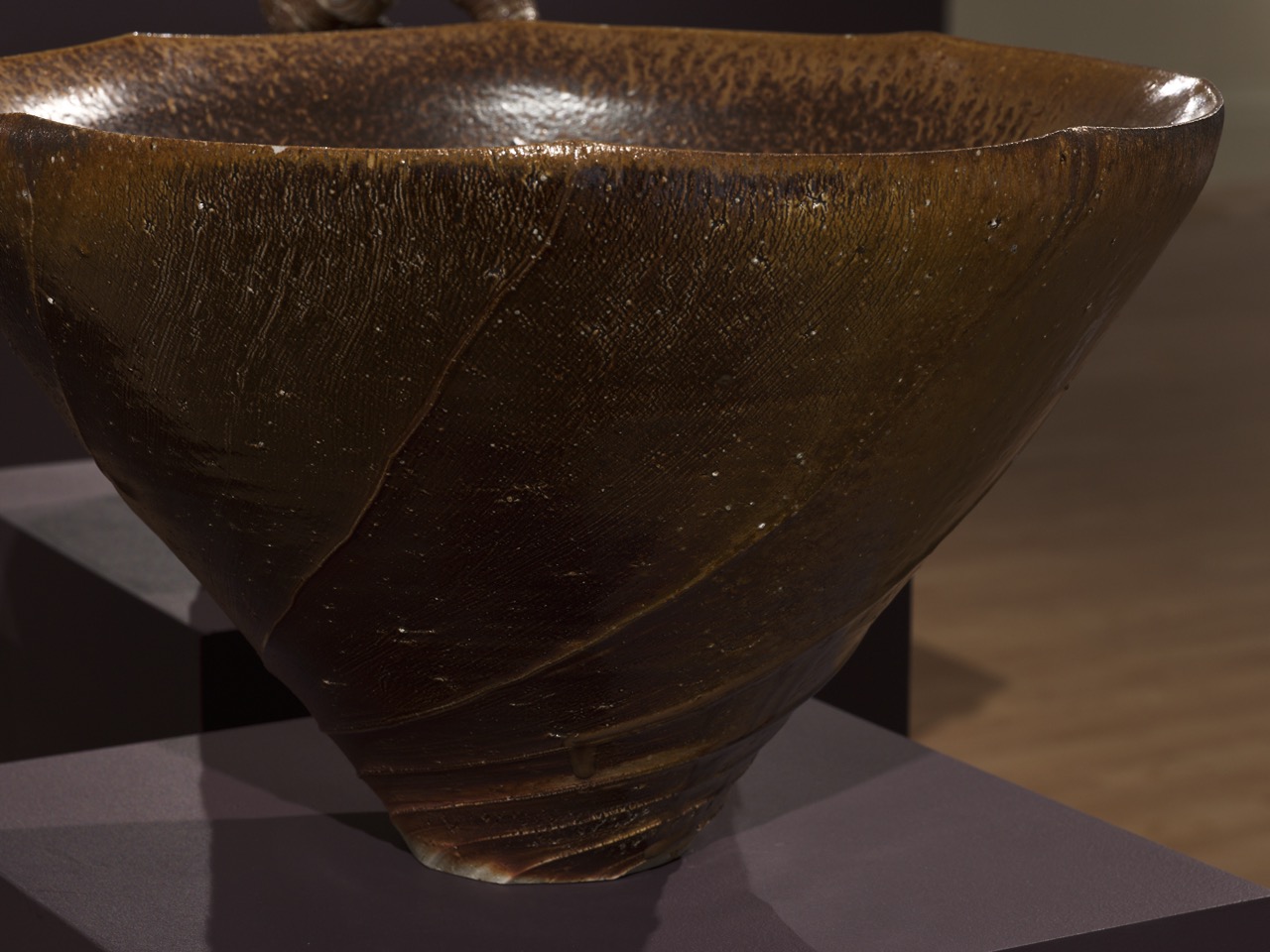
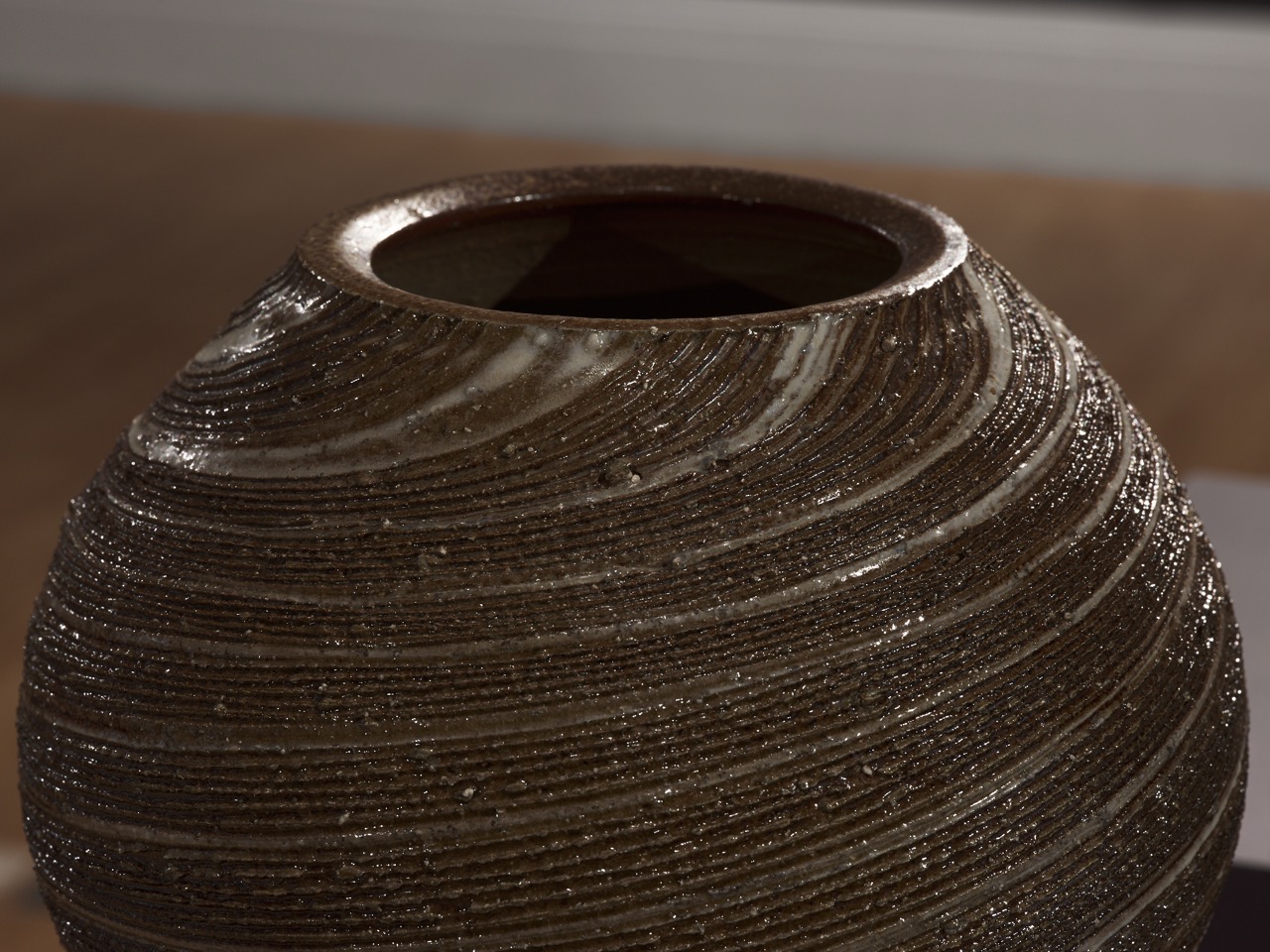
I have a unique technique I call “Raho,” or Spiral Technique, which I developed using an electric wheel. What I typically do is create a narrow cylinder and incise straight lines all the way along its surface. Then, I place my hand inside and push outwards, causing the cylinder to twist as it expands.
This technique actually originated from my teenage hobby: breakdancing. The dynamic, rotational movements of breakdancing inspired the spiral forms and the expansive energy I try to capture in my ceramic pieces.
What are you currently working on? Are there any upcoming projects or exhibitions we should look forward to?
I’m currently expanding on my “Raho” (Spiral Technique) in new ceramic pieces.
My goal is to broaden the scope of wood-fired kiln firings, seeking innovative approaches within traditional methods. I’ve also been fortunate to receive lecture invitations from around the world, and I’m looking forward to gaining new experiences and inspiration from those opportunities.
Next year, I’ll be launching wood-firing workshops right here at my studio in Bizen. Be sure to keep an eye out for those!
To take part in a County Hall Pottery exhibition or to speak to the team, please email gallery@countyhallpottery.com.