
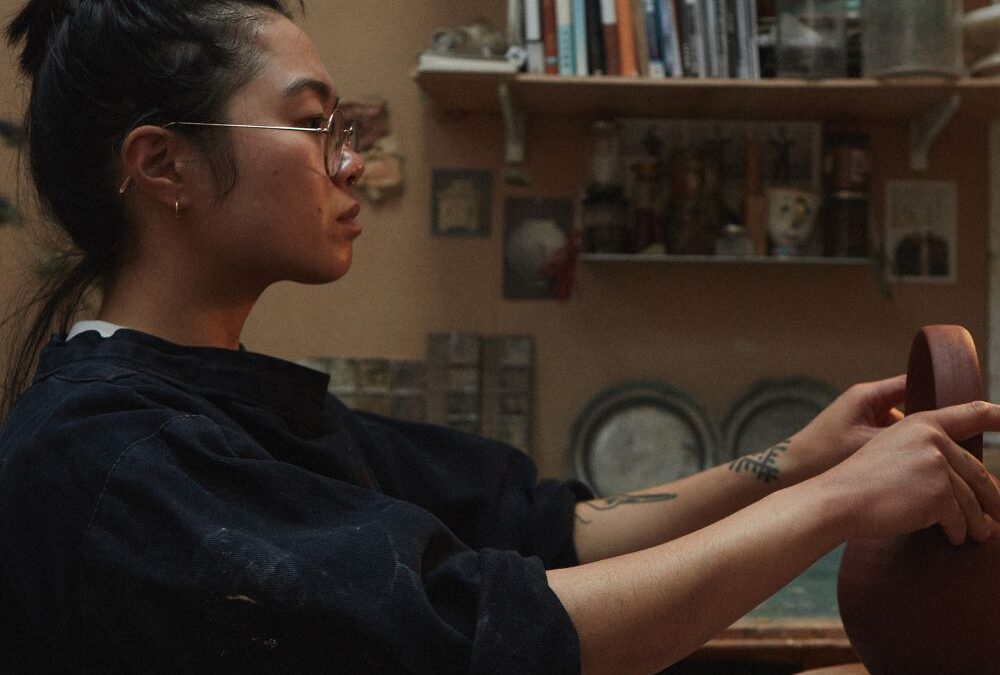
Can you start by introducing yourself and sharing an overview of your artistic practice?
I am a studio potter making high fired mostly functional ware currently living and working in Oxford. I have studied ceramics at Clay College in Stoke On Trent and was selected as a 2019 Daiwa Scholar enabling me to undertake an apprenticeship at Mitoh Kama in Karatsu, Japan. I am interested in patterns that are found in nature that have subtlety and variation. To achieve this I uses natural materials like ash, found clay and rocks. The pots are then wood fired which creates additional volatility in the atmosphere in the kiln creating unexpected and nuanced surfaces. With my work I am looking to enrich people’s lives in a little way every day, hoping to bring joy to the quotidian and exalting the domestic. I like to observe how people use and make use of the things they have, the things they make their favourites and the stories they tell behind them. How those objects become stories and the stories become history.
What led you to explore ceramics? Was there a specific moment or inspiration that sparked your interest in working with clay?
I wanted to work with my hands after finishing a degree that I had found rather too cerebral. After this period of intense anxiety I wanted to ground myself in the stuff of the earth, in placing my hands in these naturally plastic bits of decomposed rock and being able to leave my mark, mould it into what I wished. I’m not so insistent on needing to leave a mark these days, I actually think I need to tread rather lighter on the earth now, but the joy of making remains to me. Two years after I started, I think I was 24, and decided that if I wanted to do this properly I needed to invest in myself and my education and ground myself properly with a good foundation of skills and knowledge, and applied for Clay College.
How central is wood and alternative firing to your practice, and how does it shape your work?
It is central. If I could I would wood fire everything I make, but practicalities at this stage make that prohibitive. One day I’ll have my own kiln but for now I travel round the country firing wherever gives me an opportunity. I don’t think you can achieve these sorts of surfaces any other way, and although I have incorporated salt firing as well into my practice lately, wood firing still excites me more than anything else.
Do you have an interest in the Firing process? Does the firing process affect the shape or material application of your work.
I have a great interest in the firing process. Wood firing bestows the most beautiful surfaces onto pots with variations in colour and texture on different sides of pots that you can only get from this sort of process, and that are affected by the most spontaneous and whimsical of factors such as the kiln pack, the type of wood you are burning; different trees pick up different minerals and give different ash effects; even the weather can affect your firing. Burning wood not only produces heat, it also produces fly ash and volatile salts. Stoking occurs around the clock until a variety of variables are achieved; including the way the fired pots look inside the kiln, the temperatures reached and heatwork sustained, and the amount of ash deposited. Wood ash settles on the pots during the firing, and the complex interaction between flame, ash and the minerals of the clay body form a natural ash glaze. This glaze may show great variation in colour, texture, and thickness ranging from smooth and glossy to rough and sharp depending on the type of wood burnt and the way the kiln is fired. The placement of pieces within the kiln also have a great impact, as pots closer to the firebox may receive heavy coats of ash or even be submerged in embers, while others deeper in the kiln may be just softly brushed by ash effects. The pots’ different positionings in the kiln means factors such as temperature and oxidation/reduction can differ also affecting the end result on surfaces. Additionally, the way pots are placed in relation to each other affects the flame path, and thus even the appearance of pots placed in the same parts of the kiln can still vary. When loading the kiln, one must imagine the flame path as it flows through the kiln and with this awareness, try to paint the pieces with fire.
So you must consider the clay and any slips carefully as they will produce different matrices with the fly ash and produce different surfaces. If used, glazes must be chosen equally carefully to withstand the heatwork and enhance the process, not obscure it which they can easily do. You must think about how many pots you have of complimenting shapes that will create interesting packs in the kiln, although this is difficult sometimes in group firings.
Do you lend into the natural uncontrollable aspect of alternative (non electrical) firings or do you design your work to lend into the effects given?
Yes, I embrace the unpredictable nature of the process, but I choose my materials and forms carefully to enhance and show off the process to its maximum potential, which is a form of controlling the uncontrollable.
Where do you typically find inspiration for your art? Are there particular themes or sources that resonate with you
I am constantly thinking about how people use and interact with objects. I want to enrich people’s lives in a little way every day, bringing joy to the quotidian and exalting the domestic. Think of the different experiences you have when drinking tea out of a polystyrene cup or your favourite mug. I want to make that which becomes the favourite, give you that feeling of coming home by using the objects that just makes sense to you. So I like observing how people use and make use of the things they have, the things they make their favourites and the stories they tell behind them. How the objects become stories and the stories become history.
Can you walk us through your creative process, from concept to completion?
I sketch artefacts in museums and galleries, but rarely sketch out forms I intend to make before I make them. I prefer to “sketch” on the wheel trying out a number of subtle variations in form of an object before I settle on one to make a batch. If it is a one-off unique piece I tend to try and compile all my ideas and imagery first in my mind or on paper and then still put down the final form only in clay, trying out things that seem right at the time and keeping the making fairly fluid. I always consider the firing process at the beginning to decide my materials, and the form depends on materials, and the finish I decide (glaze or no glaze, where it goes in the kiln) depends on the form.
Where do you create your work? Could you share a bit about your studio or workspace?
My studio is one in a complex of artist studios in Cowley. I’m very lucky to have found it when I did, just after a renovation so there were a few empty spaces as all the artists had had to vacate. There is a waiting list now and normally. I have my own little studio space but have my gas kiln outside in the courtyard and have the use of an electric kiln as well down the hall. There is also a space available for artists to use as exhibition or workshop space which is great for holding larger sessions for more people to attend workshops. There are skylights in the recently put in roof which lend great natural light and all of the top bit of the studios are open above the partitions so anyone else who is in can also enjoy (or endure) the music I am interminably playing.
How would you describe the pieces you’ll be exhibiting at County Hall Pottery Gallery? What do you hope viewers take away from them??
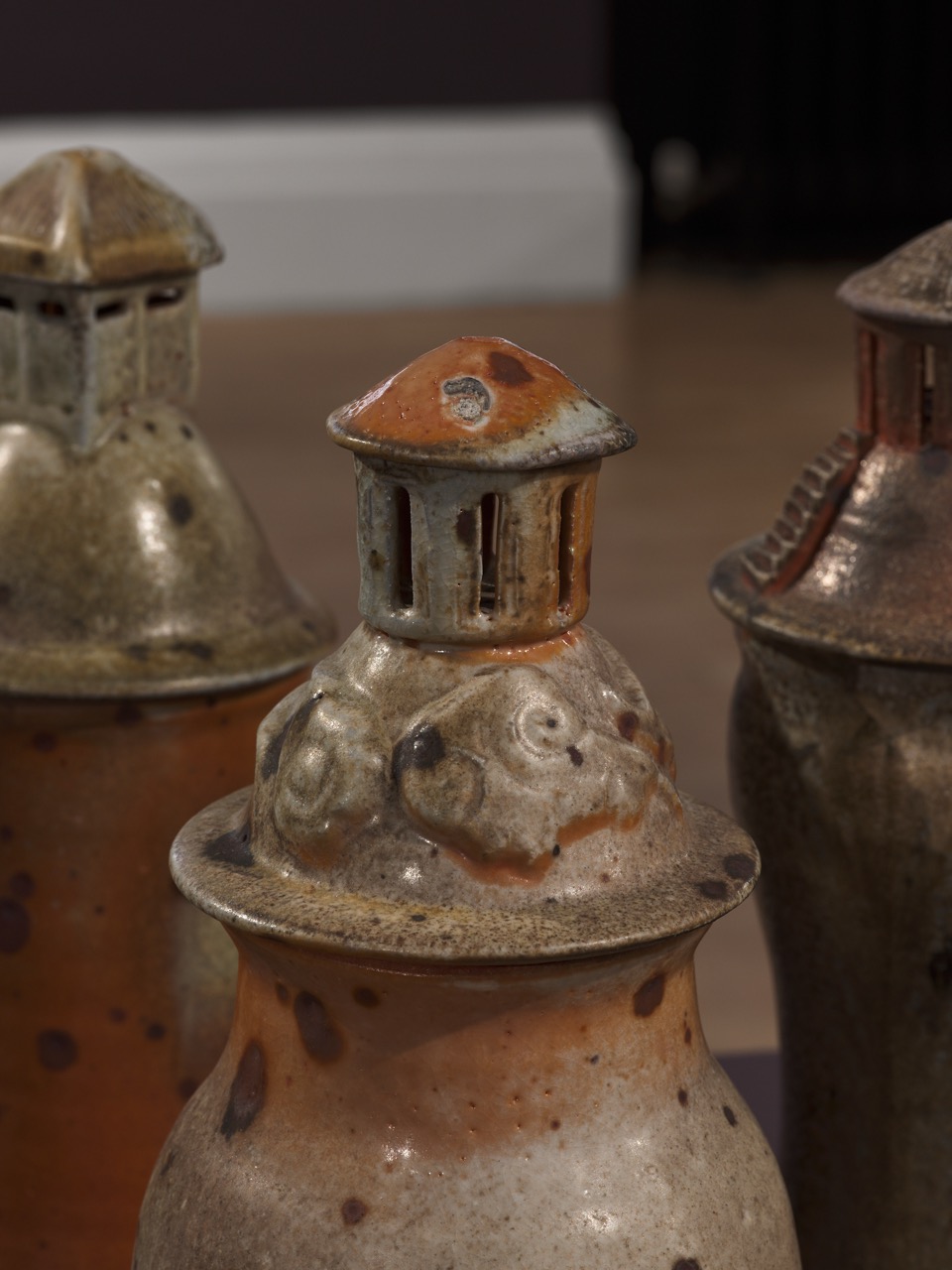
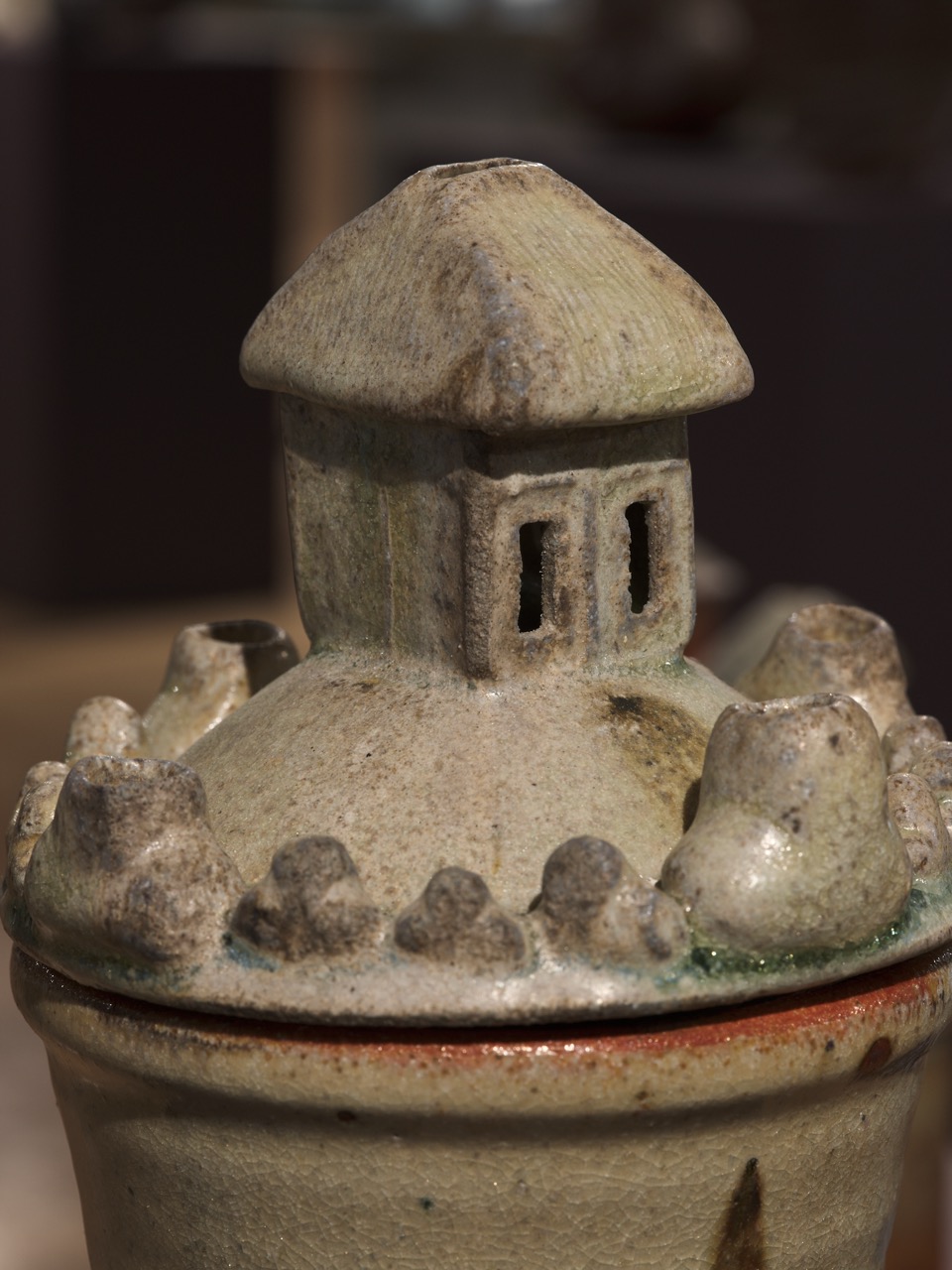
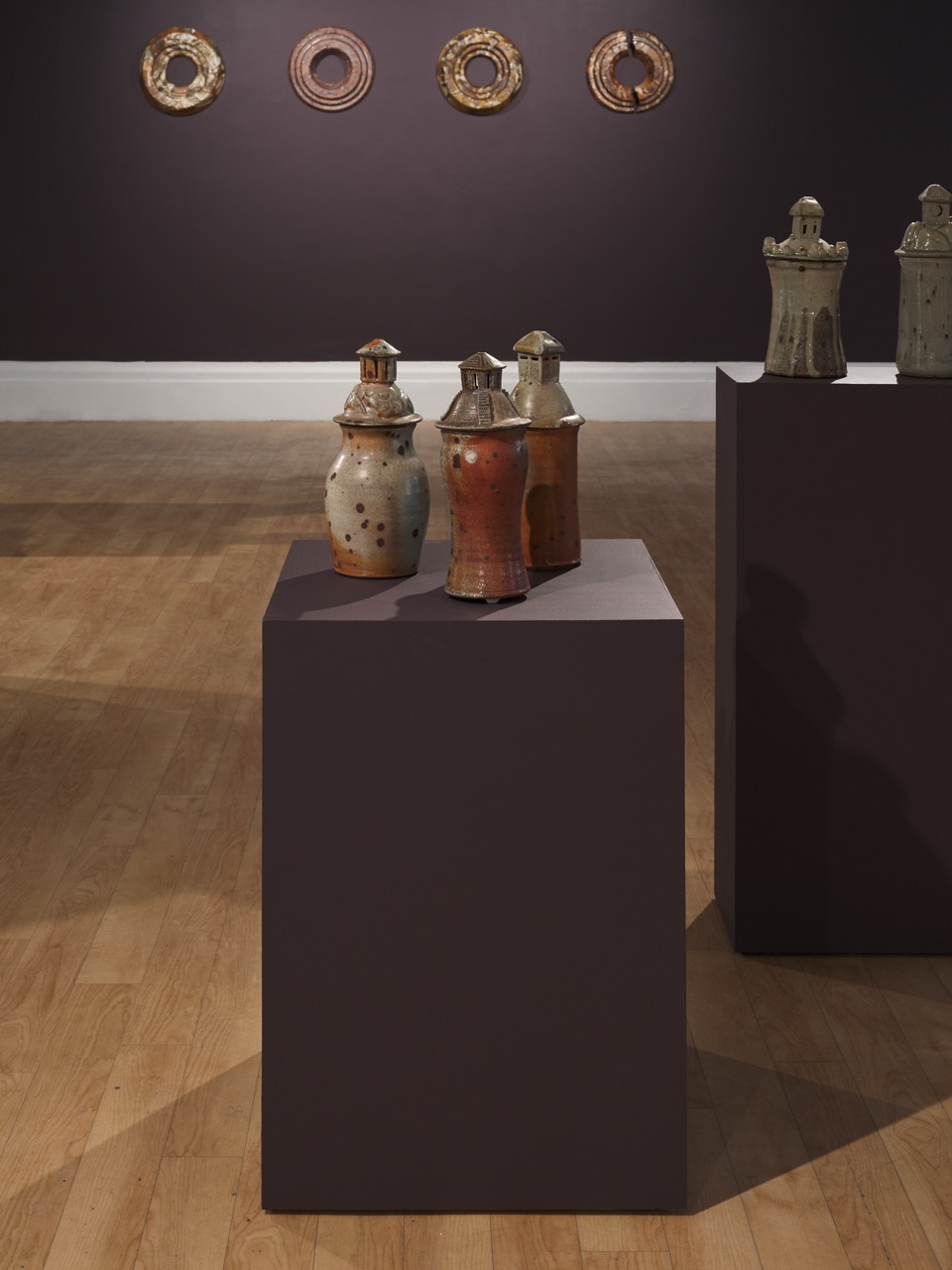
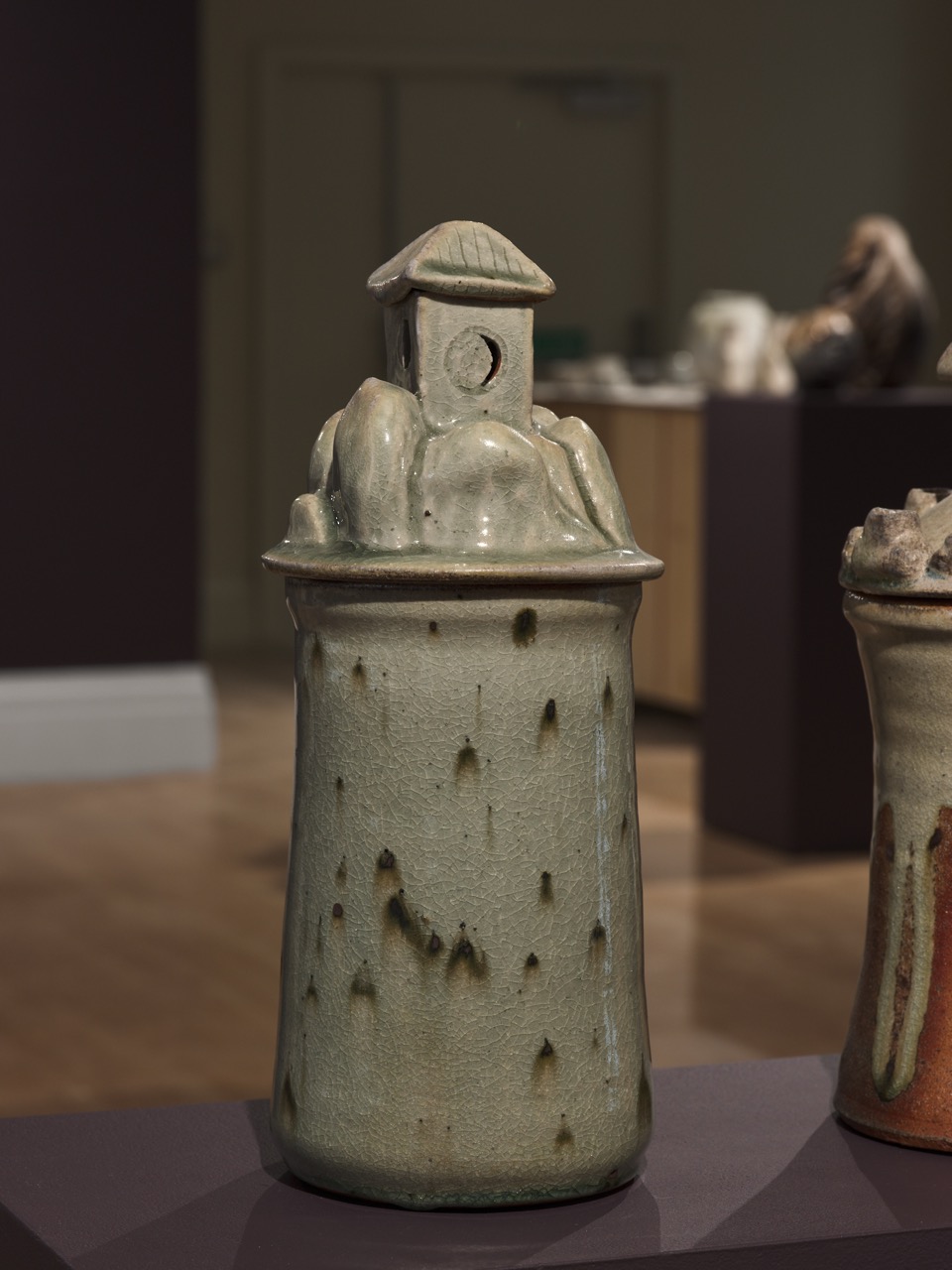
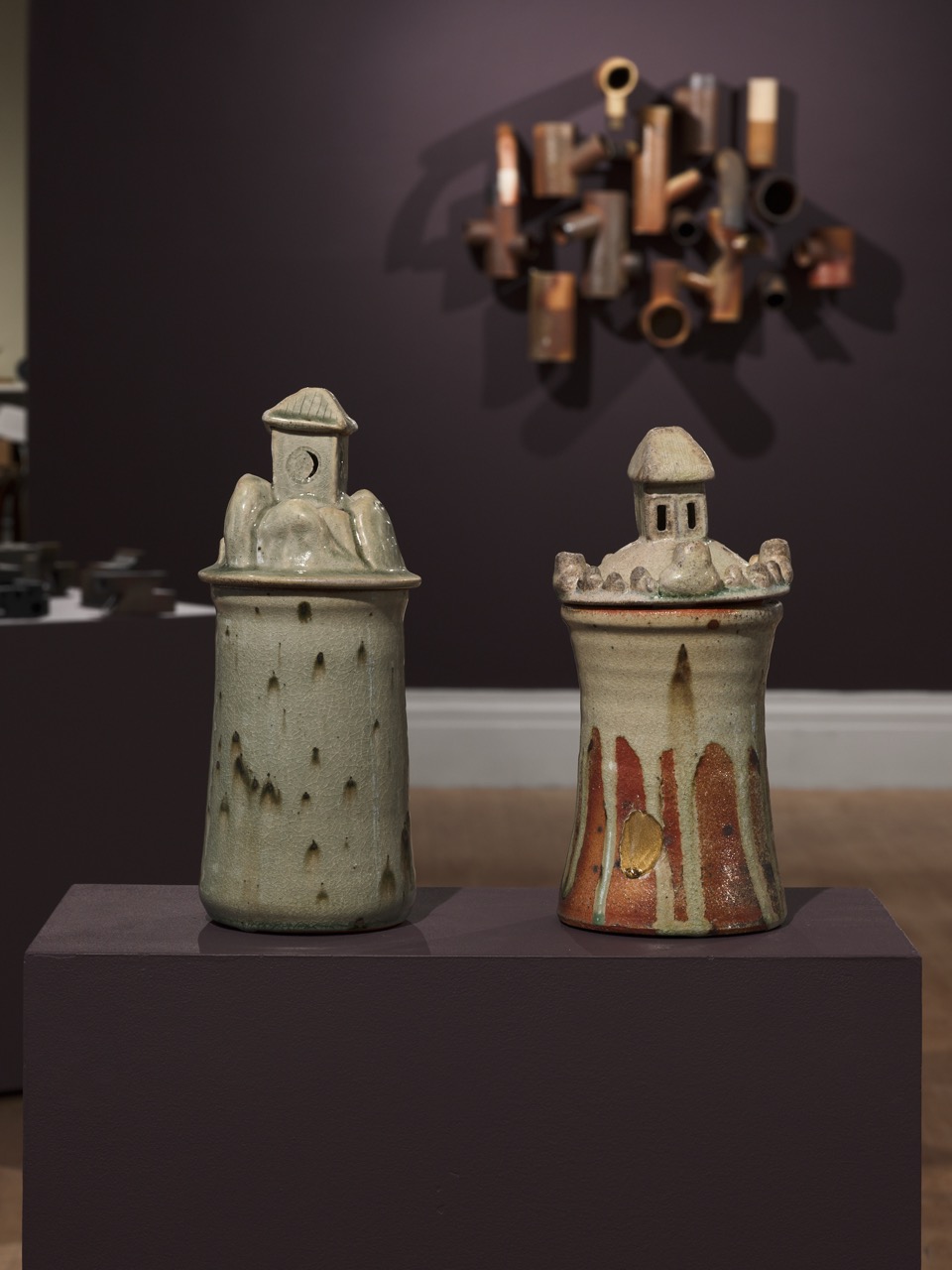
The group of vessels are ritual vessels to as yet unassigned rites. They have the function of a vessel with all those connotations and the lid for all of them has a house as its finial. The house itself is a vessel as well, symbolically and literally. It is for burning incense. The roof is removed and an incense cone is placed inside and lighted. The smoke comes out of the chimney giving life to that small image of the domestic, a home not just a house. One of the vessels has 4 candle holders on the lid too; another potential for ritual. These vessels are bestowers of ritual, giving ritual significance to the contents of the vessel, whatever that may be, as the smoke sanctifies and formalises the storage of these contents with the multitude of sensory associations with rite. They are a further exploration of my ethos where I hope to make objects to bring joy to the every day, giving significance to daily rituals and drawing attention to the beauty of the quotidian. They are special but rooted firmly in the domestic, with the house being the central symbol.
Do you have preferred techniques or materials you work with in ceramics? What draws you to these approaches?
I love the variety that my job has, in materials and technique and that I use my experience and skills to decide what is most appropriate for the task at hand. I love takings rests from the wheel to hand build and then I love getting back on the wheel once I’ve had a bit of a break from it.
What are you currently working on? Are there any upcoming projects or exhibitions we should look forward to?
I am featuring in the Wood Fire exhibition at Clay College currently. This summer I also have a solo exhibition of large vessels at Circle Contemporary Gallery opening. This series is a further exploration of the work I have on display at County Hall so please do keep an eye out.
View the price list for the artwork Jynsym is displaying and available to purchase in our After Ash exhibition here, and follow Jynsym on Instagram here!
To take part in a County Hall Pottery exhibition or to speak to the team, please email gallery@countyhallpottery.com.