
Can you start by introducing yourself and sharing an overview of your artistic practice?
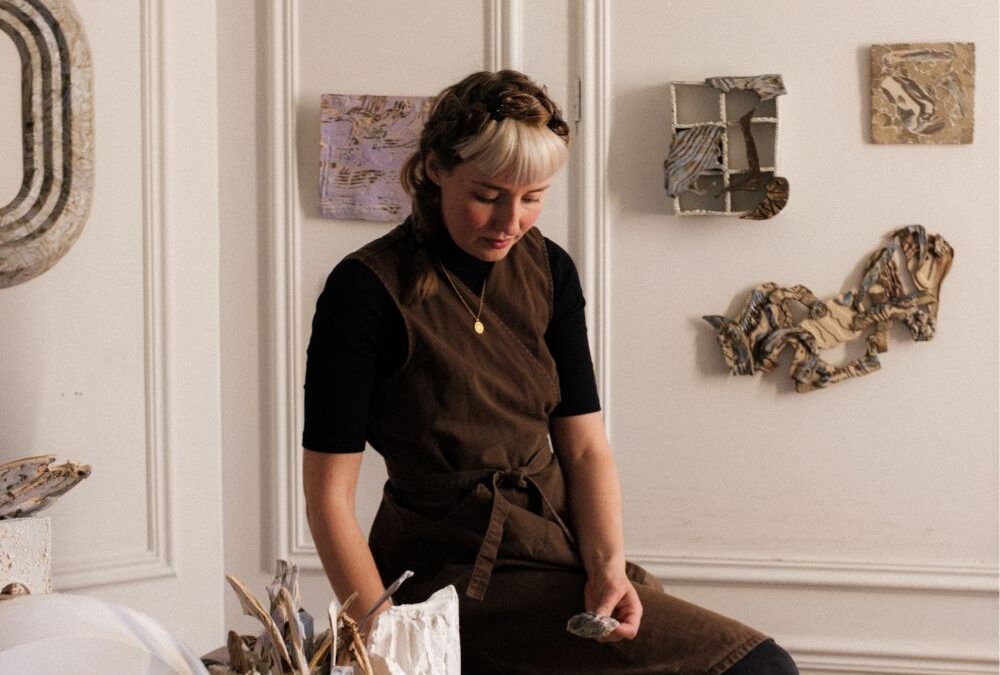
Juliet Ferguson-Rose I am an artist living and working in London, my practice assembles personal, prehistorical and topographical references. As an artist and sculptor primarily working in clay, I am making pieces as both maker and ‘archaeologist’ of collaged space, time and objects.
What led you to explore ceramics? Was there a specific moment or inspiration that sparked your interest in working with clay? Long story… or at least a long history.
Since about the age of 9 I had a very strong desire to search, to find and to make. My mum took me on a weeklong dig in Suffolk, an activity during the summer holidays where we spent time excavating a Roman bath site. We spent days scavenging for small pieces of pottery or coins, drawing them and sometimes reconstructing them in clay on a larger scale. There was this far off notion that I would go on to study archaeology and anthropology and while I did not go on to study either subject, this way of working, researching, constructing narratives and excavating sticks vividly in my mind.
How central is wood and alternative firing to your practice, and how does it shape your work?
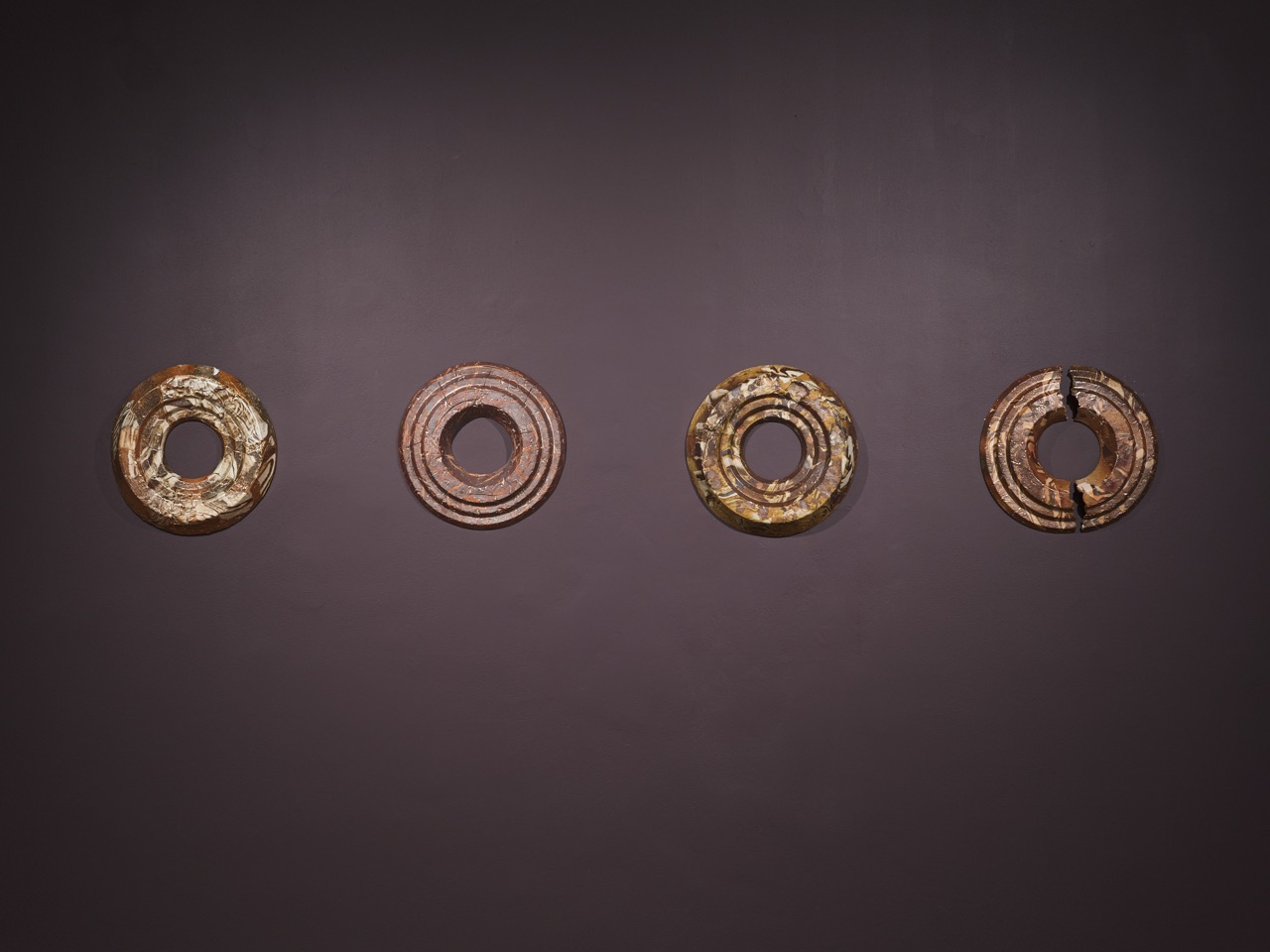
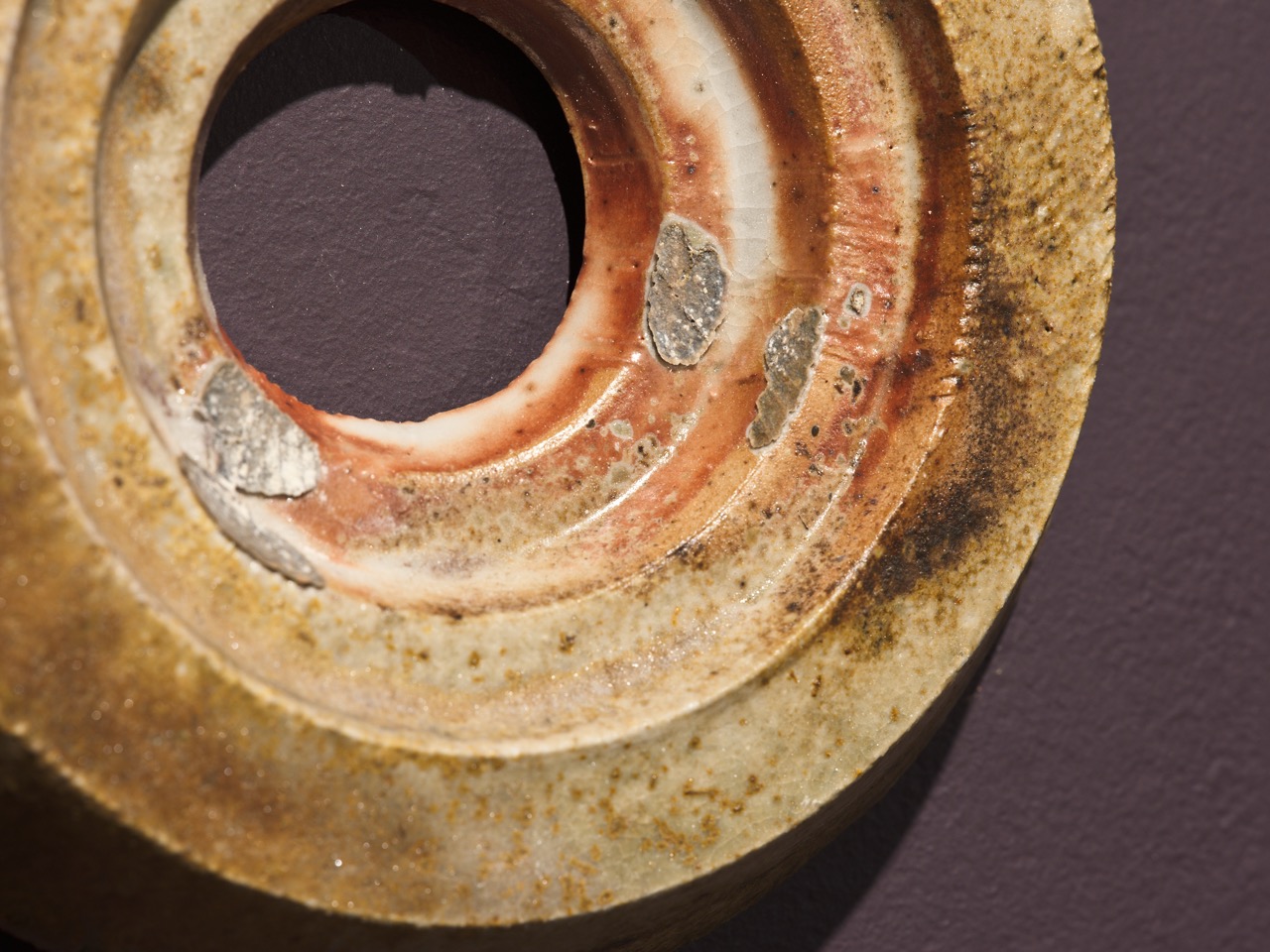
In recent years wood firing has become an axis which my year orbits around, advanced planning is required, and it becomes rather addictive, building up a specific body of work to be shared and fired, the high of communal firing, the un packing which could be parallelled to the unboxing of a long coveted purchase. After the works have been cleaned and observed, so much is learnt about the placement of the pieces in the kiln and what results you can hope to recreate in the future. Laying all the work out on the floor after the firing, segmenting them by each shelf reminds me so much of looking at layers of earth, rock, minerals and clay the sediment that signifies moments in time.
Do you have an interest in the Firing process? Does the firing process affect the shape or material application of your work.
I am interested but I do not think the firing process affects the shape of the work, there are happy coincidences, where the kiln itself is a tunnel and has similar resemblance to arch forms or caves with rock paintings, which I do respond to in my work.
Do you lend into the natural uncontrollable aspect of alternative (non electrical) firings or do you design your work to lend into the effects given?
What will be will be, but I do like to think there is some element of choice, the first firing one does so much is learnt, and its enjoyable to make a list of what of what worked well and where and ways of placing works that are to be avoided in the future.
Where do you typically find inspiration for your art? Are there particular themes or sources that resonate with you
I find myself in a constant cycle of working on a number of pieces at once, taking inspiration from things around me but also taking specific pilgrimages to ancient sites, in the Britain and across Europe.
Clay lends itself well to a cyclical way of working and I’ve found I am often struck by an idea for a work or several works in the early hours of the morning. While the sketches can seem quite fixed, getting the idea down is what’s most important and this evolves and changes at each layer of the process.
Habitually, I take lots of pictures and the cultural scavenger in me enjoys picking up everyday detritus that are sometimes integrated into works. The language of the clay itself is of prime importance, comprised of fine particles of compressed amalgam of mineral, flora and fauna. Mixed and hidden layers reveal the material’s tactile nature and the human need to create, preserve and remember.
Can you walk us through your creative process, from concept to completion?
Draw and Make everything that needs to be made, every idea, every thought, even on a small scale, sometimes ideas need to be made and remade to say what they need to say, what you envisaged them to say.
Where do you create your work? Could you share a bit about your studio or workspace?
I make my ceramic work at Earthworks Ceramic Studios in Brixton, and I think about making my work everywhere I go but the thinking, drawing, painting and after processing of my ceramic pieces is concentrated at the Bomb Factory in Holborn.
How would you describe the pieces you’ll be exhibiting at County Hall Pottery Gallery? What do you hope viewers take away from them??
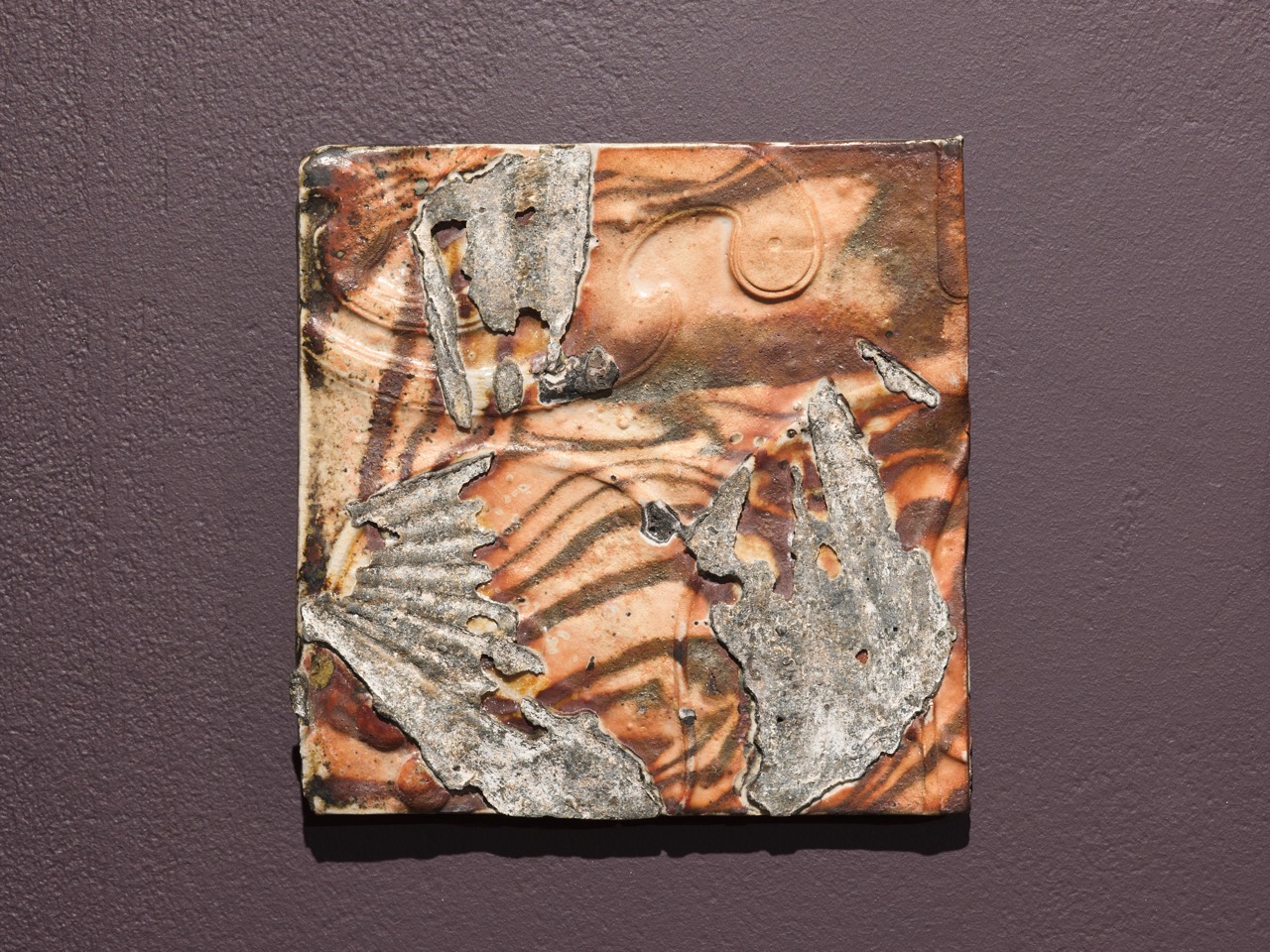
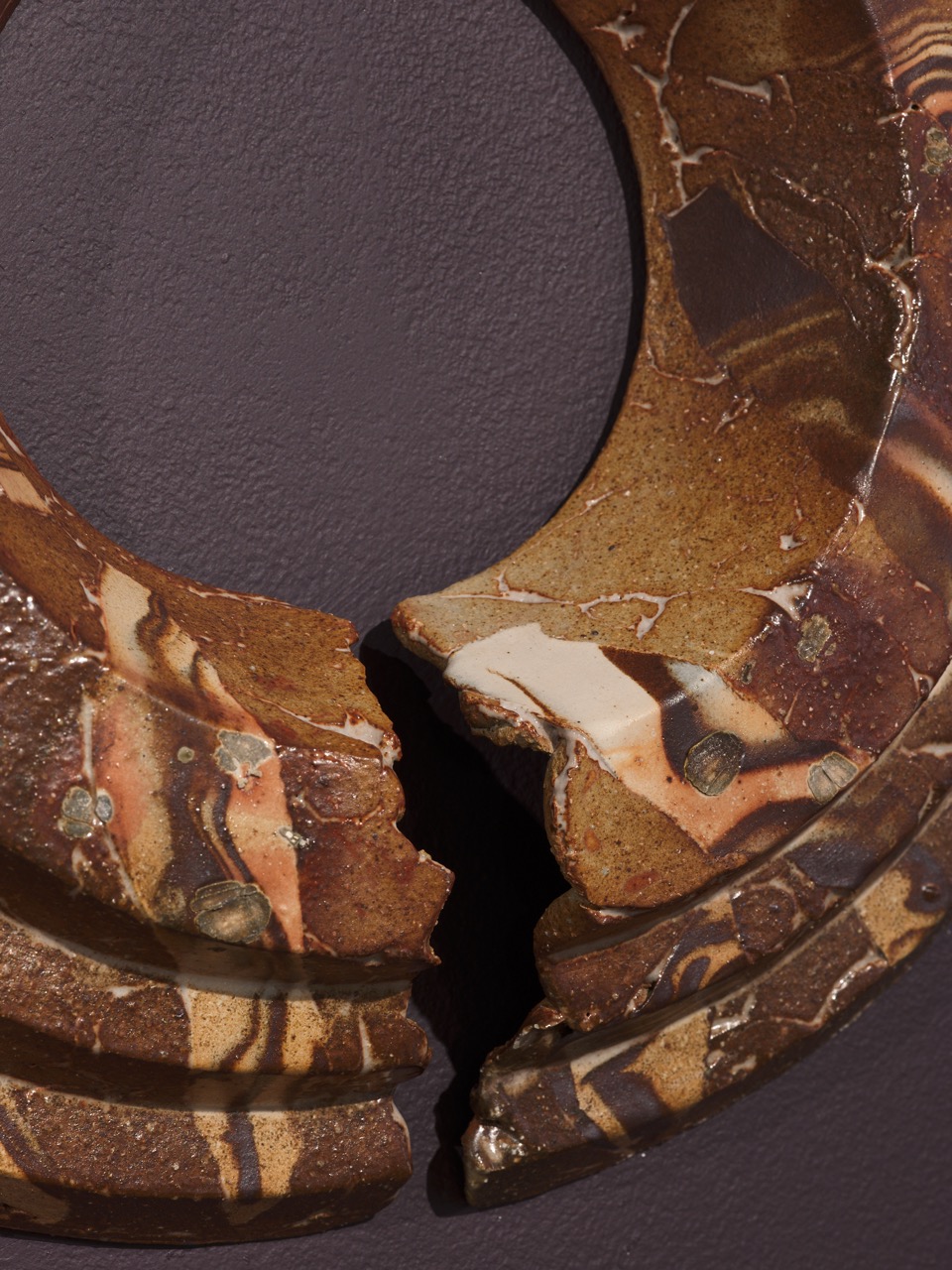
The Thresholds are series of works inspired by ancient petroglyphs I encountered during my time living in Northumberland. I was particularly captivated by the cup and ring marks dating back over 4000 years at Tod Crag. After exploration of the petroglyphs, I embarked on the creation of this new form. In several Threshold pieces, I have layered symbols of the past, symbols of our present for our future.
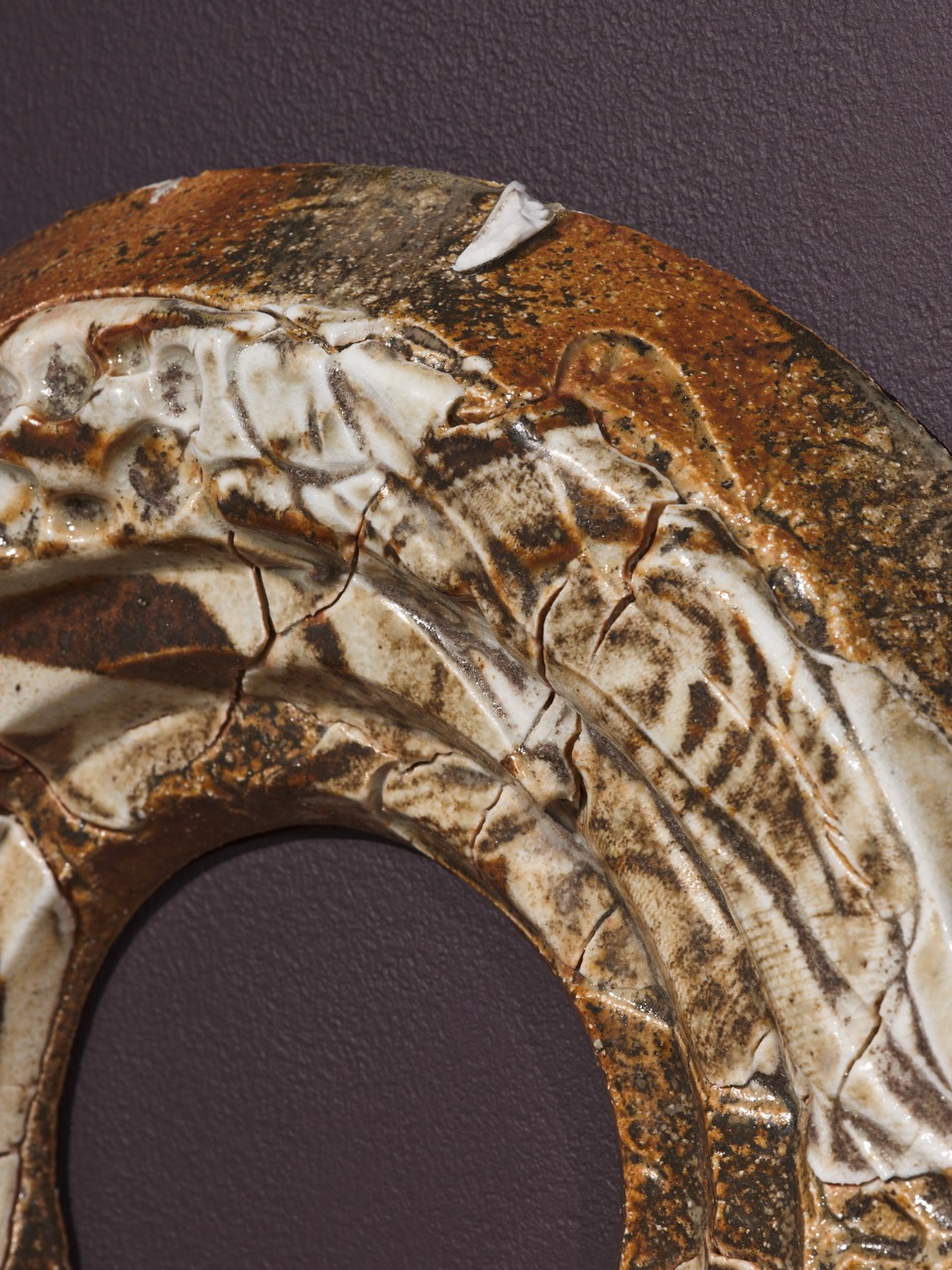
So much of our lives are spent surrounded by the waste that we humans use, create and dispose of inappropriately either by littering or through ‘recycling,’ with only a small portion of this refuse ever being reused. I want to explore fossilised qualities with everyday detritus, objects I collected whilst going about my daily life, at home and elsewhere. The clay leaves a residual presence as negative space. The compression of the objects is important; when an object has been carelessly left or accidently dropped, it sits proud of the floor but if it has been there a while then it becomes embedded, part of the ground that we walk on, either squashed into soil by our weight or flattened by cars. I am interested in this process of burial, where these objects are essentially the archaeology of the future, they are also an archaeology of now and feed into the Anthropocene.
It has been crucial for me to use a blend of two distinct clays from different sources. By combining clays, tearing them apart, and applying pressure, my intention was to tangibly convey the fusion of different spaces and eras. The resulting object serves as a testament to the physical embodiment of compressed materials and ideas, intricately layered upon one other. I am making the layering of time and place not only visible, but a physical tension in its composition. While I am mixing the clay I am looking closely, accentuating the stretching in particular areas until I am content with the composition of each surface. I like to think of these slabs as portals, windows or maybe even tears in space. I create works that aspire to delight myself and the viewer’s curiosity, reminding us that no layer is the same in the process of discovery.
Do you have preferred techniques or materials you work with in ceramics? What draws you to these approaches?
I like to chop and change play around, altering the method gently each time, everything is made in a test bed like state.
What are you currently working on? Are there any upcoming projects or exhibitions we should look forward to?
A wood firing on the horizon of course, Since my solo show at Frestonian Gallery in 2024 I have been focusing on a new body of work, I have enjoyed taking time to regroup in the studio, there a few exciting things to come but they are still in the pipeline, yet to emerge.
View the price list for the artwork Juliet is displaying and available to purchase in our After Ash exhibition here, and follow Juliet on Instagram here!
To take part in a County Hall Pottery exhibition or to speak to the team, please email gallery@countyhallpottery.com.