

Can you start by introducing yourself and sharing an overview of your artistic practice?and what led you to explore ceramics? Was there a specific moment or inspiration that sparked your interest in working with clay?
I was incredibly fortunate to of been taken to pottery classes as a child in Cumbria when I was 8. I really responded to the medium and found it gave me a way to communicate, it’s been in my life in some way ever since. Those classes all those years ago were actually under the tuition of a very young Michael Eden, way before any of us had even heard the words ‘3D printer’. Like I say, a fortunate introduction to the medium.
Did you receive formal training in ceramics, or did you develop your skills independently?
I studied Three-Dimensional Design at Manchester Metropolitan University (now known as Product Design and Craft)
I’m a big ambassador for the program which teaches an open minded and interrogative approach to design through material investigation.
I had a lot of experience of working in ceramics before studying, (I could throw quite confidently) this meant I was able to explore other aspects of the program in other materials, instead of spending time learning how to throw. This created the basis for how my practice now runs.
Quiet early on I became very interested in the power of ceramics to influence and create things other than the ceramics itself – like the space it inhabits, or the people it touches.
Can you walk us through your creative process, from concept to completion? How central is community to your practice, and how does it shape your work?
Incredibly so, it’s the driving force that runs through everything I do.
The majority of projects I undertake are collaborative or socially minded, but even when there’s a commission that arrives that involves me throwing 100 plates for a restaurant, we tend to use the project as a way of animating the studio or teaching the residents, or something similar…
The studio is very open to come into, through the bakery that exists in front of it, so people can always come in and watch.
We always try to ask the question of how we can use what we are doing to captivate an audience.
Where do you create your work? Could you share a bit about your studio or workspace?
I operate mainly through two projects/spaces
Altogether Otherwise is project set up by myself and a group of other designers. We work with a developer in Manchester City Centre and utilise their disused buildings to run design and artistic projects from, in fact beyond these two things.
One of the things I do here is run Evening Gardening Club, a club that runs on Tuesdays at 6pm. We use a very explorative approach to gardening with a group of around 30 people. We have a garden that’s part of the building and we use it to explore ideas around design and life through practical activity.
How did you both find each other to collaborate with on this project? Have you collaborated before together? Will you again?
I’m collaborating with a recovery organisation Called ANEW, in Tameside
The partnership was set up by Castlefield Gallery and Portraits of Recovery with whom I have worked a lot with before over the last 8 years.
We have just received a grant from GMCF to continue the work we are doing so the collaboration will continue.
Do you have preferred techniques or materials you work with in ceramics? What draws you to these approaches?
I would describe my approach to ceramics as process driven and interrogative. I investigate systems that draw upon the material qualities of the medium.
This approach works well when working alongside participants as the road we often find ourselves on is new territory, this removes the notion of comparison with existing ceramics or that what we’ve made is good/bad/wobbly/messy etc etc, we create new roads together.
How would you describe the pieces you’ll be exhibiting at County Hall Pottery Gallery? What do you hope viewers take away from them? Can you talk about the specific materials and techniques you are using for this exhibition?
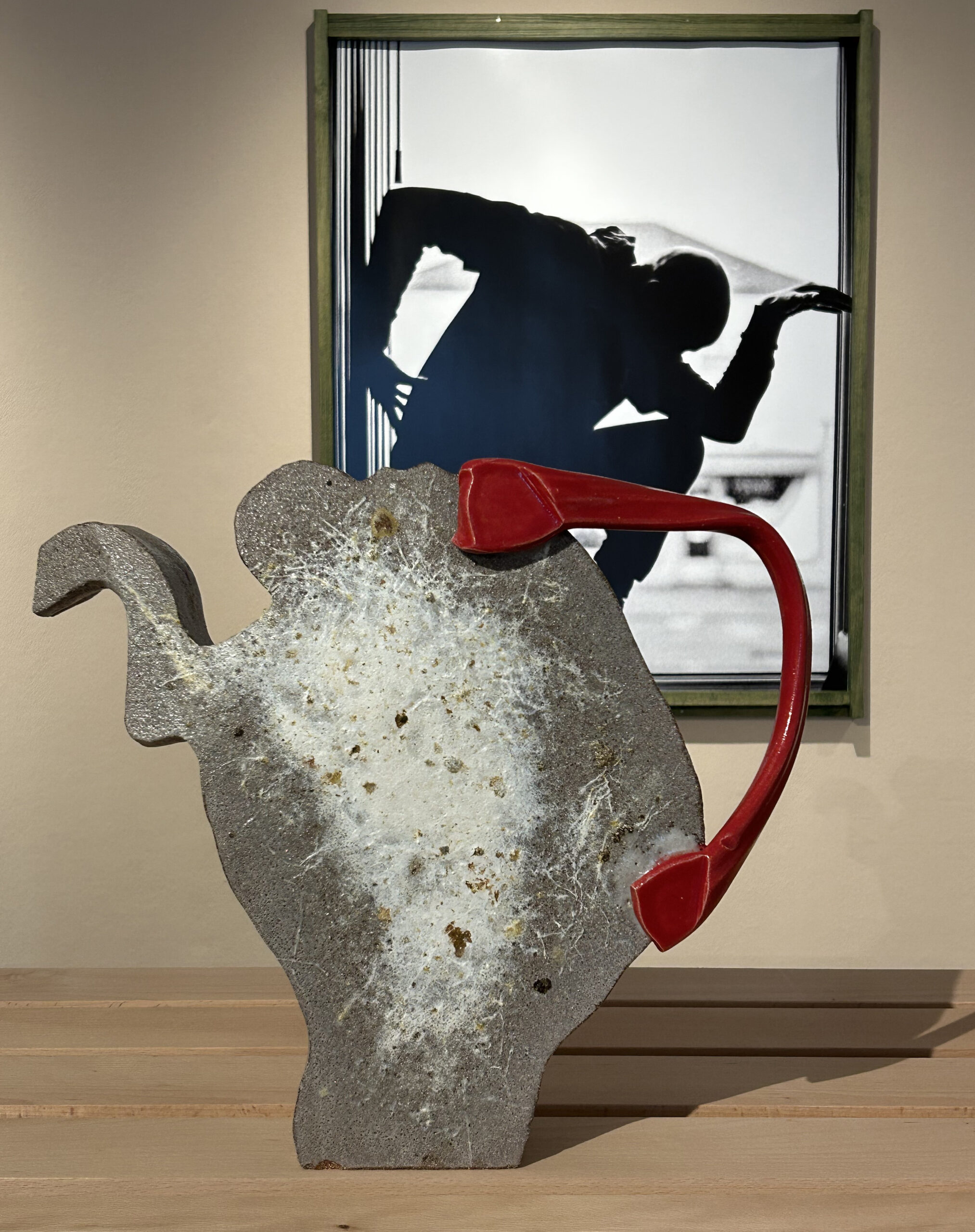
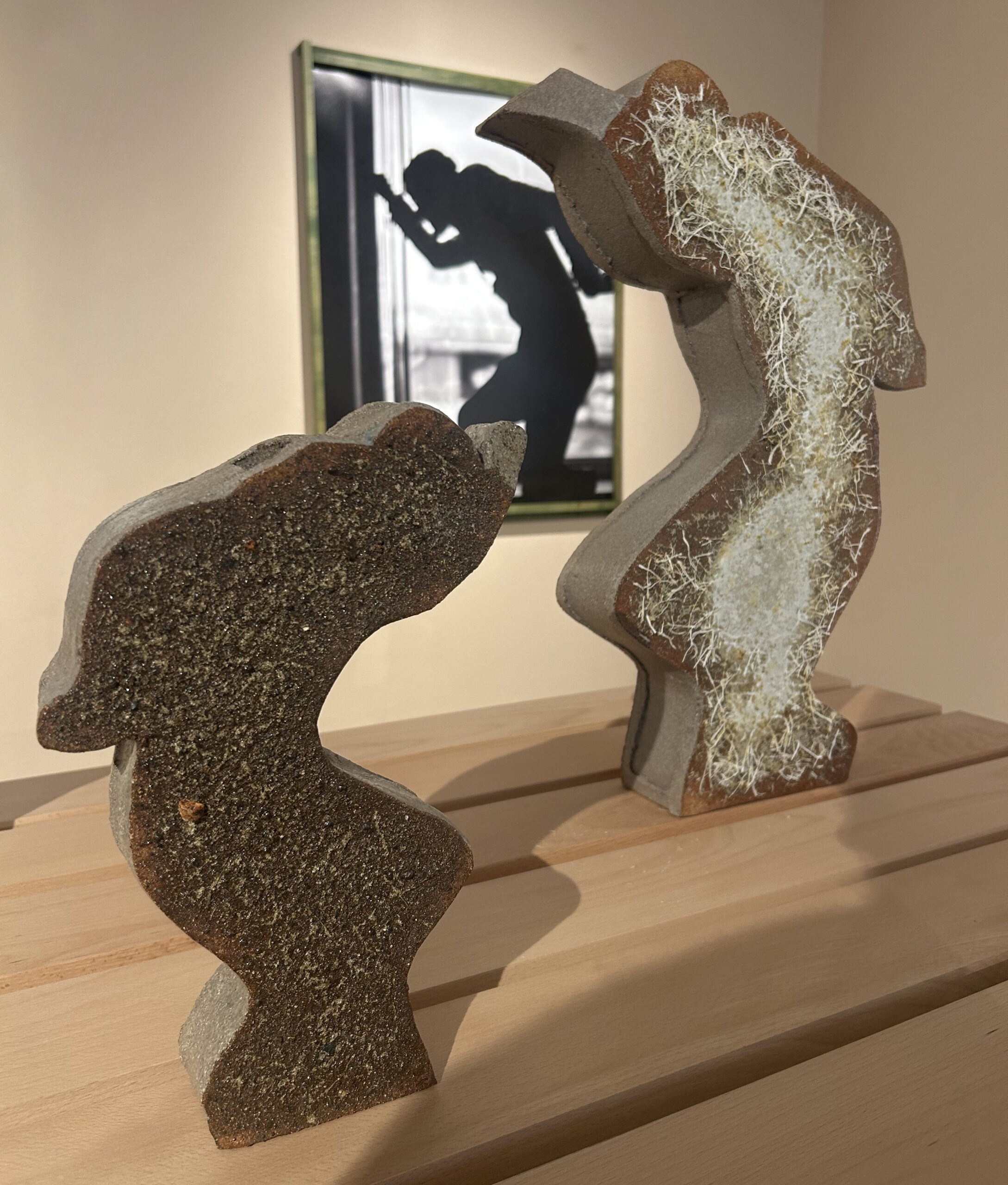
The pieces in the show are large teapots designed and made by myself and the ANEW Recovery Community.
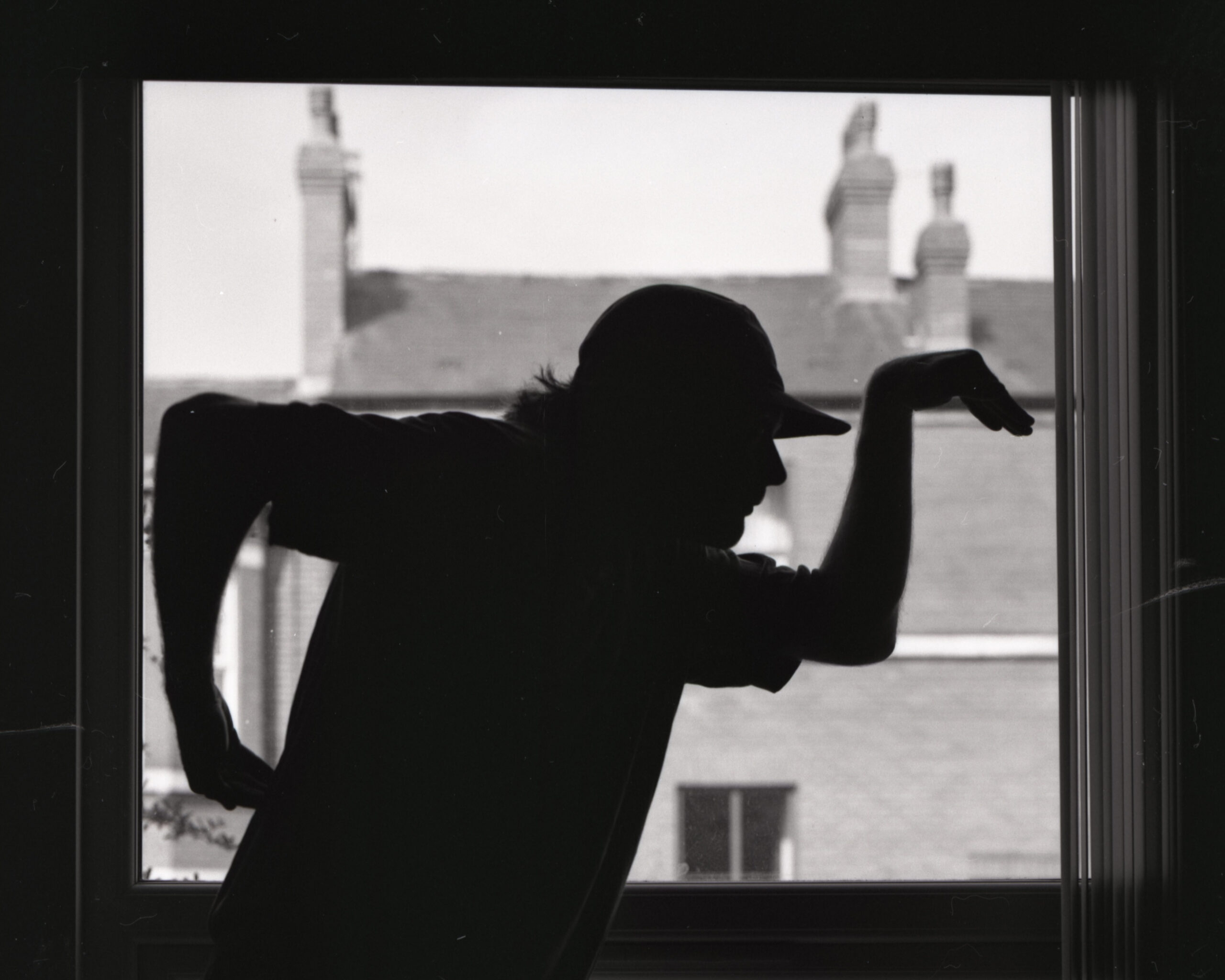
The teapots have been made in response to photographs taken by the community of each other acting as teapots. The photographs capture the individuals at a pivotal moment ion their primary recovery, they are encouraged to truly embody the object, considering things like how their spout will pour, or how their handle will feel. This embodiment is visible through the powerful silhouettes that take up the photographs and even through to when transferred into actual 3D forms – the teapots themselves.
The glaze on the teapots is made from Marestail, an unpopular plant with a high silica content.
This isn’t applied as glaze slop but instead piled on top of the pottery that is laid on its side in the kiln. An unconventional approach that produces unpredictable surfaces.
I think we see 3 x teapots being featured and would love for the associated photographs to be displayed also, as 1 to 1 human scale.
We have a framing system that we have also developed as part of the project to display large photographs.
What are you currently working on? Are there any upcoming projects or exhibitions we should look forward to?
Yes! We currently have ‘ANEW Way to Peel an Orange’ on show at Castlefield Gallery in Manchester. The show shares other work made by myself in partnership with the ANEW Recovery Community. It also shows early experiments of the Pos and Negs work we’ll be showing at County Hall Pottery.
The artworks Joe and ANEW have on display are available to purchase in our Collaborative exhibition. To take part in a County Hall Pottery exhibition or to speak to the team, please email gallery@countyhallpottery.com.