
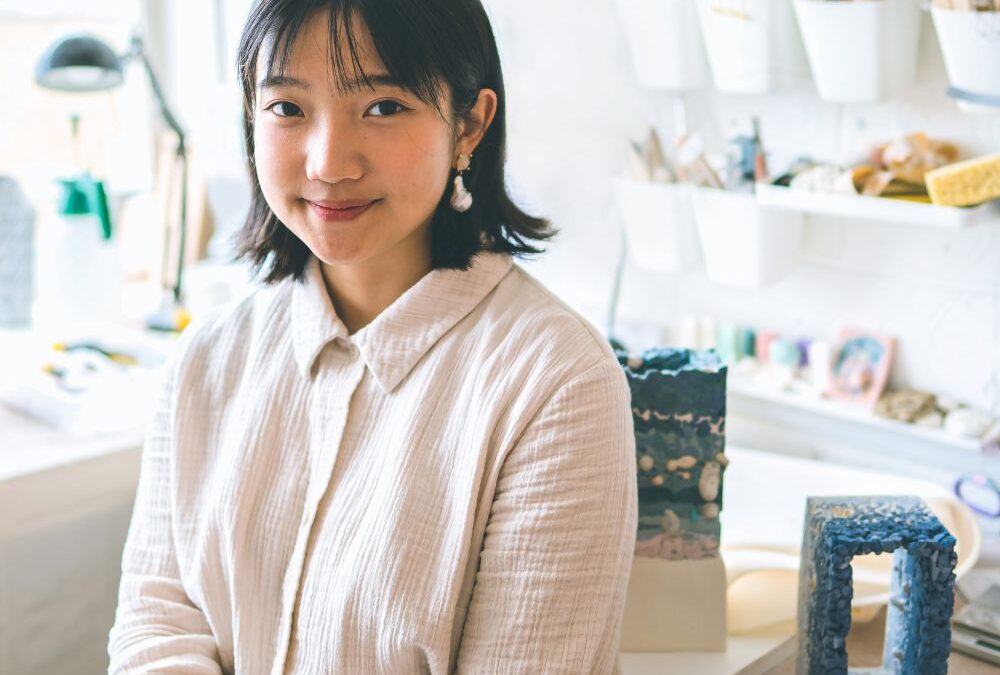
Can you start by introducing yourself and sharing an overview of your artistic practice?
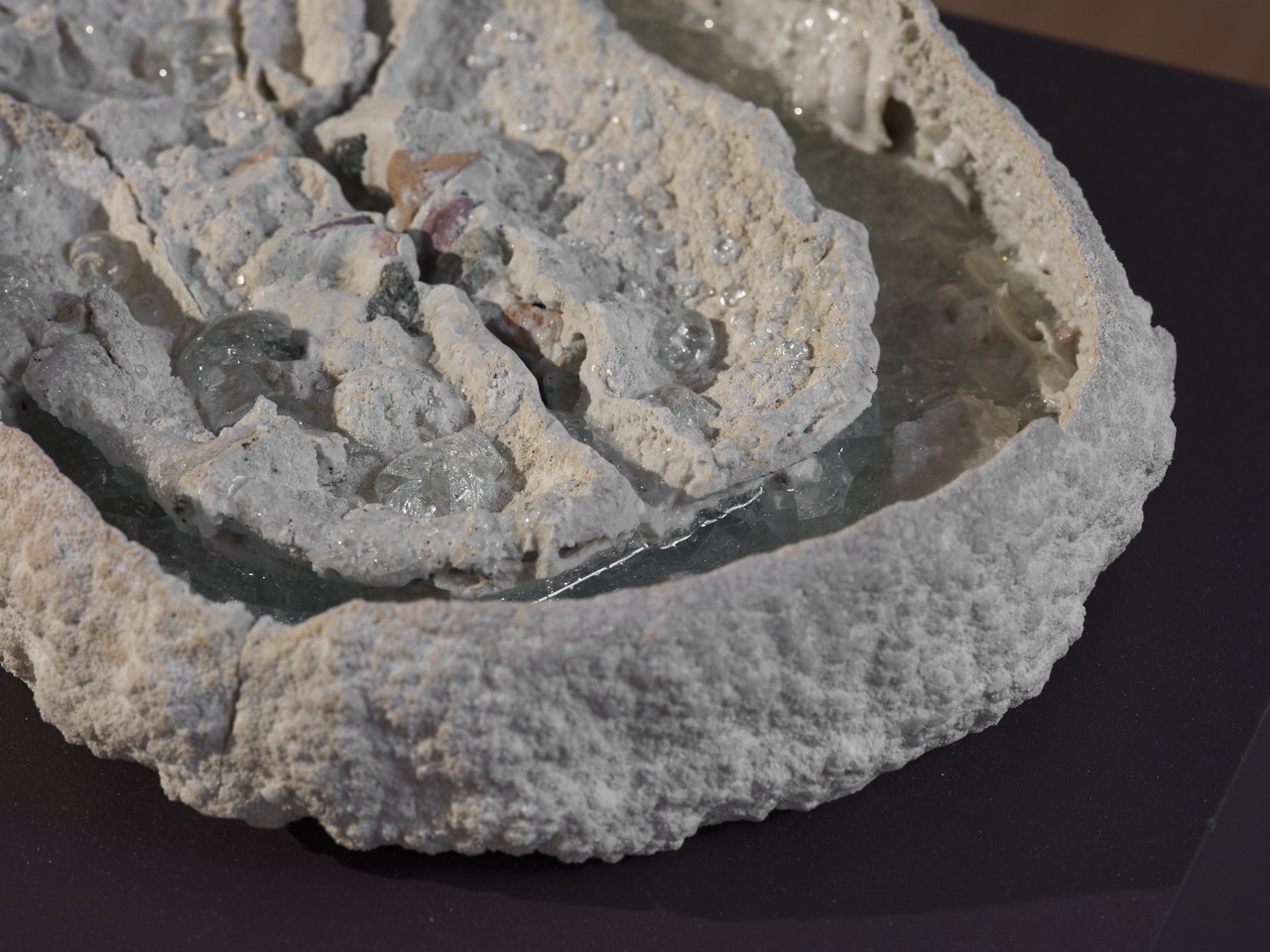
I am Ho Lai, ceramics artist from Hong Kong based in London. I find poetics in the transformation of materials, working with an approach that is both subversive and experimental. My practice centers on the interrogation of ideas, emotions, colour combinations, and material boundaries. My recent work explores the materiality of glaze as a primary sculptural medium, rather than as a surface treatment for clay. I investigate the blurred boundaries between glaze, clay, and glass, and often incorporate natural materials such as wood ash and stones. By pushing material behaviour beyond its expected limits, I am interested in how ceramic materials can carry meaning, resist categorisation, or reflect broader ideas of change, decay, and transformation.
What led you to explore ceramics? Was there a specific moment or inspiration that sparked your interest in working with clay? Long story… or at least a long history.
I studied Visual Arts during my BA degree and got into exploring ceramics as a three-dimensional practice, like many I started with wheel-throwing and got into making functional pieces. I like the tactility of the material and that you can shape it directly with your hands without relying heavily on tools. There’s also something humbling about the firing process, the moments of ‘let go’ when you have done your best and surrender to the unpredictability of the firing. Working with clay has taught me how to balance anticipation with reality, and to find peace in that space between control and unpredictability.
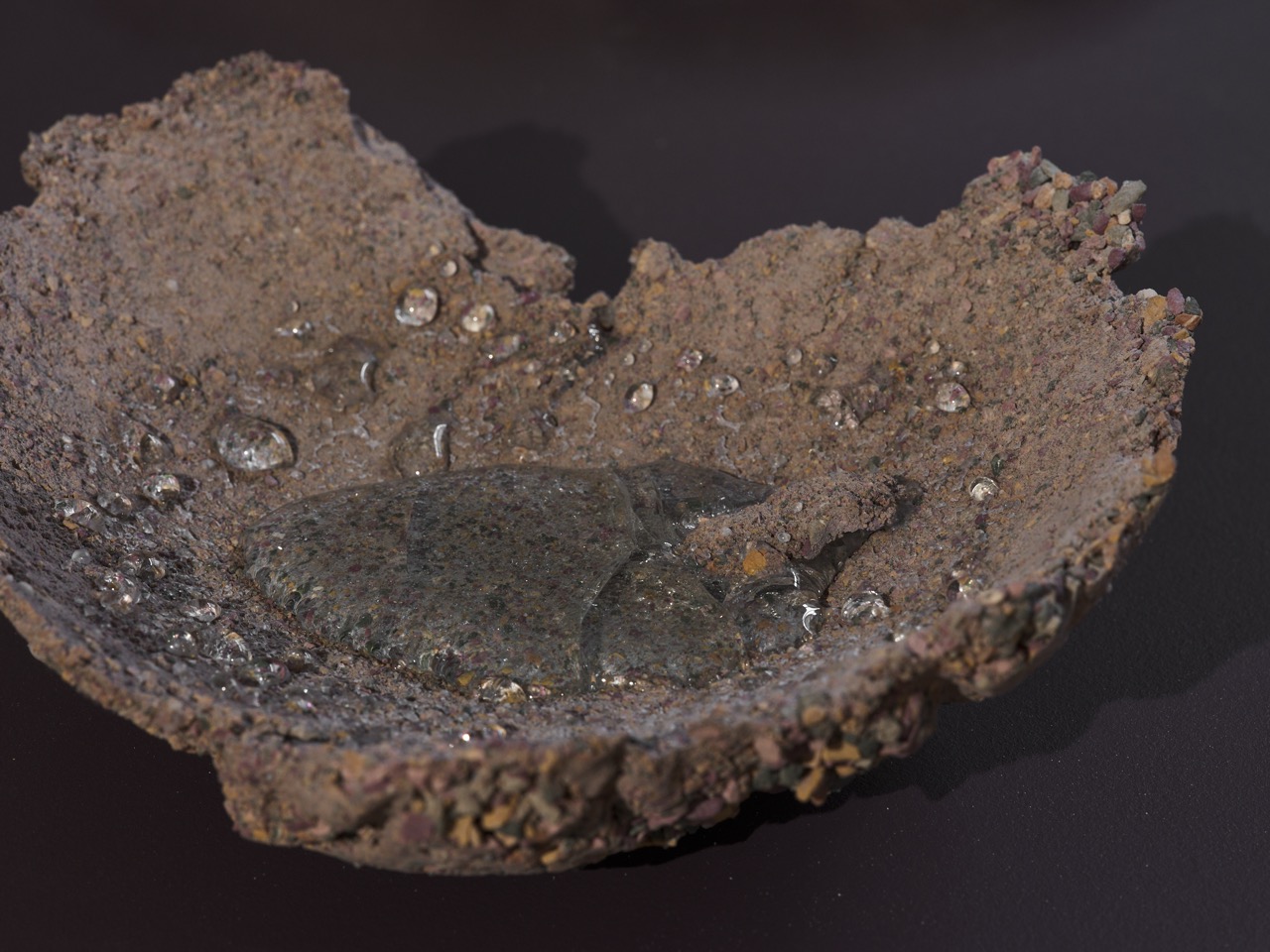
How central is wood and alternative firing to your practice, and how does it shape your work?
Through out 10 years of time in my ceramics journey I have done 6 wood firings, from learning the wisdom of fire to working with different people, I have always found myself enjoying the process just by listening to the crackle of wood and watching the dancing flames. To me the results of wood firing is a collection of material research, as my recent works in cooperates wood ashes, and from wood firing I learnt the material behaviours of ash under different firing atmosphere. This ancient firing technique is full of wisdom to be learnt from, and I would love to continue to explore this firing technique.
Do you have an interest in the Firing process? Does the firing process affect the shape or material application of your work.
I like exploring unconventional firing techniques, even firing in an electric kiln I have always wonder what more could be done to change the material during firing. My firing process is unusual as I use glaze material to sculpt, the works are buried in silica sand and fired in sager in the kiln. The silica sand holds the form of the glaze and prevent it from melting away entirely, I would say the firing process does affect the shape of the results, but it is all about a balance of control and chaos.
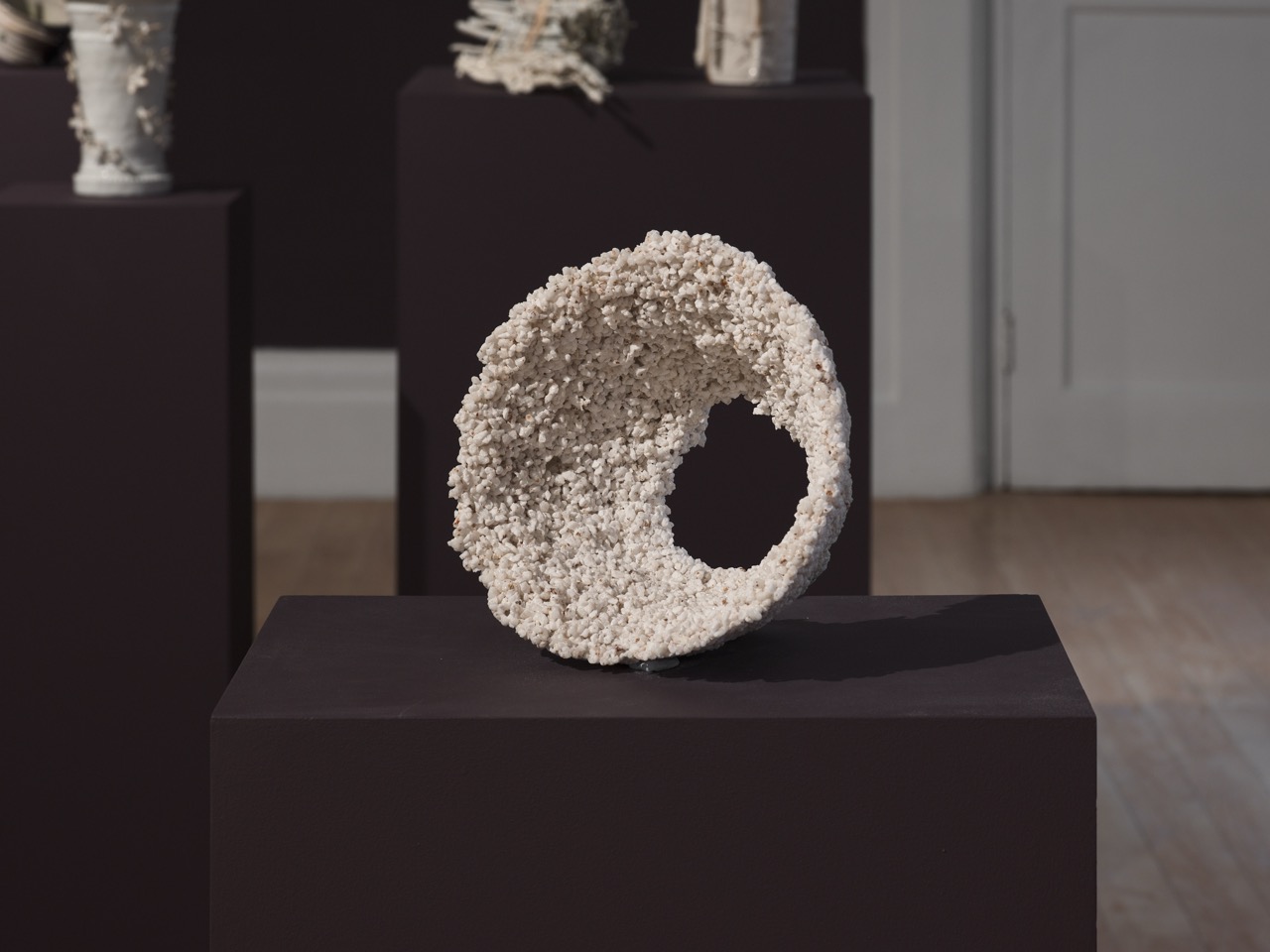
Do you lend into the natural uncontrollable aspect of alternative (non electrical) firings or do you design your work to lend into the effects given?
I would say it is both, since I use glaze material and ash to sculpt, the firing is crucial to the transformation of the material. I conduct an extensive amount of glaze tests and research to predict the results of the material, yet eventually the firing is still crucial to forming and completing the piece.
Where do you typically find inspiration for your art? Are there particular themes or sources that resonate with you
I find a lot of inspiration in music, especially grunge-gaze, shoegaze, noise and post-punk genres. And perhaps paintings and contemporary art too as I used to do oil painting before venturing into ceramics. I like Giorgio Morandi and Louise Bourgeois.
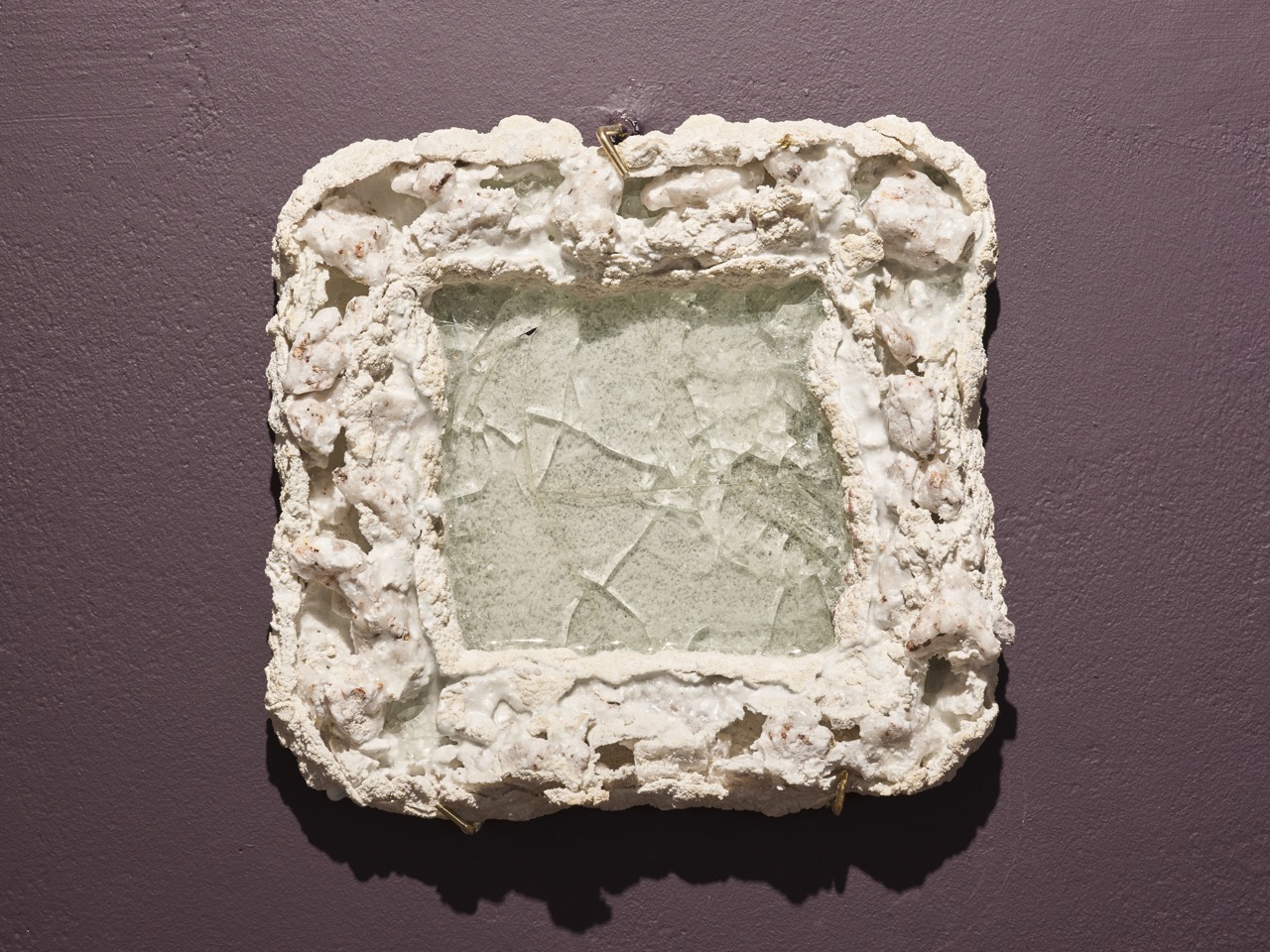
Can you walk us through your creative process, from concept to completion?
I usually start with small material tests; from there I find interesting results to develop on, whether it is scaling up or sculpting forms my process is responsive to material behaviours. Usually from the materials and the tests it informs my concept and provoke emotions, and some of the pieces could be fired multiple times as I sometimes do have an envisioned result, but I intend to let the process drive my artistic response.
Where do you create your work? Could you share a bit about your studio or workspace?
I’m based at Cockpit Arts in Deptford, London—a vibrant contemporary craft community home to over 100 makers working across a wide range of disciplines. I share my studio with two other ceramic artists, which makes for a collaborative and supportive environment. We have access to a communal kiln, and I also use a small test kiln for most of my firings, which gives me more flexibility for experimentation and smaller-scale production.
How would you describe the pieces you’ll be exhibiting at County Hall Pottery Gallery? What do you hope viewers take away from them?
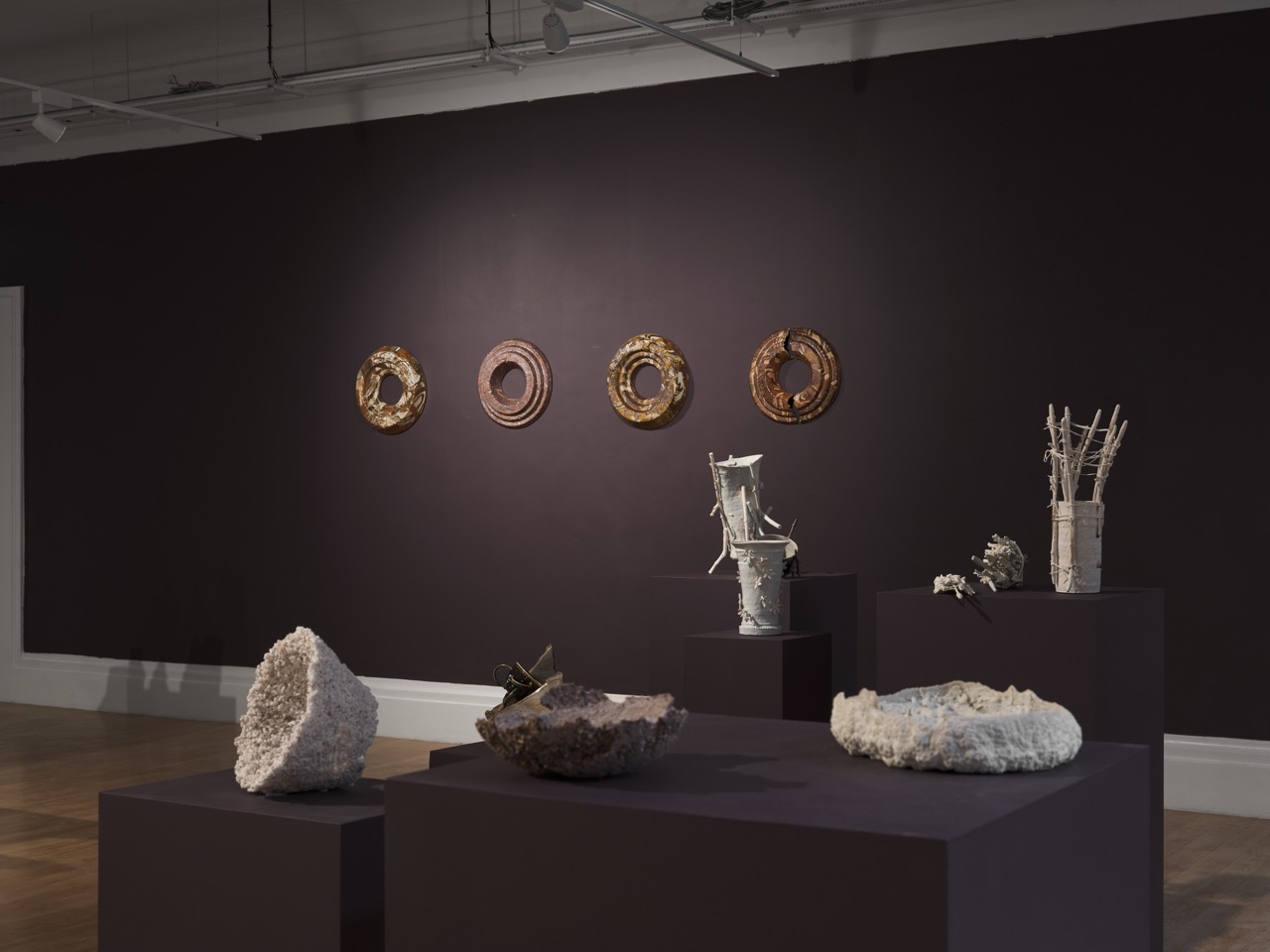
The series of work was part of my debut solo exhibition ‘Traces of Fragments’ during my residency at the Shigaraki Ceramics Cultural Park in Japan. Before going onto this residency, I was going through a lot of internal conflicts, a constant comprehension of my surroundings, my roles and responsibility, and my artistic practice. This series of work is another beginning of my artistic journey, a recovery from personal trauma, disillusionment alienation and dissociation. These sculptural forms reflect a process of destruction, collection, and reassembly, manifesting the state of residue and reminiscence. Everything I created in this series is fragmented, but they can be put back together and create new forms, this is what I hope viewers take away from them.
Do you have preferred techniques or materials you work with in ceramics? What draws you to these approaches?
I use clay fragments and grogs to create forms as my process is informed by the concept of fragmentation. My artistic approach is informed by materials and experimentations, so it really is all kinds of ceramic materials that I am interested in using, not just the conventional way of using plastic clay and coating with glazes. I guess I like to expand the boundary or question the way we were told to handle the materials, that’s why I am into using dry clay instead of plastic clay for making.
What are you currently working on? Are there any upcoming projects or exhibitions we should look forward to?
I am currently working on more ash glaze research, and hoping to attend another residency if possible. I will be sharing more on Instagram so do keep a close eye on @ho_lai