
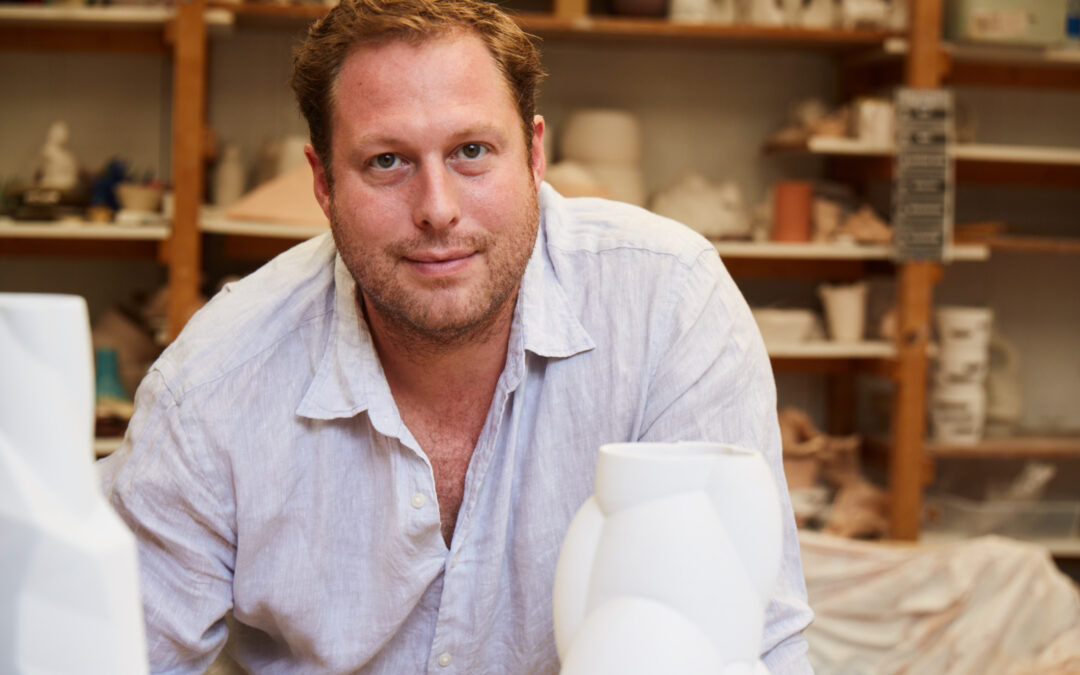
Can you start by introducing yourself and sharing an overview of your artistic practice?
My name is Fred Gwatkin and I’ve been working with clay on and off for almost 30 years now. I started out as a thrower, altering forms and experimenting with surface as I am drawn to organic structures that reflect complexity in nature.
I started working at Goldsmiths, University of London, in 2016, which shortly after acquired a 3D clay printer and I quickly became fascinated by the process and intricate forms it could produce, using a material so steeped in history. My work is mainly comprised of sculptural vessels and I enjoy using glaze and firing techniques to link them to back to the craft origins of clay.
What led you to explore ceramics? Was there a specific moment or inspiration that sparked your interest in working with clay? Long story… or at least a long history.
I always loved fire when I was growing up. I discovered Raku firing when I was 16 and it was a moment of epiphany. Up to that point, the inner workings of a kiln had always felt quite abstract and mysterious, but Raku gave me an insight into the transformative power of extreme heat as a creative force. It was also a gateway into Eastern ceramics, where I found a respect for the craft and an appreciation of more raw and imperfect aspects of the natural world.
How central is wood and alternative firing to your practice, and how does it shape your work?
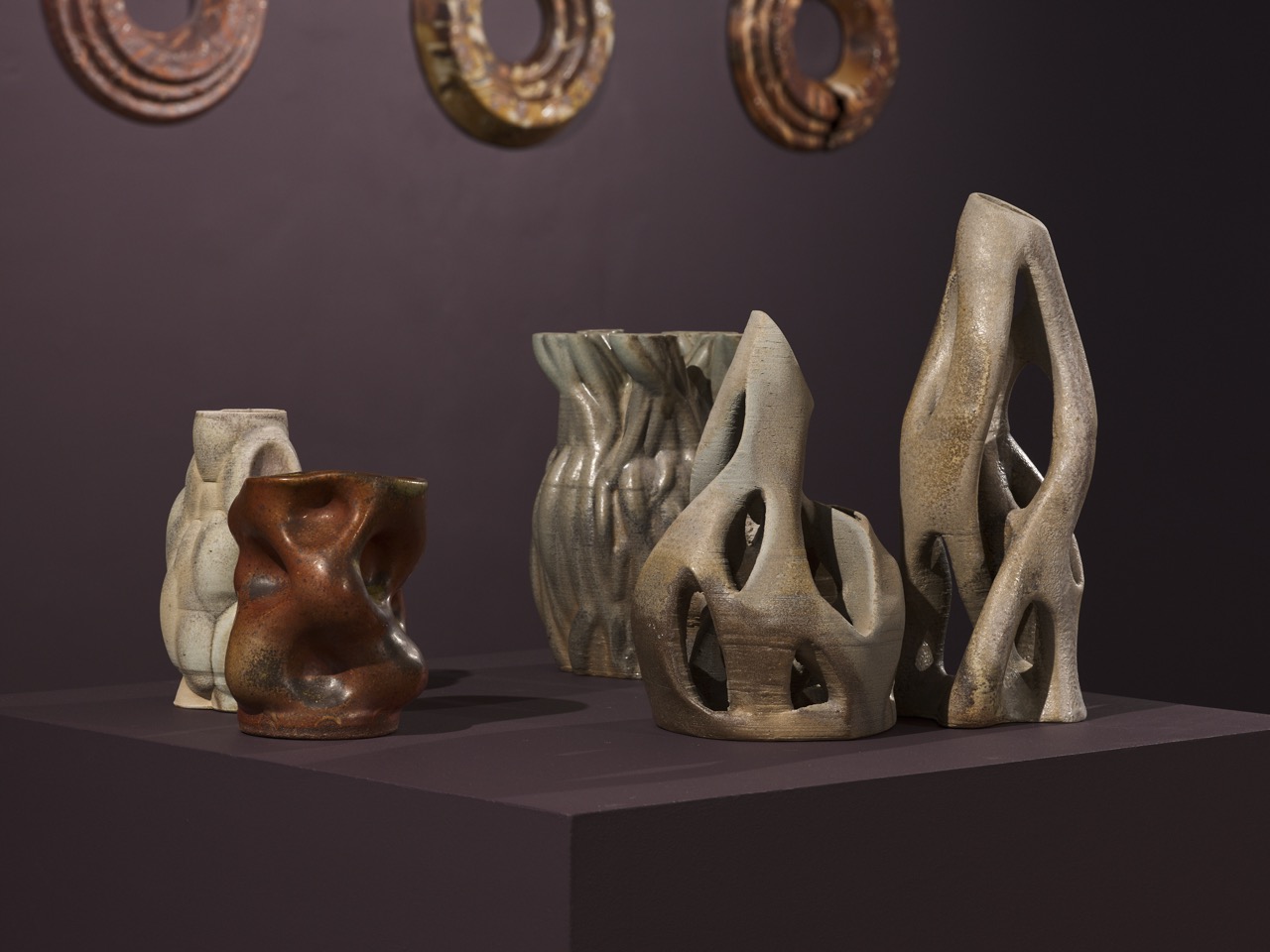
I wish it was more so, but as a maker based in London, access to a wood kiln is tricky! I am keen to explore Raku and wood firing more, though. As a Western potter working with new technology, I try to situate my work somewhere in the tradition of ceramics. Some makers feel that a 3D printed piece somehow sits in opposition to one that is hand-built, but there is still a lot of craft involved, even if not all of it as hands-on. This is a large part of why glaze and firing method are central to my work; to restore tactility to the process and pay respect to the many artists and cultures that have come before. As my work also references emergent and chaotic processes in Nature, alternative firings are the perfect way to embody these. More so than other firing techniques, you are committing them to forces that are out of your hands.

Do you have an interest in the Firing process? Does the firing process affect the shape or material application of your work.
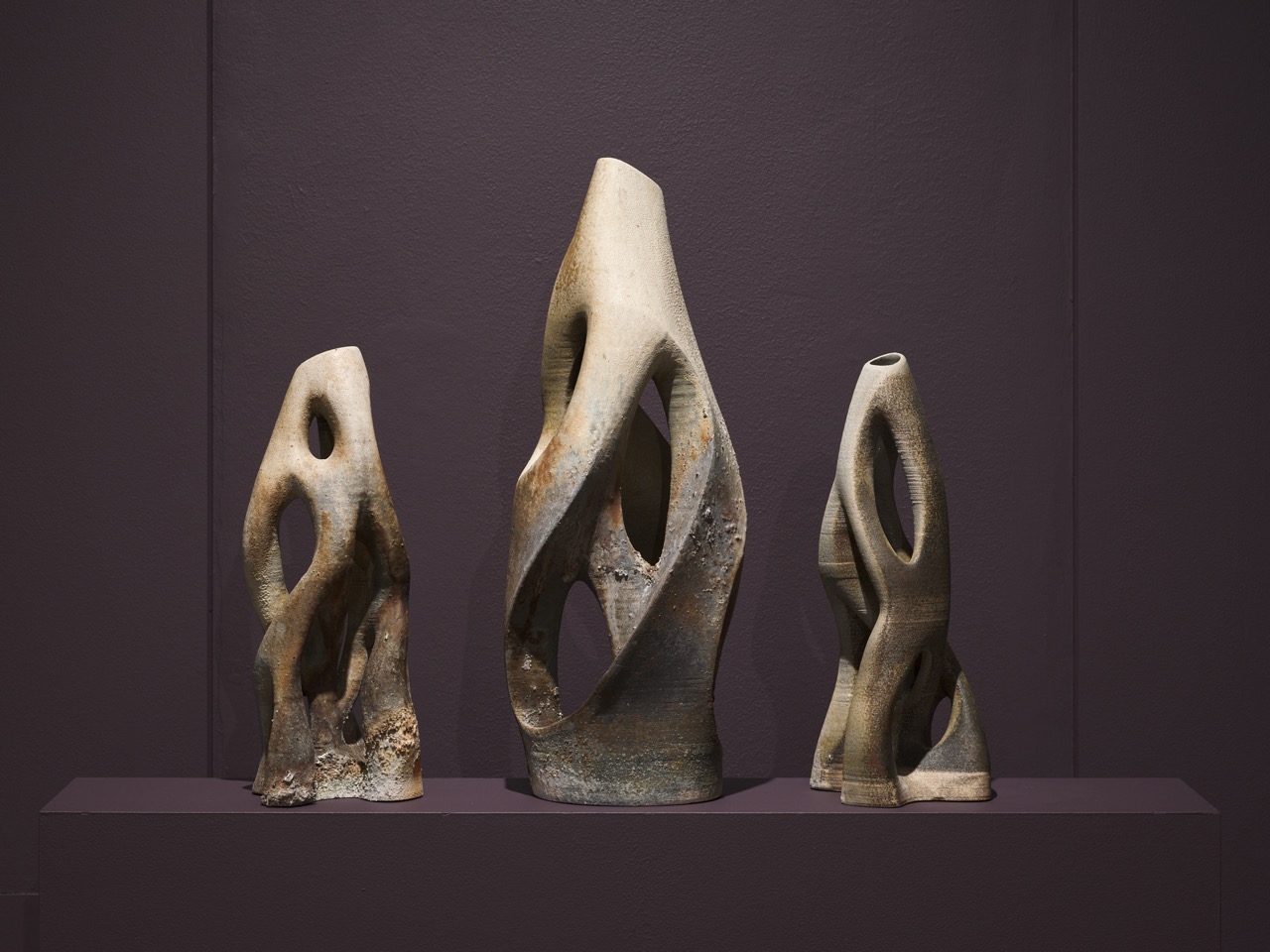
In this series of work, all of which was fired in the Oxford anagama test kiln, I thought about the path of the flame and how it would travel through apertures in the forms and deposit ash in interesting ways. It was quite surreal, manipulating shapes in the VR environment, imagining them as glowing hot ceramic being exposed to the elemental forces inside a wood-fired kiln. Thankfully, the same properties which make a clay good for 3D printing also make it good for handling the stresses of wood firing; a grogged clay body and even walls. I left most of the pieces unglazed to allow the natural ash to fully express itself – it is amazing, the variety of different effects that can be produced according to how the kiln is fired, what wood is being burnt and where the pieces are placed within it.
It’s a very profound feeling, tending to the kiln and firing pots in a way that has remained largely unchanged for well over a thousand years. It provides a connection to the past that is hard to come by in these fast-moving times.
Do you lend into the natural uncontrollable aspect of alternative (non electrical) firings or do you design your work to lend into the effects given?
As a newcomer to wood firing, I would say I attempt the latter but embrace the former! The controlled chaos of an alternative firing is one the most exciting things about it. It’s exhilarating (and a little nerve-racking) surrendering a digitally coiled piece to the random chance of these firings, as it has been so precisely fabricated up to that point, often down to the sub-millimetre.
Where do you typically find inspiration for your art? Are there particular themes or sources that resonate with you
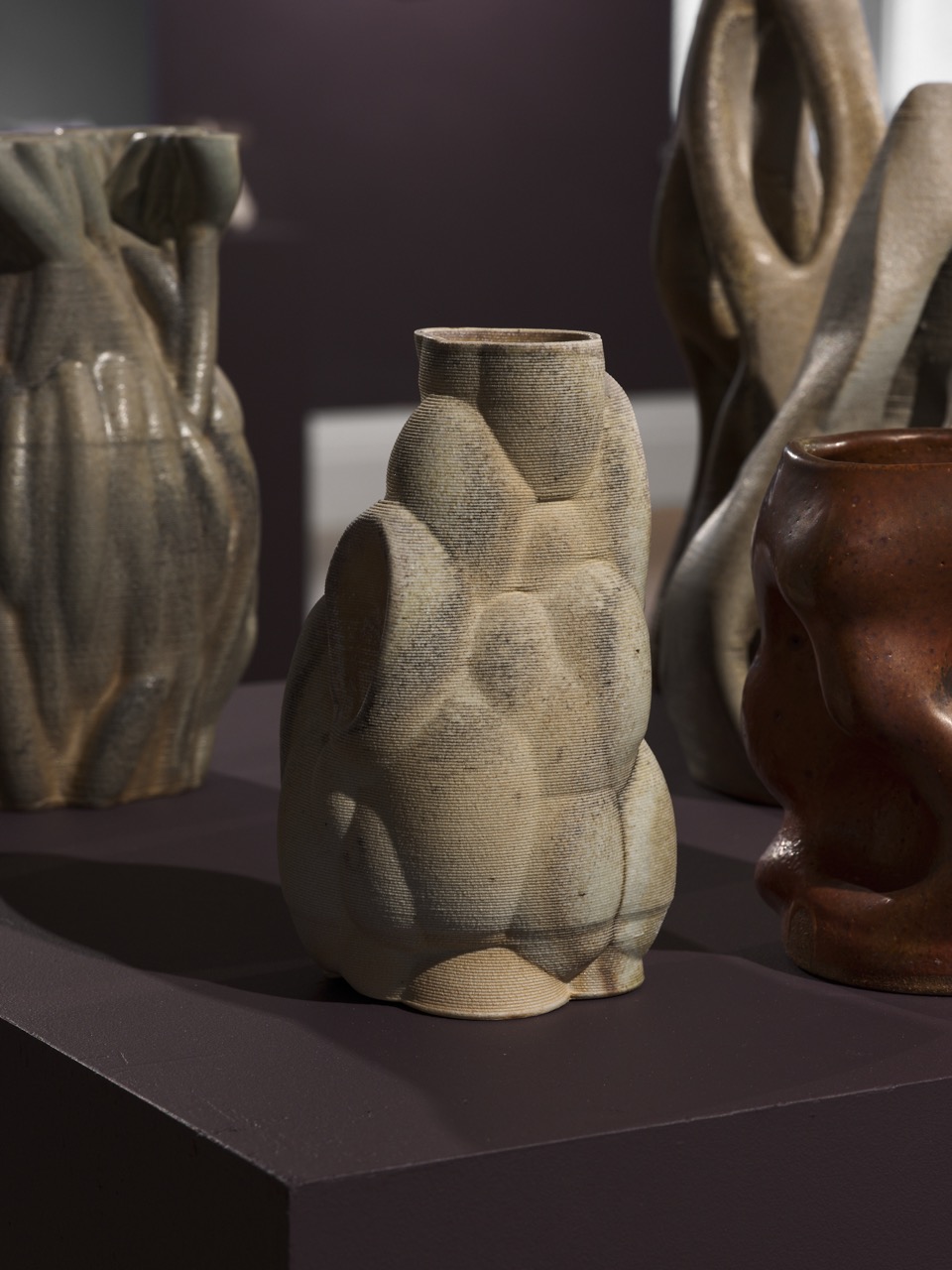
I enjoy complexity in nature, particularly when it expresses itself in a way which is alien or uncanny. Part of the reason I was initially drawn to designing in CAD is because of how well it can render bizarre and complex geometries, which are often seen under the microscope or in rock formations that have taken millions of years to develop. There is an exciting abstraction to this facet of the natural world that pulls my forms in the direction of artists from the California Clay Movement, such as Ken Price and Ron Nagle. But I am also drawn to the more ascetic, understated depiction of nature seen in Eastern ceramics.
Can you walk us through your creative process, from concept to completion?
I tend not to sketch, but taking inspiration from biology and geology I am constantly surrounded by things that set ideas in motion. When it gets to the point where I’m daydreaming about interesting glaze combinations and how they will flow over certain parts of the imagined form, I know it’s time to jump into the design software and start iterating. At this point, a lot happens in the moment; I am a ceramicist first and a 3D designer second, so my CAD skills are not to the point where I can perfectly recreate the forms in my mind’s eye, but there is a pleasure in that – it introduces an element of play and imbues the forms with their own sense of agency. VR design is genuinely a fun way finding forms, I find. Gestures of arm and hand add and subtract material and the ability to undo, redo and drastically manipulate your design are all very liberating. This somewhat offsets the constant concern of whether gravity will allow it to print without collapsing!
Working with the printer is a form of collaboration in its own right – you may have a good notion of what it will produce but the machine often has ideas of its own. It sometimes feels like tuning a musical instrument, making fine adjustments until all the many variables (clay being the most capricious) fall into harmony and allow the form to complete. Inevitably there are errors and glitches, which invite a creative decision as to whether they add to intent of the piece or compromise it.
The few pieces that make it through the printing, finishing and bisque firing are like blank canvases and my main objective is to draw on the infinite possibilities of glaze to make them as visually arresting as possible. I will often refer to the close-up photography of Rob Kesseler and attempt to capture the exotic, other-wordly colour and texture of cellular structures captured under the microscope. Or in the case of this series of work allow flame and ash draw out the naturalistic qualities of the pieces they are interacting with.

Where do you create your work? Could you share a bit about your studio or workspace?
How would you describe the pieces you’ll be exhibiting at County Hall Pottery Gallery? What do you hope viewers take away from them??
First and foremost, I hope people bring away a sense of awe at the incredible variety of colour and surface that can be produced by natural ash in wood firing.
Specific to the pieces I’m showing, I hope viewers come away with a feeling for clay’s quality as a living material, being the source of organic growth and the origin of many a creation myth, yet at the same time having the capacity to be transmuted into something permanent and ageless, like stone. If my work conveys a bit of that duality in the material, then I’m happy.
I also hope the works draw on something more atavistic – a feeling of connection to the generations of potters who have been firing in this way stretching back hundreds of years. And a feeling that all modes of making – even digital coiling – sit on a long continuum, in which people working with clay are constantly devising new ways of realising their ideas. If viewers come away feeling the often-scary advance of technology can be used with reverence for what’s come before, rather than as a substitute for it, then I’ll be all the more happy.
Do you have preferred techniques or materials you work with in ceramics? What draws you to these approaches?
Throwing and digital coiling are my go-to techniques, but being an educator I have some experience in coiling and slab-building too. I look forward at some point to combining all of these in one form that tells a story of clay’s use through the ages.
What are you currently working on? Are there any upcoming projects or exhibitions we should look forward to?
I am looking forward to returning the theme of abiogenesis – in particular the clay theory of the origins of life, which speculates that the building blocks of first life used clay’s unique structure to first evolve. I’m looking forward to a summer of designing and material testing to capture this process in an abstract sense.
View the price list for the artwork Fred is displaying and available to purchase in our After Ash exhibition here, and follow Fred on Instagram here! To take part in a County Hall Pottery exhibition or to speak to the team, please email gallery@countyhallpottery.com.