
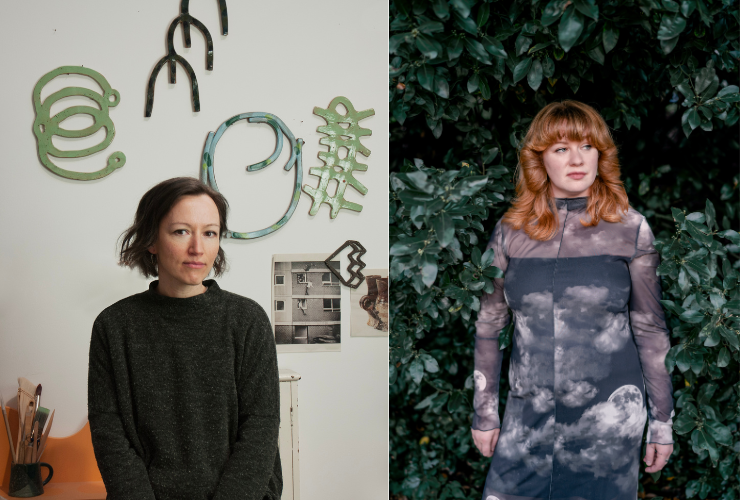
Can you start by introducing yourself and sharing an overview of your artistic practice?
Carla – I’m an artist and ceramicist based in Hastings & Bexhill – working in ceramic sculpture, wall-based works, sound and participatory projects. My work explores themes of connection, cooperation, and togetherness, drawing inspiration from social housing, community architecture, and public gathering spaces. I often incorporate motifs, decor and fragments reminiscent of community centers and playgrounds, reflecting my upbringing around these spaces.
Isobel – I’m a Hastings based musician and sound artist who increasingly also works with objects and visuals. My work often draws from, and re-interpretes, ideas of ‘place’, and how this intersects with an embodied sense of ‘self’, often combining the mediums of voice, field recording, devised performance and visual projection.
What led you to explore ceramics? Was there a specific moment or inspiration that sparked your interest in working with clay?
C – My interest in ceramics began through an exploration of architecture—which led me to work with materials like clay bricks, mud, and earth. Around the same time, I was facilitating community workshops and came to realise how powerful clay can be as a tool for connection—activating conversation, mindfulness, and bringing people together.
Clay felt like a connecting material—something that grounds you in space, in community, in the landscape, and in history.
Initially, I used ceramics as part of broader sculptural works, but over time I realised I wanted to focus more deeply on ceramic sculpture. That journey unfolded over about ten years of exploring ceramic processes and self-teaching.
Now, I’m expanding again into a more multidisciplinary practice—working with sound, wood, found objects, and collaboration as a medium. This interest in expanded ceramics is what led me to collaborate with Isobel.
Did you receive formal training in ceramics, or did you develop your skills independently?
C – I studied Fine Art at Chelsea, but I often felt intimidated by the workshops there. It sometimes felt like you had to already know everything before stepping into those spaces, so I didn’t learn ceramics at college.
After my masters, I joined a small class at Nicola Tassie’s studio, and that’s where I found a space to really explore, learn, and experiment with clay. I watched her make pottery one day, sculpture the next, all while teaching and running a working studio. That mix of practices really appealed to me.
I began working for her occasionally, which gave me a better understanding of how a ceramics studio operates. From there, I spent a lot of time teaching myself ceramics, going to a self-led evening class at a local college—until I eventually set up my own studio, Common Clay, where I continue my learning, exploring, experimenting.
Can you walk us through your creative process, from concept to completion?
C – I have recently been experimenting with sound in my ceramics—specifically the spoken voice, and I became curious about using singing too. I already knew Isobel and had been following her work for some time, so when an opportunity to collaborate came up, I asked her if she would like to make my pots sing.
We met, we talked, we shared ideas. We exchanged messages, words, phrases, and even texts by other people that resonated with us. Then we each went off to work on our parts individually.
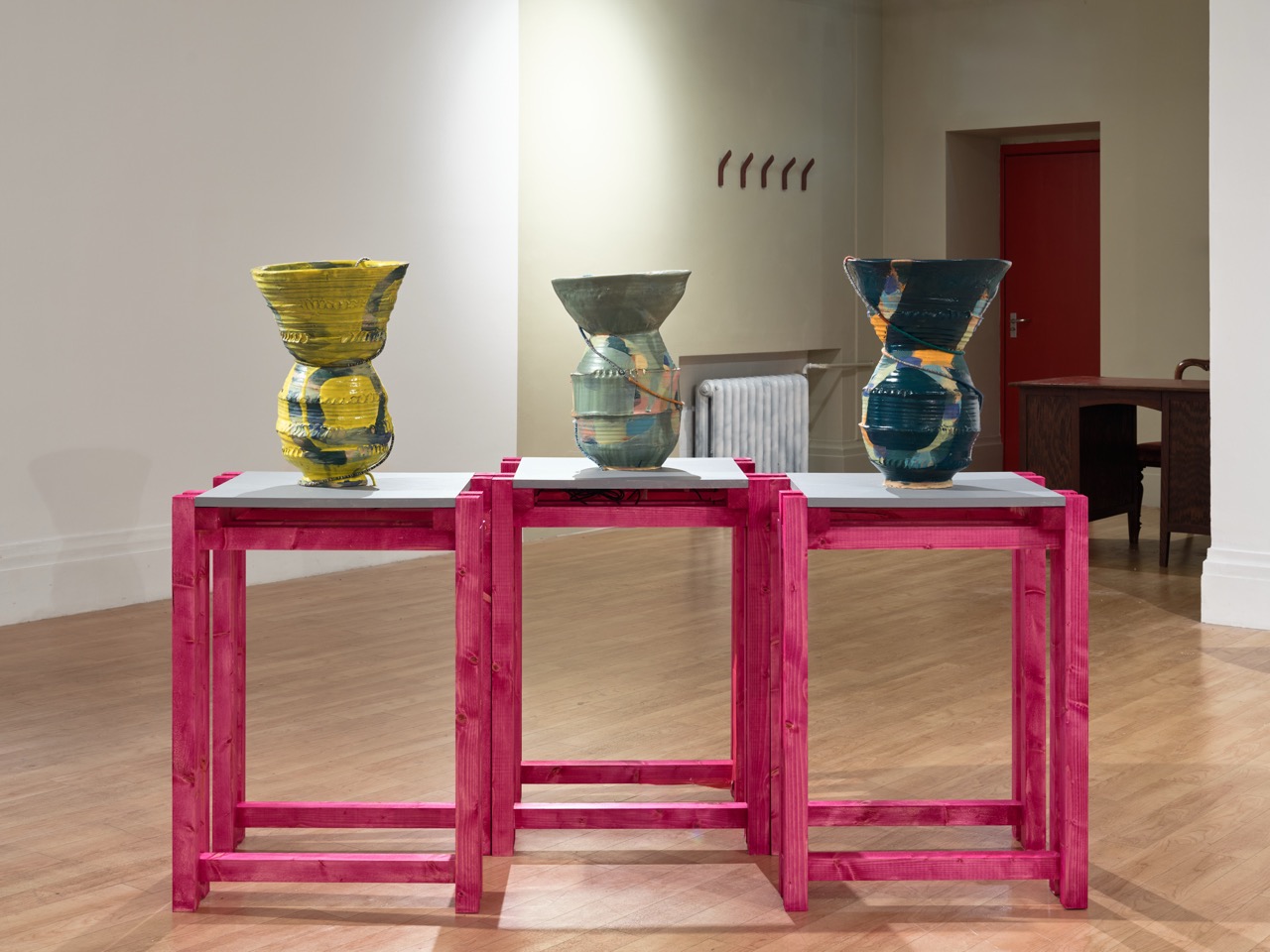
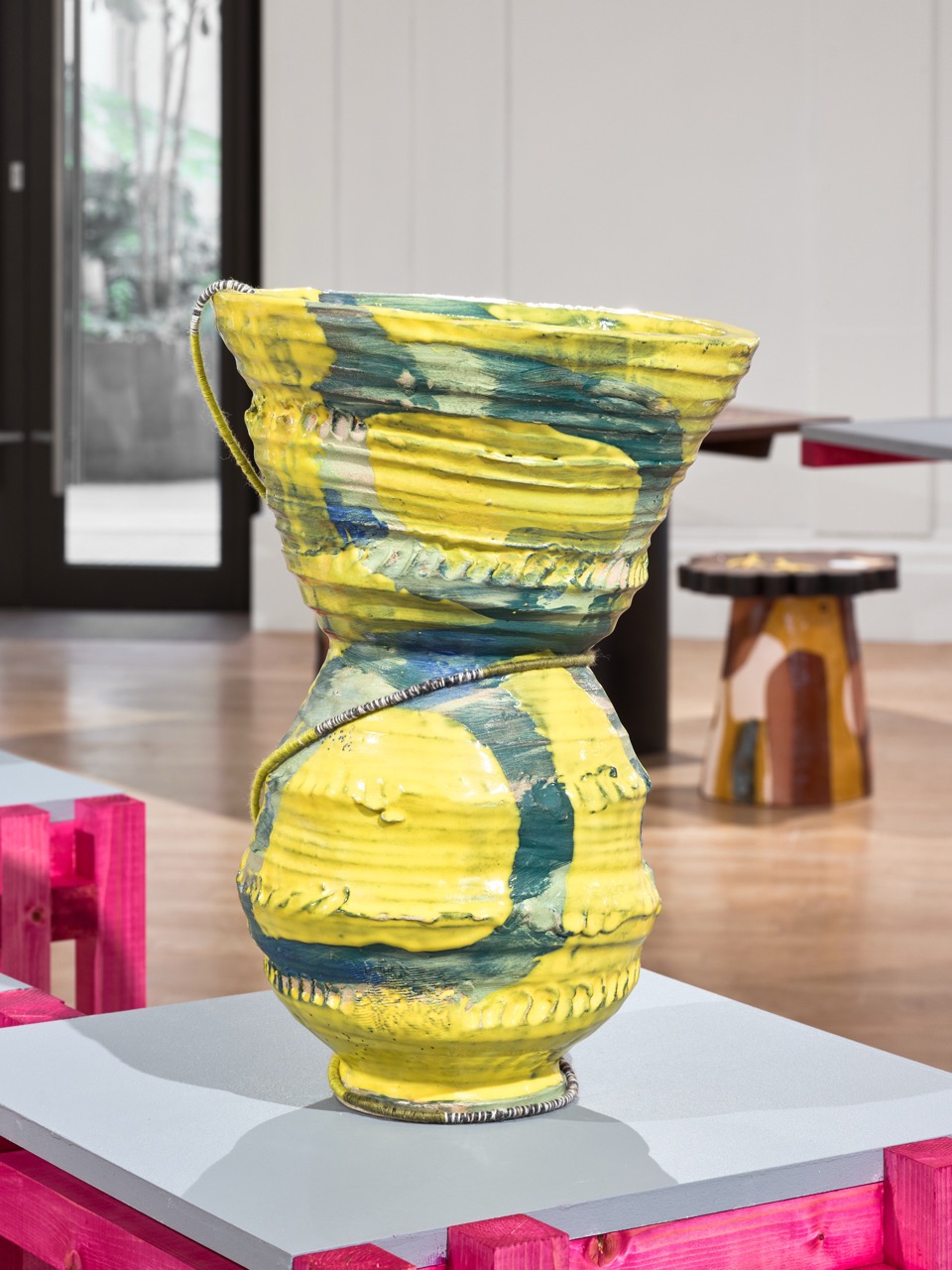
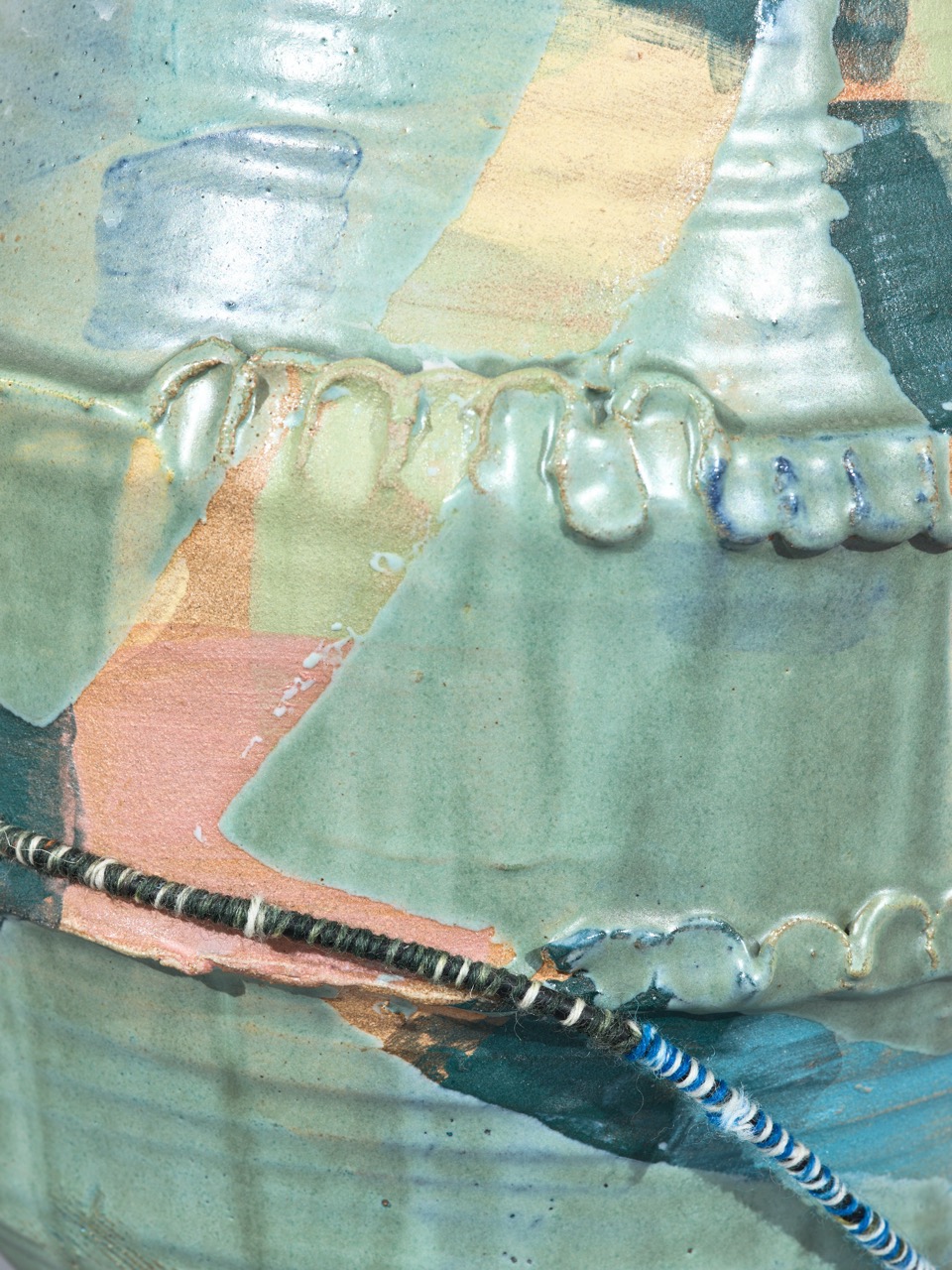
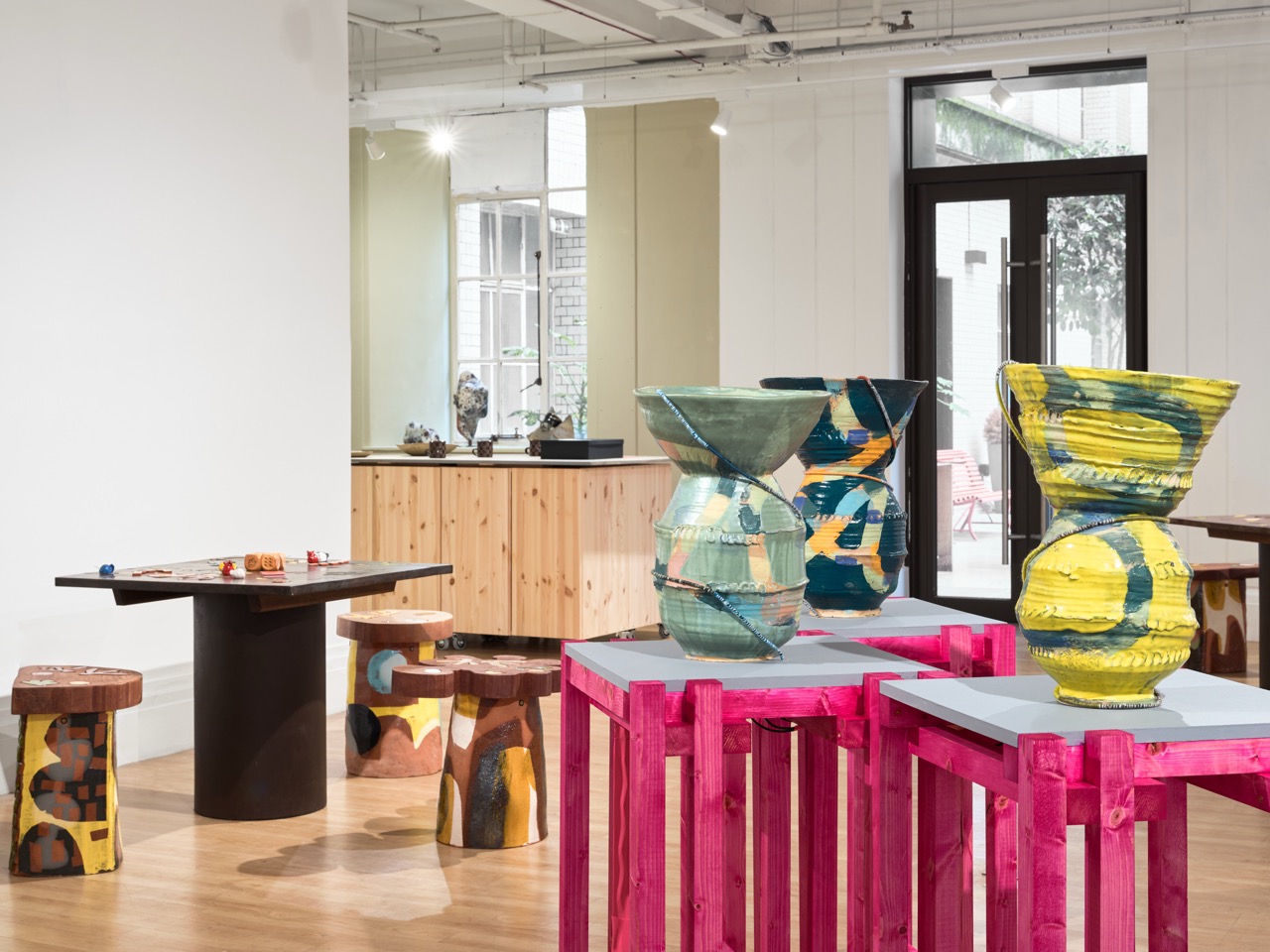
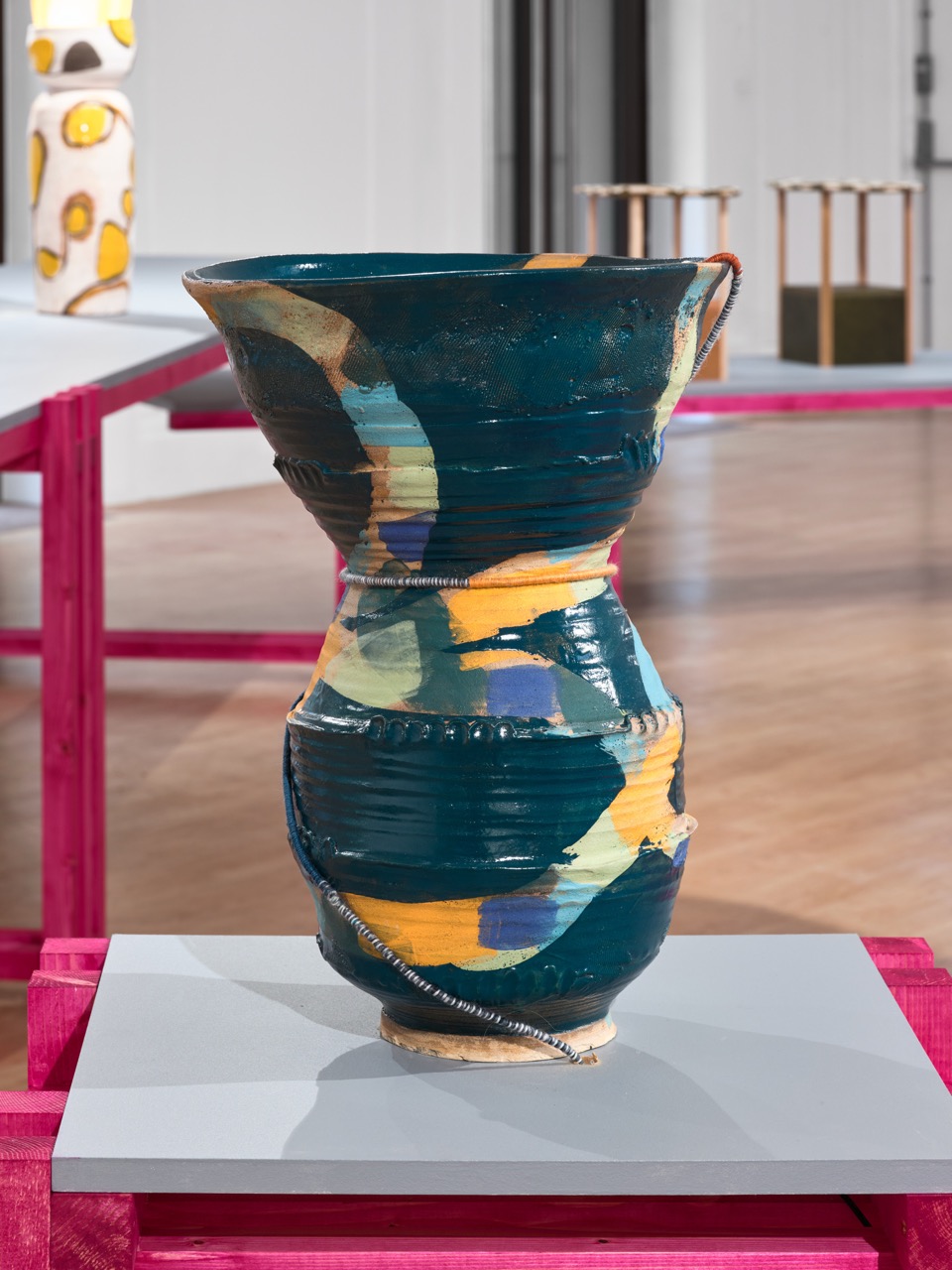
I began with some rough sketches, thinking about how the ceramic forms could amplify or distort sound. I wanted them to resemble speakers or horns—something between a listening ear and a loud mouth. The final pieces are made from multiple wheel-thrown parts, joined together while still slightly soft. I left the joins and thumb marks visible, emphasising the making process, and decorated with bright colourful slips and glazes.
We then played around with the positioning of the pieces together, thinking about how it affects how the sound is experienced.
I – I often let pieces form subconsciously in the back of my mind. After seeing Carla’s solo show The Fuddling Gossips at VOLT gallery in Eastbourne, I was struck by how she explored gender, voice, and listening—especially the physicality of leaning in to hear. When we first spoke about collaborating, I immediately thought of a song that had been quietly forming, where the voice guides the listener through what it evokes using tone, phrasing, and timbre, in real time–a song about how we experience singing. This felt timely, not only because of the long history of female voices being cast as pure and fragile, or untrustworthy and unruly, but also because I have recently reengaged with my own voice after stepping back the last few years away due to chronic pain. Carla’s idea for three large pots with wide, open mouths resonated deeply, as I had struggled to feel that same sense of openness in my own singing for some time.
How central is community to your practice, and how does it shape your work? Where do you create your work? Could you share a bit about your studio or workspace?
C – I work at Common Clay, a ceramics studio I founded in 2018. It’s a space centered around shared making, conversation, and collective care. The studio is open, inclusive, and experimental—designed to support artists working with clay in a collaborative environment – through memberships, residencies and workshops.
I have a dedicated area within our large, open-plan studio. I’m nearly always working alongside other studio members, and that constant exchange influences my process. Occasionally, I’ll take a quiet day to myself—especially when I need to spread out for larger work—but my making is always visible. It’s a collective practice in many ways, shaped by being part of a shared and supportive space.
I – community is deeply enmeshed in my practice and life. When I had to step back from actively pursuing my own career as a musician and sound artist due to chronic illness, I eventually turned my focus out to offer other women more inclusive and inviting spaces to learn music production and field recording, through Girls Twiddling Knobs. Coming back to my practice more recently, even when I am in theory making ‘solo’ work, there are still multiple wonderful humans who contribute to its thinking, testing, understanding and presentation.
For the past few years, I’ve mainly made work from home, but this year I’ve started sharing a space at The Yard, here in Hastings, with two other music makers, Tullis Rennie and Tikoda. Even just feeling part of this little active micro-community helps me want to make work, as well as being part of the ever-thriving experimental music and sound scene that’s steadily building here in Hastings.
How did you both find each other to collaborate with on this project? Have you collaborated before together? Will you again?
I – Carla approached me to work on this project together after I’d shared some work in progress, but we already knew each other from shared networks in Hastings, St Leonard’s and Bexhill. My partner had been a member of Carla’s community ceramics space, Common Clay, and we’d gotten to know each other from that time on. Carla is somewhat of a ‘lynch-pin’ in the local art scene here.
Do you have preferred techniques or materials you work with in ceramics? What draws you to these approaches?
C – I enjoy working with a variety of ceramic techniques—coiling, throwing, and slab building—and I’m always learning and experimenting. While I don’t stick to a single method, my decorative approach is more consistent: I often use layers of coloured slips, wax resist, and glaze on the surfaces. A recurring motif in my work is the connected loop, which speaks to ideas of continuity and interconnection.
My making process is loose and playful, and I deliberately bend some of the traditional ‘rules’ of pottery. I might throw a piece without fully centering the clay, join multiple parts while they’re still soft so they slump or bulge, or leave small gaps. These choices are intentional—they add a sense of movement, informality, or imperfection that I find more interesting. At the same time, I always ensure the pieces are structurally sound and durable enough to be used or handled.
After more than ten years working with ceramics, I now find joy in unlearning some of the formal techniques I once relied on. I’m particularly interested in the repair process—mending or reworking pieces as part of their evolution—so even when things ‘go wrong,’ it becomes a creative opportunity rather than a flaw.
How would you describe the pieces you’ll be exhibiting at County Hall Pottery Gallery? What do you hope viewers take away from them? Can you talk about the specific materials and techniques you are using for this exhibition?
C – We are showing an installation of ceramics and sound, consisting of three large stoneware ceramics vessels on custom made wooden plinths, with a multichannel sound work resonating from the bellies of the pots. I like to bring people close to the work, encourage people to lean in, touch, listen.
I – In terms of materials and techniques, the most obvious are songwriting, singing and recording to create the actual vocal tracks, but perhaps just as important was the multi-channel audio unit Matthew Olden built for this piece, based on our specifications, using a raspberry pi and pure data.
I hope the piece invites visitors to engage with voice as a sculptural form, and how we view the vessels it pours out from. I also hope it sparks curiosity about the emotional and physical reactions voices might elicit, and how a disembodied voice–a voice emitting from deep within a pot–might feel, whether that be untethered, free or something else.
What are you currently working on? Are there any upcoming projects or exhibitions we should look forward to?
C – I currently have work in two other London exhibitions: a ceramic and sound piece at Alice Amati, and ceramic wall drawings at Ruup & Form. I’m also working on new pieces for an upcoming exhibition at Bluecoat in Liverpool, which I’m really excited about—it’s an organisation I’ve admired for a long time.
I – I’ve just been on residency at AMATA Arts Centre in Falmouth University, Cornwall, devising a new performance piece for a project I’ve been developing called END TIMES, which explores collective and personal grief in the face of multiple, existential collapses, including the climate, humanity and democracy. I’ll be releasing the music for this project over the coming months, with live performances taking place in 2026.
The artworks Carla and Isobel is on display and available to purchase in our Collaborative exhibition. To take part in a County Hall Pottery exhibition or to speak to the team, please email gallery@countyhallpottery.com.